

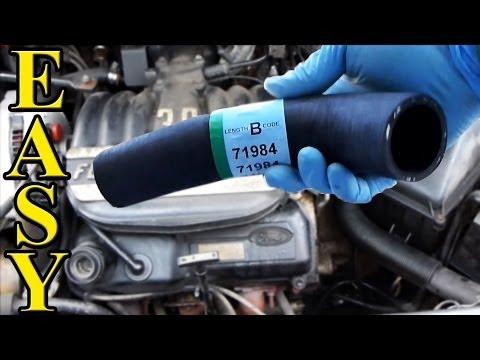







How to Replace Upper & Lower Radiator Hoses on a 2018 Honda Pilot
Step-by-step coolant hose replacement with tools list, parts, safety tips, and air-bleeding procedure for 2016, 2017, 2018, 2019, 2020
How to Replace Upper & Lower Radiator Hoses on a 2018 Honda Pilot
Step-by-step coolant hose replacement with tools list, parts, safety tips, and air-bleeding procedure for 2016, 2017, 2018, 2019, 2020


🔧 Pilot - Radiator Hose Replacement
On your Pilot, a radiator hose carries coolant between the engine and radiator. Replacing a swollen, cracked, or leaking hose prevents overheating and coolant loss.
Difficulty Level: Intermediate | Estimated Time: 1.0-2.5 hours
⚠️ Safety & Precautions
- ⚠️ Never open the radiator cap hot; coolant can spray and burn.
- ⚠️ Support the Pilot with jack stands before going underneath; never rely on a floor jack.
- ⚠️ Keep coolant away from kids/pets; it’s poisonous and attractive-tasting.
- ⚠️ Wear gloves and safety glasses; coolant and spring clamps can snap loose.
- 🔋 Battery disconnect is not required for this job.
🔧 Required Tools
You'll need the following tools for this repair:
- Safety glasses
- Nitrile gloves
- Floor jack (rated 3-ton minimum)
- Jack stands (rated 3-ton minimum)
- Wheel chocks
- Drain pan (at least 10-quart)
- Hose clamp pliers (specialty)
- Tongue-and-groove pliers
- Pick tool (90-degree)
- Trim clip remover
- 10mm socket
- 3/8" ratchet
- 3" extension
- Flat-blade screwdriver
- Funnel
- Shop towels
🔩 Required Parts
HowToo sells all the parts you need for this repair:
- Upper radiator hose - Qty: 1
- Lower radiator hose - Qty: 1
- Hose clamps - Qty: 2-4
- Honda Type 2 coolant (premixed) - Qty: 1-2 gallons
📋 Before You Begin
- Park on level ground, set the parking brake, and chock the rear wheels.
- Let the engine cool completely (best: sit overnight).
- Decide which hose you’re replacing:
- Upper hose = top of radiator to engine (usually accessible from above).
- Lower hose = bottom of radiator to engine (usually easier from below).
- Tip: Take a photo before removing anything.
🔨 Step-by-Step Instructions
Follow these steps in order:
Step 1: Relieve cooling system pressure (cold engine only)
- Use your hand to slowly loosen the radiator cap one click to release any remaining pressure, then remove it.
- If the Pilot has a plastic radiator cap cover/duct in the way, remove clips using a trim clip remover.
Step 2: Drain coolant to below hose level
- Place a drain pan (at least 10-quart) under the radiator.
- Open the radiator drain (petcock) by hand; if tight, use a flat-blade screwdriver carefully.
- Drain enough coolant so the level is below the hose you’re replacing, then close the drain.
Step 3: If doing the lower hose, raise the front for access
- Lift the front using a floor jack (rated 3-ton minimum) at the front jacking point.
- Set it down securely on jack stands (rated 3-ton minimum).
- If an under-cover/splash shield blocks access, remove fasteners using a 10mm socket, 3/8" ratchet, and trim clip remover.
Step 4: Remove the old hose clamps
- Most factory clamps are spring clamps (they squeeze to open).
- Use hose clamp pliers (specialty) to squeeze the clamp tabs, then slide the clamp back onto the hose.
- If space is tight, use tongue-and-groove pliers instead.
Step 5: Break the hose loose and remove it
- Twist the hose by hand to break it free.
- If it’s stuck, gently work around the hose end using a pick tool (90-degree) between the hose and the fitting to release it.
- Pull the hose off and aim it into the drain pan (at least 10-quart) for any remaining coolant.
- Tip: Don’t gouge the plastic radiator neck.
Step 6: Prep the fittings
- Wipe the radiator neck and engine-side fitting clean using shop towels.
- Remove any stuck rubber bits with the pick tool (90-degree), then wipe clean again.
Step 7: Install the new hose and clamps
- Slide the new clamp(s) onto the new hose before installing the hose.
- Push the new hose fully onto the fittings until it bottoms out.
- Position the clamp behind the raised “bead” on the fitting (the bead helps prevent leaks).
- Use hose clamp pliers (specialty) or tongue-and-groove pliers to set the clamps in place.
Step 8: Reinstall any removed covers/ducting
- Reinstall splash shield/under-cover fasteners using a 10mm socket, 3/8" ratchet, and trim clip remover.
- Lower the Pilot safely using the floor jack (rated 3-ton minimum).
Step 9: Refill coolant
- Use a funnel to refill the radiator with Honda Type 2 coolant (premixed).
- Fill the coolant reservoir to the MAX line with Honda Type 2 coolant (premixed).
Step 10: Bleed air and verify operation
- Set the HVAC to HOT and the fan to LOW.
- Start the engine and let it idle with the radiator cap off until the thermostat opens (upper hose gets hot).
- Watch for air bubbles at the radiator fill neck; top off as needed using Honda Type 2 coolant (premixed) and a funnel.
- Once bubbles stop and the level stabilizes, install the radiator cap.
- Let the engine continue running until the cooling fans cycle on and off at least once.
- Shut off the engine and check for leaks at both ends of the hose using a light and shop towels.
✅ After Repair
- After the first full heat cycle and cool-down, recheck the reservoir level and top off to MAX if needed.
- Inspect for seepage around the clamps for the next few drives.
- If you see overheating, no cabin heat, or repeated coolant loss, stop driving and recheck for trapped air or a loose clamp.
💰 DIY vs Shop Cost
Shop Cost: $250-$550 (parts + labor)
DIY Cost: $60-$180 (parts only)
You Save: $190-$370 by doing it yourself!
Shop labor rates vary but typically run $100-$150/hour. This repair takes a shop approximately 1.0-2.0 hours.
🎯 Ready to get started?
HowToo makes it easy: same-day/2-day shipping on every part, plus all the tools and specialty tools you need! Check out the parts and tools sections below to add everything to your cart.