







How to Replace the Wheel Bearing Hub Assembly on a 2018 Ford Explorer
Step-by-step instructions with tools, parts, safety tips, and torque specs for 2013, 2014, 2015, 2016, 2017, 2018, 2019
How to Replace the Wheel Bearing Hub Assembly on a 2018 Ford Explorer
Step-by-step instructions with tools, parts, safety tips, and torque specs for 2013, 2014, 2015, 2016, 2017, 2018, 2019


🔧 Wheel Bearing / Hub Assembly Replacement
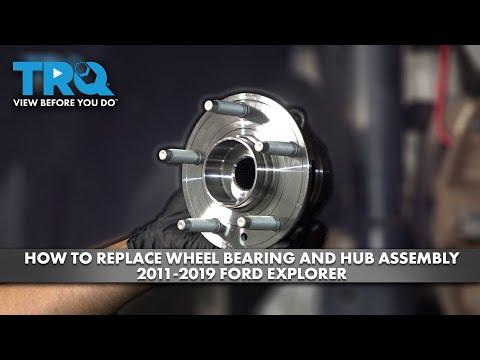
On your Explorer, the wheel bearing is serviced as a hub assembly, not as a loose bearing. This means the wheel, brake parts, and steering knuckle must come apart so the hub can be removed and replaced as a unit.
Difficulty Level: Advanced | Estimated Time: 2-4 hours per corner
⚠️ Safety & Precautions
- Support the vehicle with jack stands on solid ground. Never rely on the jack alone.
- Block the rear wheels if you are working on the front, and block the front wheels if you are working on the rear.
- If your Explorer has an electronic parking brake on the rear, put it in service mode before rear brake work.
- Wheel bearing jobs require brake and suspension disassembly. Keep the brake hose from hanging by the hose.
- Use eye protection. Rust and metal debris will fall during removal.
🔧 Required Tools
You'll need the following tools for this repair:
- Floor jack (rated 3-ton minimum)
- Jack stands
- Wheel chocks
- Safety glasses
- Mechanic gloves
- Breaker bar
- Torque wrench
- Metric socket set
- Metric wrench set
- Ratchet
- 24mm socket
- 21mm socket
- 19mm socket
- 18mm socket
- Torx socket set
- Hex bit set
- Impact gun
- Dead blow hammer
- Trim tool
- Penetrating oil
- Bungee cord
- Brake caliper hanger hook
- Pick tool
- Rubber mallet
🔩 Required Parts
HowToo sells all the parts you need for this repair:
- Front wheel hub and bearing assembly - Qty: 1
- Rear wheel hub and bearing assembly - Qty: 1
- New axle nut - Qty: 1
- Brake caliper bracket bolts - Qty: 2
- ABS wheel speed sensor seal or retaining clip - Qty: 1
- Penetrating rust cleaner - Qty: 1
📋 Before You Begin
- Park on level ground and set the parking brake.
- Loosen the wheel lug nuts before lifting the vehicle.
- If doing the rear, put the parking brake in service mode first if equipped with electronic parking brake.
- Work on one side at a time so you can use the other side as a visual reference.
- Spray rusty fasteners early.
🔨 Step-by-Step Instructions
Follow these steps in order:
Step 1: Raise and secure the vehicle
- Use a floor jack to lift the corner you are repairing.
- Support it with jack stands under the proper lift points.
- Remove the wheel with a 21mm socket or the size on your lug nuts.
Step 2: Remove the brake caliper and rotor
- Use the correct metric socket to remove the caliper bolts.
- Hang the caliper with a brake caliper hanger hook or bungee cord. Do not let it hang by the hose.
- Remove the caliper bracket with the proper socket.
- Slide the rotor off. If it is stuck, tap it gently with a rubber mallet.
Step 3: Disconnect the ABS wheel speed sensor and related clips
- Use a trim tool or pick tool to release any sensor wire clips from the knuckle.
- If the sensor or harness blocks hub removal, unbolt it with the correct Torx socket or metric socket and move it aside carefully.
Step 4: Remove the axle nut and separate the axle from the hub
- Use a 24mm socket and breaker bar to remove the axle nut.
- Push the axle inward slightly so it is free from the hub splines.
- Don’t hammer on the axle threads.
Step 5: Remove the hub assembly
- Use the correct metric socket to remove the hub mounting bolts from the back of the knuckle.
- If the hub is rusted in place, soak the mating area with penetrating oil and work it loose with a dead blow hammer.
- Remove the hub and bearing assembly from the knuckle.
Step 6: Clean the mounting surface
- Use a wire brush or pick tool to clean rust and dirt from the knuckle face.
- Make sure the mounting surface is flat and clean so the new hub seats fully.
Step 7: Install the new hub assembly
- Position the new front wheel hub and bearing assembly or rear wheel hub and bearing assembly into the knuckle.
- Start all hub bolts by hand first.
- Tighten the hub bolts with a torque wrench to factory specification.
- Install a new axle nut and snug it by hand.
Step 8: Reassemble the brake and wheel
- Reinstall the rotor, caliper bracket, and caliper using the correct socket.
- Torque the brake fasteners to factory specification with a torque wrench.
- Reconnect the ABS sensor wiring and all clips.
- Install the wheel and tighten the lug nuts in a star pattern.
- Lower the vehicle and torque the lug nuts to factory specification.
✅ After Repair
- Pump the brake pedal before moving the vehicle.
- Check that the ABS light is off.
- Road test at low speed first, then listen for noise changes during turns.
- Recheck for any loose fasteners after the test drive.
- If the noise is still there, the other side may also be worn.
💰 DIY vs Shop Cost
Shop Cost: $350-$750 per corner (parts + labor)
DIY Cost: $120-$280 per corner (parts only)
You Save: $230-$470 by doing it yourself!
Shop labor rates vary but typically run $100-$150/hour. This repair takes a shop approximately 2-4 hours.
🎯 Ready to get started?
HowToo makes it easy: same-day/2-day shipping on every part, plus all the tools and specialty tools you need! Check out the parts and tools sections below to add everything to your cart.