

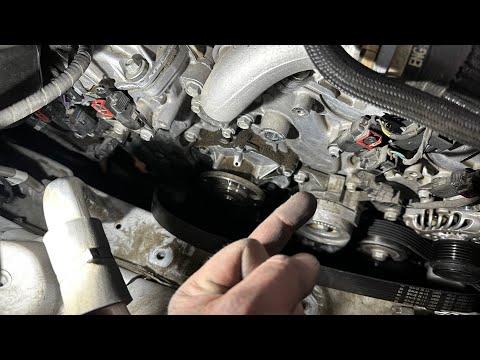







How to Replace the Water Pump on a 2019 Chevrolet Traverse (Step-by-Step DIY Guide)
Tools, parts list, safety tips, torque specs, coolant refill/bleed steps, and leak checks for 2018, 2019, 2020, 2021, 2022, 2023
How to Replace the Water Pump on a 2019 Chevrolet Traverse (Step-by-Step DIY Guide)
Tools, parts list, safety tips, torque specs, coolant refill/bleed steps, and leak checks for 2018, 2019, 2020, 2021, 2022, 2023


🔧 Traverse - Water Pump Replacement
Your Traverse’s water pump circulates coolant through the engine and radiator. If it’s leaking (coolant drip, crusty orange/white residue) or the bearing is failing (whine/grind), replacing it prevents overheating and engine damage.
Difficulty Level: Intermediate | Estimated Time: 2.5-4.0 hours
⚠️ Safety & Precautions
- 🧯 Work only on a fully cool engine; hot coolant can cause severe burns.
- 🧯 Never open the coolant cap when hot; pressure can spray coolant.
- 🧯 Support the vehicle with jack stands; never rely on a jack alone.
- 🧯 Keep hands clear of the belt path; the tensioner is spring-loaded.
- 🧯 Dispose of old coolant properly; it’s toxic to people and pets.
🔧 Required Tools
You'll need the following tools for this repair:
- Safety glasses
- Nitrile gloves
- Wheel chocks
- Floor jack (rated 3-ton minimum)
- Jack stands (rated 3-ton minimum)
- 22mm socket
- Breaker bar (1/2-inch drive)
- Torque wrench (10-200 Nm range)
- Trim clip removal tool
- 7mm socket
- 8mm socket
- 10mm socket
- 13mm socket
- 15mm socket
- Ratchet (3/8-inch drive)
- Extension set (3/8-inch drive)
- Hose clamp pliers
- Plastic gasket scraper
- Drain pan (at least 12-quart)
- Funnel
- Shop towels
- Work light
🔩 Required Parts
HowToo sells all the parts you need for this repair:
- Water pump with gasket/seal - Qty: 1
- Engine coolant (Dex-Cool 50/50 premix) - Qty: 3 gallons
- Serpentine belt - Qty: 1 Optional but smart if worn
- Hose clamps - Qty: 2 Optional if originals are weak
📋 Before You Begin
- 🧰 Park on level ground, set the parking brake, and let the engine cool completely.
- 🧰 Set the HVAC to full HOT later during bleeding; it helps move coolant through the heater core.
- 🧰 Place a drain pan under the front of the engine area before opening any hoses.
🔨 Step-by-Step Instructions
Follow these steps in order:
Step 1: Remove the right-front wheel and splash shield
- Use wheel chocks behind the rear wheels.
- Use a floor jack to lift the right-front and support with jack stands.
- Use a 22mm socket and breaker bar to remove the wheel lug nuts, then remove the wheel.
- Use a 7mm socket and trim clip removal tool to remove the fasteners/clips and pull back/remove the right-front splash shield.
- Reinstall later: Torque wheel lug nuts to 190 Nm (140 ft-lbs).
Step 2: Relieve cooling system pressure
- Use shop towels to cover the coolant surge tank cap, then slowly loosen it to release any remaining pressure.
- Remove the cap once pressure is fully released.
Step 3: Drain the coolant
- Position a drain pan (at least 12-quart) under the radiator/engine front area.
- Drain from the radiator drain cock (if equipped) using a 8mm socket, or drain by loosening the lower radiator hose clamp with hose clamp pliers and carefully cracking the hose loose.
- Open slowly—coolant can rush out fast.
Step 4: Remove the air intake duct (for access up top)
- Use an 8mm socket to loosen the intake duct clamps.
- Disconnect any attached clips, then lift the duct out of the way.
Step 5: Remove the serpentine belt
- From the right-front access area, use a 15mm socket and ratchet (3/8-inch drive) to rotate the belt tensioner and relieve tension.
- Slide the belt off the pulleys and remove it. Take a photo of belt routing first.
- Spring tension is strong—hold it firmly.
Step 6: Remove the water pump pulley
- Use a 10mm socket with a ratchet (3/8-inch drive) to remove the water pump pulley bolts.
- Remove the pulley and set it aside.
- On reassembly: Torque pulley bolts to 25 Nm (18 ft-lbs).
Step 7: Disconnect the coolant hoses from the water pump
- Use hose clamp pliers to compress the spring clamps and slide them back on the hose.
- Twist the hose gently by hand to break it free, then pull it off.
- Catch remaining coolant in the drain pan.
Step 8: Remove the water pump
- Use a 10mm socket, ratchet (3/8-inch drive), and extension set to remove the water pump mounting bolts.
- Remove the water pump from the engine.
- Use shop towels to keep coolant off the belt area.
Step 9: Clean the mating surface
- Use a plastic gasket scraper and shop towels to clean the engine’s sealing surface.
- Do not gouge the aluminum. Clean until smooth and dry.
Step 10: Install the new water pump
- Install the new gasket/seal onto the new pump (it should sit flat, not pinched).
- Position the pump and hand-thread all bolts to avoid cross-threading.
- Use a 10mm socket to snug bolts evenly in a crisscross pattern.
- Use a torque wrench (10-200 Nm range) to finish tightening: Torque water pump bolts to 10 Nm (89 in-lbs).
Step 11: Reconnect hoses and reinstall pulley and belt
- Reconnect the coolant hoses and reposition clamps using hose clamp pliers.
- Install the water pump pulley and tighten with a 10mm socket, then: Torque pulley bolts to 25 Nm (18 ft-lbs).
- Route the belt correctly and rotate the tensioner with a 15mm socket to slip the belt on.
- Visually confirm the belt is seated in every pulley groove.
Step 12: Reinstall splash shield, wheel, and intake duct
- Reinstall the splash shield fasteners using a 7mm socket and trim clip removal tool.
- Reinstall the wheel using a 22mm socket. Lower the vehicle.
- Use a torque wrench: Torque wheel lug nuts to 190 Nm (140 ft-lbs).
- Reinstall the intake duct using an 8mm socket to tighten the clamps.
Step 13: Refill and bleed the cooling system
- Use a funnel to refill the surge tank with Dex-Cool 50/50 premix to the FULL COLD line.
- Start the engine and set the HVAC to HOT with the fan on low.
- Let it idle and watch the level; add coolant as needed with the funnel.
- Once the engine reaches operating temp, verify you have hot air from the vents.
- Shut the engine off, let it cool fully, then recheck and top off to FULL COLD.
- Cool, top off, repeat once if needed.
✅ After Repair
- 🧪 With the engine warm, inspect for leaks around the pump and hose connections using a work light.
- 🧪 Verify the temperature gauge stays normal on a 10–15 minute drive.
- 🧪 After the next full cool-down, recheck coolant level at the FULL COLD mark.
- 🧪 If you spilled coolant on the belt/pulleys, clean with shop towels before driving.
💰 DIY vs Shop Cost
Shop Cost: $900-$1,400 (parts + labor)
DIY Cost: $140-$320 (parts only)
You Save: $760-$1,080 by doing it yourself!
Shop labor rates vary but typically run $100-$150/hour. This repair takes a shop approximately 2.5-4.0 hours.
🎯 Ready to get started?
HowToo makes it easy: same-day/2-day shipping on every part, plus all the tools and specialty tools you need! Check out the parts and tools sections below to add everything to your cart.