

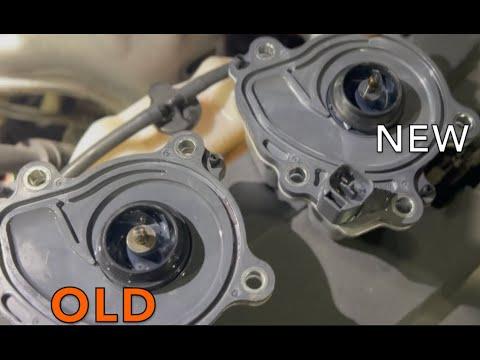







How to Replace the Water Pump on a 2015 Toyota Camry (Coolant Pump Repair Guide)
Step-by-step replacement instructions with tools, parts list, coolant bleeding tips, and torque specs for 2012, 2013, 2014, 2015, 2016, 2017
How to Replace the Water Pump on a 2015 Toyota Camry (Coolant Pump Repair Guide)
Step-by-step replacement instructions with tools, parts list, coolant bleeding tips, and torque specs for 2012, 2013, 2014, 2015, 2016, 2017


🔧 Camry - Water Pump Replacement
This job replaces the engine coolant water pump, which circulates coolant through the engine to prevent overheating. A failing pump can leak coolant, make noise, or cause overheating, so replacement is important to protect the engine.
Difficulty Level: Intermediate | Estimated Time: 2-4 hours
Assumption: this is the engine coolant water pump (not the inverter coolant pump).
⚠️ Safety & Precautions
- Let the engine cool completely before opening the cooling system; hot coolant can cause severe burns.
- Your Camry is a hybrid: do not touch any orange high-voltage cables or connectors.
- Support the car with jack stands; never work under a car held only by a jack.
- Keep coolant off paint and away from pets; it is toxic and attractive to animals.
- Battery disconnect is not required for the engine water pump, but keep the car OFF while unplugging connectors.
🔧 Required Tools
You'll need the following tools for this repair:
- Floor jack (rated 3-ton minimum)
- Jack stands (rated 3-ton minimum)
- Wheel chocks
- Safety glasses
- Nitrile gloves
- Drain pan (at least 2-gallon)
- Funnel
- Spill-free coolant funnel kit (specialty)
- 10mm socket
- 12mm socket
- 14mm socket
- 3/8" drive ratchet
- 3/8" drive torque wrench (5-80 Nm range)
- 6" extension (3/8" drive)
- Phillips screwdriver
- Trim clip removal tool
- Hose clamp pliers
- Pick tool
- Plastic gasket scraper
- Shop towels
- OBD2 scan tool (basic) (specialty)
🔩 Required Parts
HowToo sells all the parts you need for this repair:
- Engine water pump assembly (engine coolant pump) - Qty: 1
- Water pump gasket / O-ring (as equipped) - Qty: 1
- Toyota Super Long Life Coolant (pink, pre-mixed) - Qty: 2-3 gallons
- Serpentine drive belt - Qty: 1 (replace if cracked or glazed)
- Hose clamps - Qty: 1-2 (only if originals are weak)
📋 Before You Begin
- Park on level ground, set the parking brake, and place wheel chocks behind the rear wheels.
- Make sure the engine is stone cold (preferably sit overnight).
- Set the HVAC temperature to HOT later during bleeding (this opens the heater circuit).
- Have a plan to capture and properly recycle used coolant (most parts stores accept it).
🔨 Step-by-Step Instructions
Follow these steps in order:
Step 1: Raise the front of the car and remove shields
- Use a floor jack (rated 3-ton minimum) to lift the front jack point, then set the car onto jack stands (rated 3-ton minimum).
- Use a 10mm socket, Phillips screwdriver, and trim clip removal tool to remove the front under cover/splash shield fasteners.
Step 2: Drain the engine coolant
- Place a drain pan (at least 2-gallon) under the radiator drain cock.
- Slowly loosen the radiator cap first to release any residual pressure, then open the drain cock and drain coolant fully.
- If equipped with an engine block drain and you can access it safely, use a 10mm socket to open it for a more complete drain.
Step 3: Remove intake/upper access items (as needed)
- Remove the engine cover by pulling upward (no tools).
- Use a 10mm socket and Phillips screwdriver to loosen the air intake duct/clamps and move the duct out of the way for working space.
Step 4: Remove the drive belt (only if your pump is belt-driven)
- Inspect the pump area: if you see a pulley on the pump, it is belt-driven.
- Use a 14mm socket on the belt tensioner bolt and rotate to relieve tension, then slip the belt off. Take a photo of belt routing.
- If you are new to this: the “belt tensioner” is a spring-loaded arm that keeps the belt tight.
Step 5: Disconnect the water pump electrical connector (if equipped)
- If your pump has a connector, press the lock tab and unplug it by hand; use a pick tool gently only if the tab is stuck.
- Keep the car OFF while unplugging connectors.
Step 6: Remove coolant hoses from the pump
- Use hose clamp pliers to compress the clamp and slide it back on the hose.
- Twist the hose gently to break it loose, then pull it off. Use a drain pan (at least 2-gallon) for spills.
- Use shop towels to catch remaining coolant.
Step 7: Remove the water pump
- Use a 10mm socket and 12mm socket with a 3/8" drive ratchet and 6" extension (3/8" drive) to remove the water pump mounting bolts.
- Remove the pump and old gasket/O-ring.
- Clean the mating surface with a plastic gasket scraper; do not gouge aluminum. Clean and dry is leak-free.
Step 8: Install the new water pump
- Install the new gasket/O-ring onto the new pump (light coolant film is okay for O-rings).
- Position the pump and start all bolts by hand to avoid cross-threading.
- Tighten evenly in a crisscross pattern using a 3/8" drive torque wrench (5-80 Nm range). A torque wrench is a tool that tightens bolts to an exact safe tightness.
- Torque to 10 Nm (89 in-lbs) for typical M6 water pump bolts. If your pump uses larger M8 bolts, Torque to 21 Nm (15 ft-lbs).
Step 9: Reinstall hoses and reconnect electrical connector
- Reinstall hoses fully seated, then position clamps using hose clamp pliers.
- Reconnect the pump connector until it clicks (if equipped).
Step 10: Reinstall the drive belt (if removed)
- Route the belt according to your photo.
- Use a 14mm socket to rotate the tensioner and slip the belt on.
- Double-check the belt is fully seated on every pulley groove.
Step 11: Reinstall splash shield/under cover and lower the car
- Use a 10mm socket, Phillips screwdriver, and trim clip removal tool to reinstall the under cover.
- Lift slightly with the floor jack (rated 3-ton minimum), remove jack stands (rated 3-ton minimum), then lower the car.
Step 12: Refill and bleed the cooling system
- Fill the radiator slowly with Toyota Super Long Life Coolant (pink, pre-mixed) using a spill-free coolant funnel kit (specialty).
- Fill the coolant reservoir to the FULL line.
- Put the car into READY and set HVAC to HOT with fan on low. The engine may start/stop on its own, so watch coolant level closely.
- If the engine won’t stay running long enough to bleed air, use hybrid “maintenance mode” (common Toyota sequence):
-
- With the car in IG-ON (not READY), press the accelerator twice.
- Shift to N, press the accelerator twice.
- Shift to P, press the accelerator twice.
- Hold brake and press Power to READY; confirm maintenance/inspection mode if displayed.
- Let it warm up until you get steady heat from the vents, and the radiator fan cycles at least once.
- Top off coolant as bubbles purge, then install the radiator cap.
✅ After Repair
- Check for leaks around the pump and hose connections while the engine is warm.
- Test drive 10-15 minutes, then recheck coolant level after it cools and top off the reservoir if needed.
- Use an OBD2 scan tool (basic) (specialty) to clear/check any stored coolant pump or temperature-related codes.
- If you replaced the belt, listen for squeal; if present, recheck belt seating.
💰 DIY vs Shop Cost
Shop Cost: $650-$1,150 (parts + labor)
DIY Cost: $180-$420 (parts only)
You Save: $470-$730 by doing it yourself!
Shop labor rates vary but typically run $100-$150/hour. This repair takes a shop approximately 2-4 hours.
🎯 Ready to get started?
HowToo makes it easy: same-day/2-day shipping on every part, plus all the tools and specialty tools you need! Check out the parts and tools sections below to add everything to your cart.