

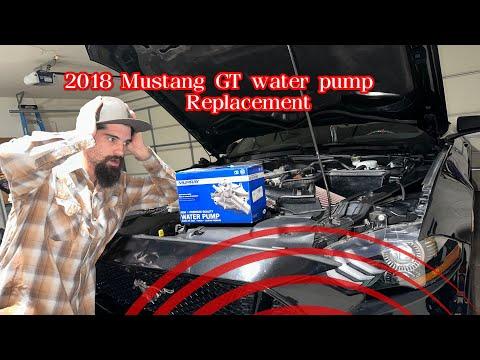




How to Replace the Water Pump on a 2014-2023 Ford Mustang (Engine: V8 5.0L)
Step-by-step Mustang water pump guide with tools, parts, coolant bleed, and torque specs for 2014, 2015, 2016, 2017, 2018, 2019, 2020, 2021, 2022, 2023
How to Replace the Water Pump on a 2014-2023 Ford Mustang (Engine: V8 5.0L)
Step-by-step Mustang water pump guide with tools, parts, coolant bleed, and torque specs for 2014, 2015, 2016, 2017, 2018, 2019, 2020, 2021, 2022, 2023


🔧 Mustang - Water Pump Replacement
Replacing the water pump on your Mustang involves draining the cooling system, removing the accessory drive belt, unbolting the old pump, and installing a new pump with a fresh gasket. The water pump moves coolant through the engine, so replacing a leaking or noisy pump helps prevent overheating and engine damage.
Difficulty Level: Intermediate | Estimated Time: 2.5-4 hours
⚠️ Safety & Precautions
- ⚠️ Work only on a completely cold engine. Hot coolant can cause severe burns.
- ⚠️ Disconnect the negative battery cable before working near the cooling fan and front engine accessories.
- ⚠️ Coolant is poisonous to people and pets. Catch all coolant in a drain pan and dispose of it properly.
- ⚠️ Never open the coolant reservoir cap when the engine is hot.
- ⚠️ Keep fingers, clothing, and tools away from the belt path when rotating or checking pulleys.
🔧 Required Tools
You'll need the following tools for this repair:
- 8mm socket
- 10mm socket
- 13mm socket
- 15mm socket
- 3/8-inch drive ratchet
- 1/2-inch drive breaker bar
- 3/8-inch drive torque wrench
- 1/2-inch drive torque wrench
- 3-inch socket extension
- 6-inch socket extension
- Serpentine belt tool (specialty)
- Flat-blade screwdriver
- Plastic trim clip remover
- Hose clamp pliers
- Gasket scraper plastic blade
- Drain pan 2-gallon minimum
- Funnel with long neck
- Cooling system vacuum fill tool (specialty)
- OBD-II scan tool with live data
- Shop towels
- Nitrile gloves
- Safety glasses
🔩 Required Parts
HowToo sells all the parts you need for this repair:
- Water pump - Qty: 1
- Water pump gasket - Qty: 1
- Engine coolant concentrate or premix meeting Ford specification WSS-M97B44-D2 - Qty: 2-3 gallons
- Distilled water - Qty: 2 gallons if using concentrate
- Serpentine belt - Qty: 1 if worn, cracked, glazed, or coolant-soaked
- Upper radiator hose clamp - Qty: 1 if damaged
- Lower radiator hose clamp - Qty: 1 if damaged
📋 Before You Begin
- 🚗 Park your Mustang on level ground, set the parking brake, and let the engine cool fully.
- 🔋 Open the hood and use a 10mm socket to disconnect the negative battery cable.
- 🧊 Remove the coolant reservoir cap only after the engine is cold.
- 📸 Take a photo of the serpentine belt routing before removal. The serpentine belt is the long belt that drives the water pump, alternator, and other accessories.
- 🧰 If you have a cooling system vacuum fill tool, use it during refill. It pulls air out before adding coolant and helps prevent trapped air pockets.
🔨 Step-by-Step Instructions
Follow these steps in order:
Step 1: Remove the Engine Appearance Cover
- Use both hands to lift the plastic engine cover straight upward from its rubber mounting grommets.
- Set the cover aside where it will not be stepped on.
- Lift evenly to avoid cracking it.
Step 2: Disconnect the Battery
- Use a 10mm socket and 3/8-inch drive ratchet to loosen the negative battery terminal clamp.
- Move the negative cable aside so it cannot spring back onto the battery post.
Step 3: Drain the Coolant
- Place a 2-gallon minimum drain pan under the radiator drain area.
- Use a flat-blade screwdriver if needed to open the radiator drain petcock carefully.
- Allow the coolant to drain until flow slows to a drip.
- If the drain petcock is hard to access or stuck, use hose clamp pliers to loosen the lower radiator hose clamp and carefully drain through the hose connection.
- Close the drain petcock after draining.
- Do not force plastic drain parts.
Step 4: Remove Intake Air Duct for Access
- Use an 8mm socket to loosen the air duct clamp at the throttle body.
- Use an 8mm socket to loosen the air duct clamp at the air box.
- Disconnect any small breather hose by hand, then lift the intake duct out of the way.
- Keep dirt out of the open throttle body area with a clean shop towel.
Step 5: Remove the Serpentine Belt
- Locate the belt tensioner. The tensioner is the spring-loaded pulley arm that keeps the belt tight.
- Use a serpentine belt tool or 1/2-inch drive breaker bar on the tensioner to rotate it and release belt tension.
- Slide the belt off the water pump pulley first, then slowly let the tensioner return to its stop.
- Remove the belt from the remaining pulleys and compare it to your routing photo.
- Inspect the belt. Replace it if you see cracks, missing ribs, glazing, or coolant contamination.
Step 6: Remove Hoses from the Water Pump Area
- Use hose clamp pliers to compress the spring clamps on the water pump hoses.
- Slide the clamps back onto the hose.
- Twist each hose gently by hand to break it loose, then pull it off the water pump connection.
- Use a flat-blade screwdriver only to gently help loosen stuck hoses. Do not gouge the aluminum housing.
- Use shop towels to catch leftover coolant.
Step 7: Remove the Water Pump Pulley if Needed
- If pulley bolts block water pump access, use a 10mm socket and 3/8-inch drive ratchet to loosen the pulley bolts.
- Hold the pulley steady by hand while loosening the bolts.
- Remove the pulley and set it aside in the same orientation.
- If the pulley was removed, reinstall later and Torque to 25 Nm (18 ft-lbs).
Step 8: Remove the Old Water Pump
- Use a 10mm socket, 13mm socket, 3-inch socket extension, and 3/8-inch drive ratchet to remove the water pump mounting bolts.
- Note bolt locations as you remove them. Some bolts may be different lengths.
- Pull the water pump straight forward from the engine.
- If it is stuck, tap gently by hand or wiggle it. Do not pry hard against the aluminum timing cover.
Step 9: Clean the Gasket Surface
- Use a plastic gasket scraper blade to remove old gasket material from the engine surface.
- Wipe the surface clean with shop towels.
- Do not use a metal scraper, sanding disc, or rotary abrasive wheel. These can damage the sealing surface.
- Make sure no gasket pieces fall into open coolant passages.
- Clean surfaces prevent leaks.
Step 10: Install the New Water Pump
- Place the new water pump gasket onto the new water pump.
- Position the water pump squarely against the engine by hand.
- Start all water pump bolts by hand first to avoid cross-threading.
- Use a 10mm socket, 13mm socket, and 3/8-inch drive ratchet to snug the bolts evenly in a crisscross pattern.
- Use a 3/8-inch drive torque wrench to tighten the water pump bolts evenly to Torque to 25 Nm (18 ft-lbs).
Step 11: Reconnect Hoses
- Push each hose fully onto its water pump fitting by hand.
- Use hose clamp pliers to move each clamp back to its original position.
- Make sure each clamp sits behind the raised bead on the fitting.
- Replace any weak, rusty, or distorted clamp with a new clamp.
Step 12: Reinstall the Water Pump Pulley
- Place the pulley back onto the water pump hub in the same direction it came off.
- Start the bolts by hand.
- Use a 10mm socket and 3/8-inch drive torque wrench to tighten the pulley bolts to Torque to 25 Nm (18 ft-lbs).
Step 13: Reinstall the Serpentine Belt
- Route the belt around the pulleys using your photo as a guide.
- Leave the water pump pulley or smooth idler pulley for last.
- Use the serpentine belt tool or 1/2-inch drive breaker bar to rotate the tensioner.
- Slip the belt onto the final pulley, then slowly release the tensioner.
- Check that the belt ribs are centered in every grooved pulley.
- Misrouted belts can shred quickly.
Step 14: Reinstall Intake Air Duct
- Remove the shop towel from the throttle body opening.
- Set the intake duct back into position by hand.
- Reconnect any breather hose by hand.
- Use an 8mm socket to tighten the duct clamps until snug. Do not overtighten plastic parts.
Step 15: Refill the Cooling System
- Mix coolant concentrate with distilled water at a 50/50 ratio if not using premix.
- Using a cooling system vacuum fill tool is best. Follow the tool instructions to pull vacuum, verify it holds, then draw coolant into the system.
- If filling without a vacuum tool, place a long-neck funnel in the coolant reservoir and slowly add coolant until it reaches the proper cold fill level.
- Leave the reservoir cap off for the initial air purge.
Step 16: Reconnect the Battery
- Place the negative battery cable back onto the battery post.
- Use a 10mm socket and 3/8-inch drive ratchet to tighten the clamp snugly.
Step 17: Bleed Air from the Cooling System
- Start the engine and let it idle with the heater set to full hot and low fan speed.
- Use an OBD-II scan tool with live data to watch engine coolant temperature.
- As air bubbles come out, add coolant to keep the reservoir near the cold fill range.
- Install the reservoir cap once bubbling reduces and coolant level stabilizes.
- Let the engine reach normal operating temperature while checking for leaks.
- Shut the engine off and allow it to cool fully.
- Recheck the coolant level and top off to the cold fill mark if needed.
Step 18: Reinstall the Engine Cover
- Line up the engine cover with its rubber grommets.
- Press down by hand until it seats fully.
✅ After Repair
- ✅ Start your Mustang and inspect the water pump, hose connections, and drain area for leaks.
- ✅ Watch coolant temperature with an OBD-II scan tool with live data during the first full warm-up.
- ✅ Take a short test drive, then let the engine cool completely and recheck coolant level.
- ✅ Recheck for leaks after the first drive and again the next day.
- ✅ Dispose of old coolant at an approved recycling or hazardous-waste location. In Panipat, use a local authorized automotive service facility or waste collection point that accepts used coolant.
💰 DIY vs Shop Cost
Shop Cost: $450-$750 USD equivalent (parts + labor)
DIY Cost: $120-$280 USD equivalent (parts only)
You Save: $330-$470 USD equivalent by doing it yourself!
Shop labor rates vary by region. This repair takes a shop approximately 2-3 hours.
🎯 Ready to get started?
HowToo makes it easy: same-day/2-day shipping on every part, plus all the tools and specialty tools you need! Check out the parts and tools sections below to add everything to your cart.