

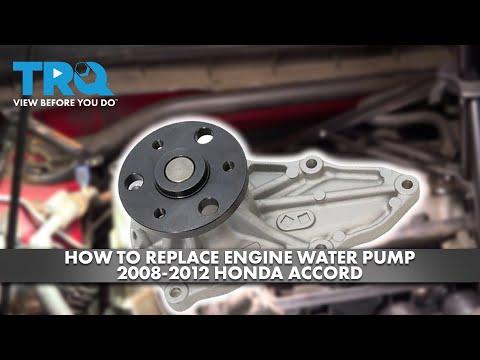







How to Replace the Water Pump on a 2012 Honda Accord (DIY Step-by-Step Guide)
Tools, parts list, safety tips, torque specs, and coolant refill/bleeding steps to stop leaks and overheating for 2008, 2009, 2010, 2011, 2012
How to Replace the Water Pump on a 2012 Honda Accord (DIY Step-by-Step Guide)
Tools, parts list, safety tips, torque specs, and coolant refill/bleeding steps to stop leaks and overheating for 2008, 2009, 2010, 2011, 2012


🔧 Accord - Water Pump Replacement
On your Accord, the water pump circulates coolant through the engine and radiator. If it’s leaking or the engine is overheating, replacing the pump (and refilling/bleeding the cooling system) is the correct fix.
Difficulty Level: Intermediate | Estimated Time: 2.5-4.5 hours
⚠️ Safety & Precautions
- ⚠️ Never open the radiator cap on a hot engine; let it cool fully.
- ⚠️ Support the car with jack stands; never rely on a jack alone.
- ⚠️ Keep coolant off paint and away from kids/pets; it’s toxic.
- ⚠️ If you remove an engine mount/bracket for access, support the engine with a jack and wood block first.
- 🔌 Battery disconnect is not required for the pump itself, but keep tools clear of the radiator fan (it can turn on).
🔧 Required Tools
You'll need the following tools for this repair:
- Floor jack (rated 3-ton minimum)
- Jack stands (rated 3-ton minimum)
- Wheel chocks
- Safety glasses
- Nitrile gloves
- Drain pan (at least 2-gallon)
- Funnel
- Trim clip removal tool
- Phillips screwdriver
- 10mm socket
- 12mm socket
- 14mm socket
- 19mm socket
- 3/8" drive ratchet
- 3/8" drive extensions (3" and 6")
- Serpentine belt tool or long-handled 14mm box wrench
- Torque wrench (3/8" drive)
- Gasket scraper or plastic razor scraper
- Shop rags
🔩 Required Parts
HowToo sells all the parts you need for this repair:
- Water pump (engine coolant pump) with O-ring/gasket - Qty: 1
- Honda-compatible coolant (Type 2 / premix) - Qty: 2 gallons
- Serpentine belt - Qty: 1 (recommended while you’re in there)
📋 Before You Begin
- Park on level ground, set the parking brake, and chock the rear wheels.
- Let the engine cool completely (upper radiator hose should feel cool).
- Turn the HVAC to HOT before bleeding later; this opens the heater circuit.
- If you end up needing extra clearance, be ready to support the engine from underneath with a jack and a wood block.
🔨 Step-by-Step Instructions
Follow these steps in order:
Step 1: Lift the front-right corner and remove the splash shield
- Use a floor jack to lift the front-right jacking point and set the car on jack stands.
- Remove the right-front lower splash shield/inner fender access panel using a trim clip removal tool and Phillips screwdriver.
Step 2: Drain the coolant
- Place a drain pan under the radiator drain cock (bottom of radiator).
- Slowly remove the radiator cap (only when cool), then open the drain cock by hand or with a Phillips screwdriver if needed.
- Let coolant drain fully, then close the drain cock snugly (do not over-tighten).
Step 3: Remove the serpentine belt
- From the passenger-side access area, put a serpentine belt tool or long-handled 14mm box wrench on the belt tensioner hex.
- Rotate the tensioner to relieve belt tension, then slip the belt off one pulley and remove the belt.
- Tip: Take a belt routing photo first.
Step 4: Remove the water pump pulley (if equipped)
- Hold the pulley from turning by keeping tension on it by hand, and remove the small pulley bolts using a 10mm socket.
- Remove the pulley and set it aside.
Step 5: Remove the water pump
- Put rags under the pump area to catch remaining coolant.
- Remove the water pump mounting bolts using a 12mm socket and extensions.
- Pull the pump straight off the engine. More coolant will spill—keep the drain pan positioned.
- Remove the old O-ring/gasket and clean the mating surface using a gasket scraper or plastic razor scraper.
- Tip: Don’t gouge the aluminum surface.
Step 6: Install the new water pump
- Lightly wet the new O-ring with fresh coolant, then place it on the new pump.
- Install the pump onto the engine and hand-start all bolts.
- Tighten the mounting bolts evenly with a 12mm socket, then use a torque wrench: Torque to 12 N·m (9 ft-lbs).
Step 7: Reinstall the pulley and serpentine belt
- Reinstall the water pump pulley and start bolts by hand, then tighten with a 10mm socket: Torque to 12 N·m (9 ft-lbs).
- Route the belt per your photo, rotate the tensioner with the serpentine belt tool or 14mm box wrench, and slip the belt into place.
- Double-check the belt is fully seated in every pulley groove using a flashlight.
Step 8: Refill and bleed the cooling system
- Make sure the radiator drain cock is closed.
- Fill the radiator slowly using a funnel with Honda-compatible coolant (Type 2 / premix) until full.
- Fill the overflow reservoir to the MAX line.
- Start the engine and let it idle with the radiator cap off until the thermostat opens (upper radiator hose gets hot).
- As the level drops, add coolant as needed. Squeeze the upper radiator hose gently to help push air out.
- Once bubbles stop and the level stabilizes, install the radiator cap.
- Let the engine reach operating temperature and confirm the cabin heat blows hot.
Step 9: Reinstall splash shield and lower the car
- Reinstall the splash shield/inner panel using the trim clip removal tool and Phillips screwdriver.
- Lower the car using the floor jack.
✅ After Repair
- With the engine running, inspect around the water pump for leaks using a flashlight.
- Take a short 10–15 minute drive, then recheck the coolant level in the overflow bottle after it cools; top off to MAX if needed.
- Watch the temperature gauge over the next few trips; any overheating means there’s likely trapped air or a leak.
💰 DIY vs Shop Cost
Shop Cost: $550-$950 (parts + labor)
DIY Cost: $90-$220 (parts only)
You Save: $460-$730 by doing it yourself!
Shop labor rates vary but typically run $100-$150/hour. This repair takes a shop approximately 2.5-4.0 hours.
🎯 Ready to get started?
HowToo makes it easy: same-day/2-day shipping on every part, plus all the tools and specialty tools you need! Check out the parts and tools sections below to add everything to your cart.