

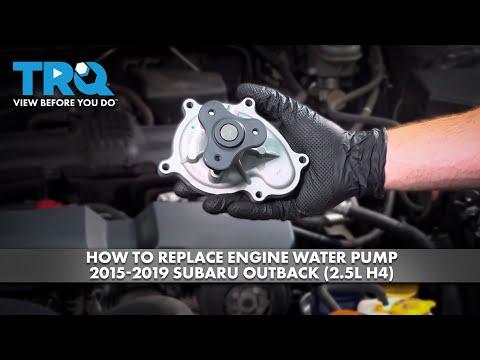




How to Replace the Water Pump on a 2010-2014 Subaru Outback (Engine: Flat 6 3.6L)
Step-by-step coolant pump repair guide with tools, parts, torque specs, and safety tips for 2010, 2011, 2012, 2013, 2014
How to Replace the Water Pump on a 2010-2014 Subaru Outback (Engine: Flat 6 3.6L)
Step-by-step coolant pump repair guide with tools, parts, torque specs, and safety tips for 2010, 2011, 2012, 2013, 2014


🔧 Outback - Water Pump Replacement
Replacing the water pump on your Outback requires draining the cooling system, removing the front engine accessory drive components, removing the pump, and resealing the new pump to the engine. On the 3.6L flat-six, this job is more involved than a simple belt-driven pump because access is tight at the front of the engine.
Difficulty Level: Advanced | Estimated Time: 4-6 hours
⚠️ Safety & Precautions
- ⚠️ Let the engine cool completely before opening the radiator cap. Hot coolant can cause severe burns.
- ⚠️ Disconnect the negative battery cable before working near the radiator fans or drive belt area.
- ⚠️ Support the front of the vehicle with jack stands. Never rely on a floor jack alone.
- ⚠️ Coolant is toxic to people and pets. Drain it into a sealed drain pan and dispose of it properly.
- ⚠️ The serpentine belt drives multiple accessories. Take a photo before removal so routing is easy to restore.
🔧 Required Tools
You'll need the following tools for this repair:
- 3/8-inch drive ratchet
- 1/2-inch drive ratchet
- 10mm socket
- 12mm socket
- 14mm socket
- 17mm socket
- 10mm wrench
- 12mm wrench
- Serpentine belt tool (specialty)
- Torque wrench, 5-80 Nm range
- Flat-blade screwdriver
- Trim clip removal tool
- Hose clamp pliers
- Plastic gasket scraper
- Drain pan, 2-gallon minimum
- Coolant funnel kit
- Floor jack, rated 2-ton minimum
- Jack stands, rated 2-ton minimum
- Wheel chocks
- Safety glasses
- Nitrile gloves
- Shop towels
🔩 Required Parts
HowToo sells all the parts you need for this repair:
- Water pump - Qty: 1
- Water pump gasket or O-ring seal - Qty: 1
- Subaru-compatible long-life coolant - Qty: 2 gallons
- Thermostat gasket - Qty: 1
- Serpentine belt - Qty: 1
- Radiator drain plug gasket - Qty: 1
- Distilled water - Qty: 1 gallon if using concentrate coolant
📋 Before You Begin
- 🚗 Park your Outback on level ground and set the parking brake.
- 🧊 Make sure the engine is stone cold before opening the cooling system.
- 🔋 Use a 10mm wrench to disconnect the negative battery cable.
- 🛞 Place wheel chocks behind the rear wheels.
- 📸 Take clear photos of the serpentine belt routing and hose positions before removing anything.
- 📌 A serpentine belt tool is a long-handled tool used to safely rotate the belt tensioner and release belt tension.
- 📌 A torque wrench tightens bolts to an exact tightness so parts seal correctly without cracking.
🔨 Step-by-Step Instructions
Follow these steps in order:
Step 1: Raise And Secure The Front
- Use the floor jack to lift the front of your Outback at the front center jacking point.
- Place jack stands under the front support points and gently lower the vehicle onto them.
- Use safety glasses before working under the vehicle.
- Shake lightly to confirm stability.
Step 2: Remove The Lower Engine Cover
- Use the trim clip removal tool to remove the plastic clips from the lower splash shield.
- Use a 10mm socket to remove any 10mm bolts holding the lower engine cover.
- Set the cover and hardware aside in order.
Step 3: Drain The Coolant
- Place the 2-gallon drain pan under the radiator drain area.
- Slowly remove the radiator cap by hand only after the engine is fully cool.
- Use a flat-blade screwdriver to open the radiator drain plug.
- Allow the coolant to drain fully into the drain pan.
- Close the drain plug by hand, then snug it gently with the flat-blade screwdriver.
- Do not overtighten plastic drain plugs.
Step 4: Remove The Air Intake Ducting
- Use a flat-blade screwdriver to loosen the intake hose clamps.
- Use a 10mm socket to remove the air intake duct mounting bolts if equipped.
- Lift the intake ducting out of the way to improve front engine access.
Step 5: Remove The Serpentine Belt
- Use the serpentine belt tool on the belt tensioner to rotate the tensioner and release belt tension.
- Slide the belt off one pulley by hand while holding the tensioner released.
- Slowly let the tensioner return to its resting position.
- Remove the belt from the engine bay.
- Compare old and new belt length.
Step 6: Remove Cooling Hoses Near The Pump
- Use hose clamp pliers to compress the spring clamps on the water pump and thermostat housing hoses.
- Slide the clamps back on the hoses.
- Twist the hoses gently by hand to break them loose, then pull them off.
- Use shop towels to catch remaining coolant.
- If a hose is stuck, use a flat-blade screwdriver carefully at the hose edge without gouging the metal fitting.
Step 7: Remove Components Blocking Water Pump Access
- Use a 12mm socket or 14mm socket to remove any front bracket or idler pulley hardware blocking pump access.
- Use a 17mm socket if an idler pulley center bolt requires removal.
- Keep bolts organized by location because lengths may differ.
- When reinstalling idler pulley hardware later, tighten typical Subaru front accessory pulley bolts to Torque to 39 Nm (29 ft-lbs) unless the replacement part instructions specify otherwise.
Step 8: Remove The Water Pump
- Place the drain pan under the front of the engine again.
- Use a 10mm socket and 12mm socket to remove the water pump mounting bolts.
- Loosen bolts evenly in a crisscross pattern so the pump separates evenly.
- Pull the water pump straight away from the engine by hand.
- Expect more coolant to drain when the pump comes loose.
Step 9: Clean The Sealing Surface
- Use a plastic gasket scraper to remove old gasket material from the engine sealing surface.
- Wipe the area clean with shop towels.
- Do not use a metal scraper because it can scratch the aluminum surface and cause leaks.
- Clean metal seals best.
Step 10: Install The New Water Pump
- Install the new water pump gasket or O-ring seal onto the new water pump.
- Position the water pump squarely against the engine by hand.
- Start all bolts by hand first to avoid cross-threading.
- Use a 10mm socket and 12mm socket to snug the bolts evenly in a crisscross pattern.
- Use the torque wrench to tighten the water pump bolts to Torque to 10 Nm (7 ft-lbs) unless the pump instructions specify a different value.
Step 11: Reinstall Hoses And Brackets
- Push the coolant hoses fully onto their fittings by hand.
- Use hose clamp pliers to move each spring clamp back to its original position.
- Use a 12mm socket, 14mm socket, or 17mm socket to reinstall removed brackets and pulleys.
- Tighten front accessory pulley or bracket bolts to Torque to 39 Nm (29 ft-lbs) unless the component instructions specify otherwise.
Step 12: Install The New Serpentine Belt
- Route the new serpentine belt around the pulleys using your photo as a guide.
- Use the serpentine belt tool to rotate the tensioner.
- Slide the belt over the final pulley by hand.
- Slowly release the tensioner.
- Check that the belt ribs sit fully inside every pulley groove.
Step 13: Reinstall Intake Ducting And Lower Cover
- Use a flat-blade screwdriver to tighten the intake hose clamps.
- Use a 10mm socket to reinstall any intake duct bolts.
- Use the trim clip removal tool and 10mm socket to reinstall the lower engine cover.
Step 14: Refill The Cooling System
- Install the coolant funnel kit on the radiator filler neck.
- Pour Subaru-compatible long-life coolant slowly into the funnel.
- If using concentrate, mix with distilled water to the correct 50/50 ratio before filling.
- Fill until coolant stays visible in the funnel.
Step 15: Bleed Air From The Cooling System
- Reconnect the negative battery cable using a 10mm wrench.
- Set the heater controls inside the cabin to full hot and low fan speed.
- Start the engine and let it idle with the coolant funnel installed.
- Watch for air bubbles coming up through the funnel.
- Add coolant as the level drops.
- Let the engine idle until the radiator fans cycle on and off once.
- Install the radiator cap by hand after the air bubbles stop and the level stabilizes.
Step 16: Fill The Overflow Tank
- Fill the coolant overflow reservoir to the FULL mark with Subaru-compatible long-life coolant.
- Wipe spilled coolant with shop towels.
- Check that the radiator cap is fully seated.
✅ After Repair
- ✅ Let the engine reach normal operating temperature and check for leaks around the water pump, hoses, and radiator drain plug.
- ✅ Take a short test drive while watching the temperature gauge.
- ✅ After the engine cools fully, recheck the radiator and overflow tank levels.
- ✅ Top off coolant if needed.
- ✅ Listen for belt squeal or pulley noise. If heard, shut the engine off and recheck belt alignment.
- ✅ Dispose of old coolant at an approved recycling or hazardous waste facility near Panipat.
💰 DIY vs Shop Cost
Shop Cost: $650-$1,050 (parts + labor)
DIY Cost: $160-$350 (parts only)
You Save: $490-$700 by doing it yourself!
Shop labor rates vary but typically run $100-$150/hour. This repair takes a shop approximately 4-6 hours.
🎯 Ready to get started?
HowToo makes it easy: same-day/2-day shipping on every part, plus all the tools and specialty tools you need! Check out the parts and tools sections below to add everything to your cart.