
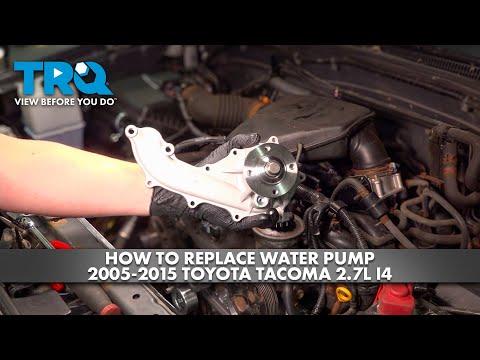




How to Replace the Water Pump on a 2007-2013 Toyota Tacoma (Engine: Inline 4 2.7L)
Step-by-step DIY guide with tools, parts, coolant bleeding, torque specs, and safety tips for 2007, 2008, 2009, 2010, 2011, 2012, 2013
How to Replace the Water Pump on a 2007-2013 Toyota Tacoma (Engine: Inline 4 2.7L)
Step-by-step DIY guide with tools, parts, coolant bleeding, torque specs, and safety tips for 2007, 2008, 2009, 2010, 2011, 2012, 2013


🔧 Tacoma - Water Pump Replacement
Replacing the water pump on your Tacoma means draining the cooling system, removing the drive belt and front engine components, then installing a new pump with a fresh gasket. The water pump moves coolant through the engine, so a leaking or noisy pump should be replaced before it causes overheating.
Difficulty Level: Intermediate | Estimated Time: 3-5 hours
⚠️ Safety & Precautions
- ⚠️ Let the engine cool completely before opening the cooling system. Hot coolant can cause serious burns.
- ⚠️ Disconnect the negative battery cable before working near the cooling fan and belt area.
- ⚠️ Support the front of your Tacoma with jack stands if you raise it. Never rely on a jack alone.
- ⚠️ Keep coolant away from pets and children. It is poisonous and often tastes sweet.
- ⚠️ Do not mix random coolant types. Your Tacoma uses Toyota-compatible long-life coolant.
🔧 Required Tools
You'll need the following tools for this repair:
- 10mm socket
- 12mm socket
- 14mm socket
- 17mm socket
- 3/8-inch ratchet
- 1/2-inch breaker bar
- 3/8-inch torque wrench
- 1/2-inch torque wrench
- 3-inch socket extension
- 6-inch socket extension
- 14mm box-end wrench
- Flat-blade screwdriver
- Trim clip removal tool
- Pliers
- Hose clamp pliers
- Plastic gasket scraper
- Drain pan 2-gallon minimum
- Coolant funnel kit
- Floor jack rated 3-ton minimum
- Jack stands rated 3-ton minimum
- Wheel chocks
- Shop towels
- Nitrile gloves
- Safety glasses
🔩 Required Parts
HowToo sells all the parts you need for this repair:
- Water pump - Qty: 1
- Water pump gasket - Qty: 1
- Toyota-compatible pink long-life coolant, premixed 50/50 - Qty: 2 gallons
- Serpentine drive belt - Qty: 1
- Thermostat gasket - Qty: 1
📋 Before You Begin
- 🅿️ Park your Tacoma on level ground, set the parking brake, and place wheel chocks behind the rear wheels.
- ❄️ Start only with a cold engine. Let it sit several hours if it was recently driven.
- 🔋 Use a 10mm socket to disconnect the negative battery cable, then tuck it aside so it cannot touch the battery post.
- 🧰 A torque wrench tightens bolts to an exact force so the new water pump seals correctly without cracking parts.
- 🧰 A serpentine belt is the single long belt that drives accessories like the alternator and power steering pump.
- 🧰 A gasket scraper removes old sealing material without gouging the aluminum engine surface.
🔨 Step-by-Step Instructions
Follow these steps in order:
Step 1: Raise and Protect the Front Area
- Use wheel chocks to secure the rear wheels.
- Use a floor jack rated 3-ton minimum to lift the front of your Tacoma if you need more room underneath.
- Place jack stands rated 3-ton minimum under the frame, then gently lower the truck onto them.
- Use safety glasses and nitrile gloves before draining coolant.
Step 2: Remove the Skid Plate
- Use a 12mm socket and 3/8-inch ratchet to remove the front skid plate bolts.
- Support the skid plate with one hand while removing the last bolt.
- Set the skid plate and bolts aside in order.
- Keep bolts grouped by location.
Step 3: Drain the Coolant
- Place a drain pan 2-gallon minimum under the radiator drain area.
- Use pliers if needed to open the radiator drain cock carefully.
- Remove the radiator cap slowly by hand after confirming the engine is cold.
- Let the coolant drain fully into the pan.
- Close the radiator drain cock by hand when draining slows to a drip.
Step 4: Remove the Engine Covers and Air Intake Ducting
- Use a 10mm socket and 3/8-inch ratchet to remove any upper engine cover fasteners if equipped.
- Use a flat-blade screwdriver to loosen the air intake tube clamps.
- Use pliers to release any small hose clamps attached to the intake duct.
- Lift the intake duct out of the way to improve access to the front of the engine.
Step 5: Remove the Fan Shroud
- Use a trim clip removal tool to remove the plastic clips at the top of the fan shroud.
- Use a 10mm socket to remove the fan shroud bolts.
- Lift the shroud upward slightly and leave it loose around the fan if it cannot come out yet.
- Plastic clips break easily; go slow.
Step 6: Remove the Mechanical Fan and Clutch
- Use a 12mm box-end wrench or 12mm socket to loosen the four fan clutch nuts at the water pump pulley.
- Hold the pulley steady by hand while breaking the nuts loose.
- Remove the four nuts and lift the fan and fan clutch out together with the shroud.
- Store the fan upright. Do not lay the fan clutch flat for a long time.
Step 7: Remove the Serpentine Drive Belt
- Find the belt routing diagram under the hood, or take a clear phone photo before removal.
- Use a 14mm socket and 1/2-inch breaker bar on the belt tensioner.
- Rotate the tensioner to release belt tension, then slide the belt off one pulley.
- Slowly release the tensioner back to its stop.
- Remove the belt from the remaining pulleys.
Step 8: Remove the Water Pump Pulley
- Use a 12mm socket and 3/8-inch ratchet to remove the water pump pulley bolts.
- If the pulley spins, hold it by hand or reinstall two fan nuts loosely and use them for grip.
- Remove the pulley from the water pump nose.
Step 9: Move Hoses and Brackets Out of the Way
- Use pliers or hose clamp pliers to slide coolant hose clamps away from the pump connections if hoses block access.
- Twist hoses gently by hand to break them loose, then pull them off.
- Use a 10mm socket or 12mm socket to remove any small brackets attached near the pump.
- Do not pry hard against aluminum sealing surfaces.
Step 10: Remove the Old Water Pump
- Place shop towels below the water pump to catch remaining coolant.
- Use a 10mm socket, 12mm socket, and 3/8-inch ratchet to remove the water pump mounting bolts.
- Note bolt lengths and locations as they come out.
- Gently tap the pump by hand or wiggle it loose. Do not gouge the engine surface.
- Remove the old water pump and gasket.
Step 11: Clean the Gasket Surface
- Use a plastic gasket scraper to remove old gasket material from the engine surface.
- Use shop towels to wipe the surface clean and dry.
- Check that no gasket pieces fall into the coolant passages.
- The surface should feel smooth with no raised debris.
- Clean sealing surfaces prevent leaks.
Step 12: Install the New Water Pump
- Place the new water pump gasket onto the new water pump.
- Position the pump against the engine by hand.
- Start all bolts by hand first to avoid cross-threading.
- Use a 10mm socket or 12mm socket to snug the bolts evenly in a crisscross pattern.
- Use a 3/8-inch torque wrench to tighten the water pump bolts to Torque to 21 Nm (15 ft-lbs).
Step 13: Reinstall Hoses and Brackets
- Use hose clamp pliers or pliers to reinstall coolant hose clamps in their original positions.
- Use a 10mm socket or 12mm socket to reinstall removed brackets.
- Tighten small bracket bolts snugly, then verify hoses are fully seated past the bead on each fitting.
Step 14: Reinstall the Water Pump Pulley
- Place the water pump pulley onto the new pump.
- Start the pulley bolts by hand.
- Use a 12mm socket to snug the pulley bolts evenly.
- Use a 3/8-inch torque wrench to tighten the pulley bolts to Torque to 21 Nm (15 ft-lbs).
Step 15: Install the Serpentine Drive Belt
- Route the belt over the pulleys using the belt routing photo or under-hood diagram.
- Use a 14mm socket and 1/2-inch breaker bar to rotate the tensioner.
- Slip the belt over the final pulley, then slowly release the tensioner.
- Look at every pulley and confirm the belt ribs sit fully in the grooves.
Step 16: Reinstall the Fan, Fan Clutch, and Shroud
- Lower the fan clutch and fan shroud into position together.
- Start the four fan clutch nuts by hand.
- Use a 12mm socket or 12mm box-end wrench to tighten the fan clutch nuts evenly.
- Use a 3/8-inch torque wrench if access allows and tighten the fan clutch nuts to Torque to 18 Nm (13 ft-lbs).
- Use a 10mm socket to reinstall the fan shroud bolts.
- Use the trim clip removal tool by hand to seat the plastic clips.
Step 17: Reinstall the Intake Ducting
- Set the air intake duct back into place.
- Use a flat-blade screwdriver to tighten the intake tube clamps.
- Use pliers to reconnect any small hose clamps removed earlier.
- Use a 10mm socket to reinstall the engine cover if equipped.
Step 18: Refill the Cooling System
- Install a coolant funnel kit on the radiator neck.
- Pour Toyota-compatible pink long-life coolant, premixed 50/50, into the radiator slowly.
- Fill the overflow reservoir to the FULL mark.
- Use shop towels to wipe spilled coolant immediately.
Step 19: Bleed Air From the Cooling System
- Reconnect the negative battery cable using a 10mm socket.
- Set the cabin heater to full hot and fan to low.
- Start the engine and let it idle with the coolant funnel installed.
- Watch for air bubbles rising through the funnel as the engine warms up.
- Squeeze the upper radiator hose carefully by hand to help move trapped air.
- When the thermostat opens and bubbles slow down, top off the radiator as needed.
- Install the radiator cap by hand once the level stabilizes.
Step 20: Reinstall the Skid Plate
- Use a floor jack rated 3-ton minimum if needed to safely position the skid plate.
- Start all skid plate bolts by hand.
- Use a 12mm socket and 3/8-inch ratchet to tighten the skid plate bolts.
- Lower your Tacoma from the jack stands using the floor jack.
✅ After Repair
- ✅ Let the engine reach normal temperature and confirm the temperature gauge stays steady.
- ✅ Check around the new water pump, hoses, radiator drain, and lower engine area for leaks.
- ✅ Take a short test drive, then let the engine cool completely.
- ✅ Recheck the coolant level in the radiator and overflow reservoir when cold.
- ✅ Add coolant if the level drops after trapped air works out.
- ✅ Dispose of old coolant at a proper recycling center or repair shop. Do not pour it on the ground.
💰 DIY vs Shop Cost
Shop Cost: $650-$1,050 (parts + labor)
DIY Cost: $140-$300 (parts only)
You Save: $510-$750 by doing it yourself!
Shop labor rates vary but typically run $100-$150/hour. This repair takes a shop approximately 3-4 hours.
🎯 Ready to get started?
HowToo makes it easy: same-day/2-day shipping on every part, plus all the tools and specialty tools you need! Check out the parts and tools sections below to add everything to your cart.