

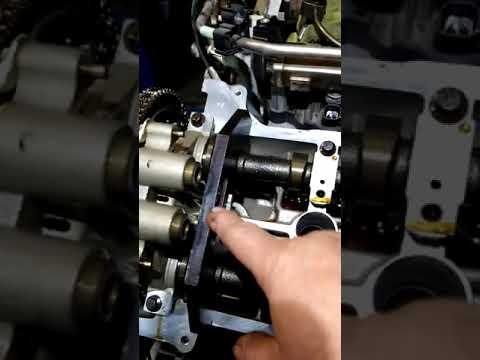







How to Replace the Timing Chain on a 2016 Ford Explorer 3.5L V6 (No Timing Belt)
Step-by-step timing chain, guides & tensioners replacement with tools, parts list, and retiming safety tips for 2016, 2017, 2018, 2019
How to Replace the Timing Chain on a 2016 Ford Explorer 3.5L V6 (No Timing Belt)
Step-by-step timing chain, guides & tensioners replacement with tools, parts list, and retiming safety tips for 2016, 2017, 2018, 2019


🔧 Explorer - Timing Chain Replacement (No Timing Belt)
Your Explorer’s 3.5L V6 uses a timing chain, not a timing belt. If you’re trying to fix chain rattle, cam/crank correlation codes, or high-mileage wear, the repair involves replacing the chains, guides, and tensioners and then re-timing the engine.
Difficulty Level: Advanced | Estimated Time: 8-14 hours
Assumption: 3.5L Ti-VCT chain-driven timing (stock setup).
⚠️ Safety & Precautions
- ⚠️ Support the vehicle securely on jack stands; never rely on a jack.
- ⚠️ Let the engine cool fully; you’ll drain coolant and work near hot components.
- ⚠️ Disconnect the negative battery cable to prevent accidental starts.
- ⚠️ This job requires precise cam timing; rotating the engine at the wrong time can cause internal damage.
- ⚠️ Many fasteners are “torque-to-yield” (one-time-use); reusing them can cause failure.
🔧 Required Tools
You'll need the following tools for this repair:
- Floor jack (rated 3-ton minimum)
- Jack stands (rated 3-ton minimum)
- Wheel chocks
- Safety glasses
- Nitrile gloves
- Drain pan (at least 10-quart)
- Socket set 8mm-21mm
- Deep socket set 8mm-21mm
- Wrench set 8mm-21mm
- 1/4" drive ratchet
- 3/8" drive ratchet
- 1/2" drive breaker bar
- Torque wrench 10-100 Nm
- Torque wrench 40-300 Nm
- Torque angle gauge
- Torx bit set T20-T55
- E-Torx socket set E8-E14
- Serpentine belt tool 3/8" drive
- Harmonic balancer puller kit (specialty)
- Ford 3.5L timing tool kit (cam holding/locking and crank pin) (specialty)
- Engine support bar (specialty)
- Trim clip removal tool
- Plastic razor scraper
- RTV sealant applicator
- Shop rags
- Flashlight
🔩 Required Parts
HowToo sells all the parts you need for this repair:
- Timing chain kit (primary chain, secondary chains, guides, tensioners) - Qty: 1
- Front timing cover gasket set - Qty: 1
- Front crankshaft seal - Qty: 1
- Valve cover gasket set - Qty: 1
- Water pump gasket/O-ring set (recommended while open) - Qty: 1
- Crankshaft pulley bolt (one-time-use) - Qty: 1
- Camshaft sprocket bolts (one-time-use if specified in kit/manual) - Qty: 4
- Engine coolant (Motorcraft-spec yellow) - Qty: 2-3 gallons premix
- Engine oil (5W-20 full synthetic) - Qty: 6 quarts
- Oil filter - Qty: 1
- RTV silicone gasket maker (Ford-spec) - Qty: 1
📋 Before You Begin
- Park on level ground, set the parking brake, and chock the rear wheels.
- Disconnect the battery using a 10mm socket on the negative terminal.
- Raise the front and support with jack stands at the proper lift points.
- Remove the lower splash shield using a trim clip removal tool and appropriate 8mm socket.
- Pro tip: Bag and label bolts by component.
🔨 Step-by-Step Instructions
Follow these steps in order:
Step 1: Drain fluids
- Place a drain pan (at least 10-quart) under the radiator drain.
- Open the drain and remove the degas bottle cap to drain coolant.
- Drain engine oil using a socket set 8mm-21mm and move the pan as needed.
Step 2: Remove air intake and upper access components
- Remove the intake tube/airbox as needed using a socket set 8mm-21mm and Torx bit set T20-T55.
- Disconnect electrical connectors carefully; use a flashlight so you don’t break tabs.
- Pro tip: Press tabs, don’t pry them.
Step 3: Support the engine and remove the right-side mount
- Install an engine support bar (specialty) across the fenders and take the engine weight.
- Remove the right engine mount hardware using a socket set 8mm-21mm and torque wrench 40-300 Nm for reassembly.
- Torque to Ford specification on reassembly (varies by fastener).
Step 4: Remove the serpentine belt and front accessories
- Relieve belt tension using a serpentine belt tool 3/8" drive and remove the belt.
- Remove accessory brackets/fasteners blocking the timing cover using socket set 8mm-21mm and E-Torx socket set E8-E14.
- Torque to Ford specification on reassembly.
Step 5: Remove the crank pulley (harmonic balancer)
- Remove the crank bolt using a 1/2" drive breaker bar and appropriate deep socket set 8mm-21mm.
- Use a harmonic balancer puller kit (specialty) to pull the pulley off straight.
- Plan to install a new crankshaft pulley bolt (one-time-use).
- Torque to Ford specification plus required angle using a torque angle gauge (torque-to-yield procedure).
Step 6: Remove valve covers for cam access
- Unplug coils/connectors and remove valve cover bolts using a socket set 8mm-21mm.
- Lift covers off; if stuck, tap gently—do not pry on sealing surfaces.
- Torque to Ford specification on reassembly (small bolts strip easily).
Step 7: Remove the front timing cover
- Remove timing cover bolts using socket set 8mm-21mm and E-Torx socket set E8-E14.
- Break the seal carefully using a plastic razor scraper; avoid gouging aluminum.
- Clean mating surfaces with a plastic razor scraper and shop rags.
Step 8: Set cylinder 1 to TDC and lock the engine timing
- Rotate the crankshaft by hand using a socket set 8mm-21mm on the crank (never use the starter).
- Install the Ford 3.5L timing tool kit (cam holding/locking and crank pin) (specialty).
- A “locking/holding tool” is a bracket/pin set that keeps cams/crank from moving while chains are off.
Step 9: Remove timing chains, guides, and tensioners
- Release/remove tensioners using socket set 8mm-21mm.
- Remove guides and chains using socket set 8mm-21mm and Torx bit set T20-T55 as equipped.
- Keep parts organized left/right and primary/secondary.
Step 10: Install new chains, guides, and tensioners
- Install new guides using a torque wrench 10-100 Nm.
- Install new chains aligning the colored links to the timing marks (per kit/manual) while the timing tool kit is installed.
- Install tensioners last, then pull the retaining pins (if equipped) to apply tension.
- Torque to Ford specification for guide, sprocket, and tensioner fasteners.
- Pro tip: Double-check marks before pulling pins.
Step 11: Verify timing by hand-rotating the engine
- Remove the timing tools, then rotate the crankshaft two full turns by hand using a breaker bar.
- Reinstall the timing tool kit and confirm the engine returns to correct locked position.
- If anything binds, stop and re-check chain routing and marks.
Step 12: Reinstall the timing cover with correct sealant
- Install the new front crank seal as needed using the appropriate driver from the harmonic balancer puller kit (specialty) if it includes seal adapters.
- Apply RTV silicone gasket maker (Ford-spec) at the specified joints (typically where castings meet) using an RTV sealant applicator.
- Install the timing cover and tighten bolts evenly using a torque wrench 10-100 Nm.
- Torque to Ford specification in the proper sequence.
Step 13: Reinstall crank pulley, engine mount, accessories, and belt
- Reinstall the crank pulley and install a new crankshaft pulley bolt using a torque wrench 40-300 Nm and torque angle gauge.
- Torque to Ford specification (torque-to-yield procedure).
- Reinstall accessory brackets with E-Torx socket set E8-E14 and torque wrench.
- Reinstall the engine mount and remove the engine support bar only after all mount hardware is tightened.
- Reinstall the serpentine belt using the serpentine belt tool 3/8" drive.
Step 14: Reinstall valve covers and intake
- Install new valve cover gaskets and reinstall covers using a torque wrench 10-100 Nm.
- Torque to Ford specification (small fasteners—go slow).
- Reinstall intake ducting and connectors using socket set 8mm-21mm and Torx bit set T20-T55.
Step 15: Refill fluids
- Refill engine oil and install a new filter using appropriate socket set 8mm-21mm (as needed for splash shields).
- Refill coolant with the correct spec coolant.
✅ After Repair
- Reconnect the battery using a 10mm socket.
- Start the engine and let it idle; watch for leaks at the timing cover and valve covers.
- Check coolant level again after the thermostat opens, then top off as needed.
- Listen for abnormal rattles; a brief first-start noise can happen while tensioners fully pressurize.
- If the check engine light appears, scan for codes; cam/crank correlation issues usually mean timing is off and must be rechecked.
💰 DIY vs Shop Cost
Shop Cost: $2,000-$4,500 (parts + labor)
DIY Cost: $350-$1,100 (parts only)
You Save: $1,650-$3,400 by doing it yourself!
Shop labor rates vary but typically run $100-$150/hour. This repair takes a shop approximately 8-14 hours.
🎯 Ready to get started?
HowToo makes it easy: same-day/2-day shipping on every part, plus all the tools and specialty tools you need! Check out the parts and tools sections below to add everything to your cart.