

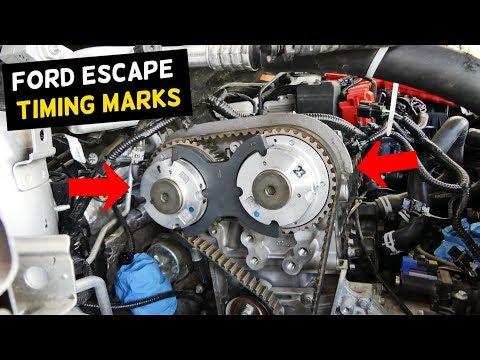




How to Replace the Timing Chain on a 2013-2019 Ford Escape 2.0L EcoBoost (Trim: SE | Engine: Inline 4 2.0L)
Advanced step-by-step guide covering specialty tools, parts, timing setup, torque specs, and safety tips for 2013, 2014, 2015, 2016
How to Replace the Timing Chain on a 2013-2019 Ford Escape 2.0L EcoBoost (Trim: SE | Engine: Inline 4 2.0L)
Advanced step-by-step guide covering specialty tools, parts, timing setup, torque specs, and safety tips for 2013, 2014, 2015, 2016


🔧 Escape - Timing Chain Replacement
Don’t buy a timing belt. Your Escape’s 2.0L EcoBoost uses a timing chain, while the visible external belts are accessory drive belts. Ford’s 2019 engine information identifies the 2.0L EcoBoost and shows its separate drive-belt arrangement. fordservicecontent.com
Timing-chain replacement requires locking the crankshaft and camshafts in exact positions, supporting the engine, removing the front cover, and resealing several precision surfaces. One incorrect tooth can cause severe engine damage, so this isn’t a good first-time repair.
Difficulty Level: Advanced | Estimated Time: 10-15 hours
⚠️ Safety & Precautions
- ⚠️ Disconnect the negative battery terminal before removing engine components.
- ⚠️ Support the vehicle only with properly rated jack stands on solid, level ground.
- ⚠️ Support the engine before removing the right engine mount.
- ⚠️ Never rotate the crankshaft or camshafts independently with the chain removed.
- ⚠️ Do not use painted marks alone to establish valve timing.
- ⚠️ Several fasteners may be torque-to-yield. These stretch during tightening and must not be reused.
- ⚠️ Exact tightening stages must come from current Ford service information for the engine build. Guessing here can destroy the engine.
🔧 Required Tools
You'll need the following tools for this repair:
- Ford 2.0L EcoBoost timing tool set (specialty)
- Engine support bar rated 500kg minimum
- Crankshaft pulley holding tool (specialty)
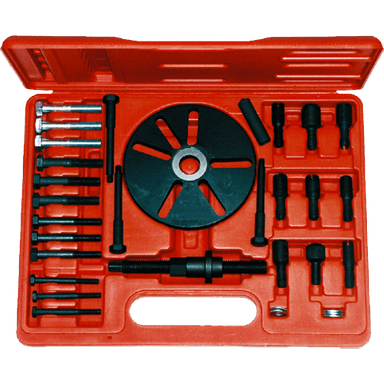
- Harmonic balancer puller (specialty)
- Torque-angle gauge (specialty)
- Torque wrench rated 10-100 Nm
- Torque wrench rated 40-250 Nm
- 3/8-inch drive metric socket set
- 1/2-inch drive metric socket set
- E-Torx socket set
- Metric combination wrench set
- 1/2-inch drive breaker bar
- Plastic gasket scraper
- Sealant dispensing gun
- Engine oil drain pan rated 8 litres minimum
- Coolant drain pan rated 12 litres minimum
- Floor jack rated 2-ton minimum
- Jack stands rated 2-ton minimum
- Wheel chocks
- Nitrile gloves
- Safety glasses
🔩 Required Parts
HowToo sells all the parts you need for this repair:
- Complete engine timing chain kit - Qty: 1
- Timing-chain tensioner - Qty: 1 if not included in kit
- Timing-chain guides - Qty: 1 complete set if not included
- Crankshaft pulley bolt - Qty: 1
- Required one-time-use timing fasteners - Qty: 1 complete set
- Front crankshaft oil seal - Qty: 1
- Timing-cover sealant - Qty: 1
- Valve-cover gasket set - Qty: 1
- Engine oil and filter - Qty: 1 service
- Correct-specification engine coolant - Qty: As required
I’d use a complete kit rather than replacing only the loose component. Opening this engine twice is nobody’s idea of saving money.
📋 Before You Begin
- Park your Escape on level ground, select Park, apply the parking brake, and chock the rear wheels.
- Let the engine become completely cold.
- Record any stored diagnostic trouble codes before disconnecting the battery.
- Disconnect the negative battery terminal using the correctly sized metric socket.
- Confirm that the timing kit includes the chain, guides, tensioner, and required sprockets for the repair.
- Obtain the current Ford workshop procedure before loosening the crankshaft, camshaft, engine-mount, or timing-cover fasteners.
🔨 Step-by-Step Instructions
Follow these steps in order:
Step 1: Prepare and drain the engine
- Use the floor jack and jack stands to raise and securely support the front of the vehicle.
- Use the metric socket set to remove the lower splash shield.
- Place the drain pans underneath, then drain the engine oil and the required amount of coolant.
Step 2: Clear the right side of the engine
- Use the metric socket set to remove the air-intake ducting and components blocking access.
- Remove the right-front wheel and inner splash shield with the metric socket set.
- Release the accessory-belt tensioner with the correct socket and remove the external drive belt.
- Photograph the belt routing before removal.
Step 3: Support the engine
- Install the engine support bar across approved structural points.
- Take the engine’s weight with the support bar before touching the engine mount.
- Use the metric socket set to remove the right engine mount and mounting bracket as directed by Ford service information.
- Torque during installation to the current Ford specification for each fastener.
Step 4: Remove upper-engine components
- Use the metric socket set to remove the ignition coils and valve cover.
- Keep dirt, dropped hardware, and old gasket material out of the open cylinder head.
- Remove any additional brackets, wiring retainers, or hoses identified in the Ford procedure.
Step 5: Position and lock the engine
- Use a socket and breaker bar on the crankshaft bolt to rotate the engine only in its normal running direction.
- Position cylinder number one at the specified timing position.
- Install the Ford crankshaft and camshaft locking tools from the specialty timing set.
- Do not treat the locking tools as counter-hold tools for loosening bolts.
Step 6: Remove the crankshaft pulley
- Use the crankshaft pulley holding tool and breaker bar to remove the crankshaft bolt.
- Use the harmonic balancer puller if the pulley does not slide off by hand.
- Discard the crankshaft bolt if Ford identifies it as one-time-use.
Step 7: Remove the timing cover
- Use the metric and E-Torx socket sets to remove every timing-cover fastener.
- Record each bolt’s position because lengths may differ.
- Separate the cover with the approved pry locations only.
- Never drive a screwdriver between machined sealing surfaces.
Step 8: Remove the old timing components
- Verify that the crankshaft and camshaft locking tools remain fully seated.
- Release or remove the chain tensioner according to the kit and Ford procedure.
- Use the metric socket set to remove the guides, chain, and any sprockets included in the repair.
- Inspect the oil pan and timing area for broken guide material.
- Stop if the camshafts move or the locking tools loosen.
Step 9: Install the new timing set
- Install the new sprockets, chain, guides, and tensioner in the exact Ford sequence.
- Align all designated chain links and timing references before releasing the tensioner.
- Use the torque wrench and torque-angle gauge for every critical fastener.
- Torque each timing fastener to its engine-specific Ford value and angle stage.
- Check every timing mark twice.
Step 10: Verify mechanical timing
- Remove the locking tools only when instructed by the service procedure.
- Use the breaker bar and crankshaft socket to rotate the engine slowly by hand through two complete crankshaft revolutions.
- Stop immediately if solid resistance is felt.
- Return the crankshaft to the timing position and confirm that all locking tools reinstall without forcing them.
Step 11: Reseal the timing cover
- Use the plastic gasket scraper to clean the cover and engine sealing surfaces without scratching them.
- Install a new front crankshaft seal using the proper seal installer supplied or specified for the job.
- Apply the specified sealant bead with the dispensing gun.
- Fit the cover within the sealant manufacturer’s working-time limit.
- Torque the timing-cover fasteners in Ford’s specified sequence.
Step 12: Reassemble the engine
- Install the valve cover with a new gasket using the metric socket set.
- Install the crankshaft pulley with a new crankshaft bolt.
- Use the holding tool, torque wrench, and angle gauge for the specified tightening stages.
- Reinstall the engine-mount bracket and mount while the engine remains supported.
- Reinstall the accessory belt, splash shields, wheel, intake components, and lower cover.
Step 13: Refill and inspect
- Install a new oil filter and refill the engine with the correct oil.
- Refill the cooling system with the correct coolant mixture.
- Reconnect the negative battery terminal using the metric socket.
- Inspect the engine bay for loose connectors, trapped wiring, tools, and open fluid containers.
✅ After Repair
- Disable fuel or ignition as directed by Ford service information and crank briefly to build oil pressure before the first start.
- Start the engine and shut it down immediately if the oil-pressure warning remains on, the chain rattles continuously, or abnormal mechanical noise is heard.
- Check the timing cover, valve cover, crankshaft seal, oil filter, and cooling system for leaks.
- Bleed the cooling system and verify normal heater operation and engine temperature.
- Scan for camshaft/crankshaft correlation codes and variable-cam-timing faults.
- Recheck oil and coolant levels after the engine cools completely.
💰 DIY vs Shop Cost
Shop Cost: $1,800-$3,500 (parts + labor)
DIY Cost: $450-$900 (parts, sealants, fluids, and specialty-tool access)
You Save: $900-$2,600 by doing it yourself!
Specialist labor rates vary considerably. This repair typically occupies a professional technician for approximately 10-15 hours, and damaged valves or sprockets increase the total.
🎯 Ready to get started?
HowToo has opened the timing-chain components matched to your Escape. Buy a complete kit, new one-time-use fasteners, seals, and fluids together, but don’t begin until you have the Ford locking tools and current engine-specific torque sequence.