

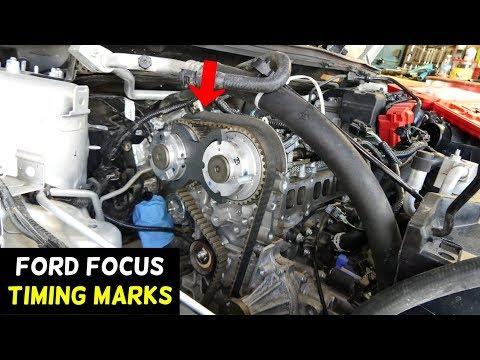



How to Replace the Timing Chain on a 2013-2018 Ford Focus 2.0L (Engine: Inline 4 2.0L)
Step-by-step guide with timing tools, parts, safety tips, and torque checks for 2013, 2014, 2015, 2016, 2017, 2018
How to Replace the Timing Chain on a 2013-2018 Ford Focus 2.0L (Engine: Inline 4 2.0L)
Step-by-step guide with timing tools, parts, safety tips, and torque checks for 2013, 2014, 2015, 2016, 2017, 2018


🔧 Focus - Timing Belt Replacement
Your Focus with the 2.0L naturally aspirated engine does not use a timing belt. It uses a timing chain, which is inside the engine and is not a normal maintenance replacement item like a belt.
If you are hearing timing-chain noise, have cam/crank correlation codes, poor running, or a no-start condition, the repair is a much more advanced timing chain service that requires precise engine timing setup.
Difficulty Level: Advanced | Estimated Time: 8-12 hours
⚠️ Safety & Precautions
- ⚠️ Do not remove timing components unless the engine is properly locked at Top Dead Center. Top Dead Center means piston #1 is at the exact top of its compression stroke.
- ⚠️ Incorrect timing can cause severe engine damage.
- ⚠️ Support the engine before removing any engine mount parts.
- ⚠️ Disconnect the negative battery cable before working near the starter, alternator, or front engine wiring.
- ⚠️ This engine uses sealants and torque-to-yield fasteners in some timing-area repairs. Torque-to-yield bolts are stretched during tightening and should not be reused when specified.
🔧 Required Tools
You'll need the following tools for this repair:
- 8mm socket
- 10mm socket
- 13mm socket
- 15mm socket
- 18mm socket
- 21mm socket
- 3/8-inch ratchet
- 1/2-inch breaker bar
- Torque wrench, 10-150 ft-lb range
- Angle gauge (specialty)
- Ford 2.0L timing tool set (specialty)
- Crankshaft pulley holding tool (specialty)
- Harmonic balancer puller (specialty)
- Engine support bar (specialty)
- Floor jack, rated 2-ton minimum
- Jack stands, rated 2-ton minimum
- Wheel chocks
- Trim clip removal tool
- Gasket scraper, plastic
- Drain pan, 2-gallon minimum
- Safety glasses
- Nitrile gloves
🔩 Required Parts
HowToo sells all the parts you need for this repair:
- Timing chain kit - Qty: 1
- Timing chain tensioner - Qty: 1
- Timing chain guides - Qty: 1 set
- Crankshaft front seal - Qty: 1
- Valve cover gasket set - Qty: 1
- Timing cover sealant - Qty: 1
- Crankshaft pulley bolt - Qty: 1
- Engine oil - Qty: 5 quarts
- Oil filter - Qty: 1
- Engine coolant - Qty: As needed if coolant is drained
📋 Before You Begin
- Park your Focus on level ground, set the parking brake, and chock the rear wheels.
- Let the engine cool fully before opening the cooling system or working around the exhaust side of the engine.
- Use a 10mm socket to disconnect the negative battery cable.
- Plan for the vehicle to be down for a full day or longer.
- This is not a beginner-friendly maintenance job. If you meant the accessory belt, that is a separate, much easier repair.
🔨 Step-by-Step Instructions
Follow these steps in order:
Step 1: Verify the Repair Needed
- Use an OBD-II scan tool to check for camshaft/crankshaft timing codes before disassembly.
- Listen for chain rattle at cold start. A short rattle can point to tensioner or guide wear.
- If there are no symptoms or codes, do not replace the timing chain as routine maintenance.
- Chains are not scheduled belt replacements.
Step 2: Raise and Secure the Vehicle
- Use a floor jack to lift the front of your Focus at the proper front jacking point.
- Place jack stands under the approved support points.
- Use wheel chocks behind the rear tires.
- Never work under a vehicle supported only by a jack.
Step 3: Remove Splash Shield and Right Front Wheel
- Use a lug wrench or 19mm socket to loosen the right front wheel nuts before lifting if needed.
- Use a trim clip removal tool and 8mm socket to remove the lower splash shield fasteners.
- Remove the right front wheel with a 19mm socket.
- When reinstalling the wheel later, torque lug nuts to 135 Nm (100 ft-lbs).
Step 4: Remove the Accessory Drive Belt
- Use the correct belt tensioner tool or ratchet to rotate the belt tensioner.
- Slide the accessory belt off the pulleys.
- Draw a belt routing picture before removal if the label is missing.
- Take a photo first.
Step 5: Support the Engine
- Install an engine support bar across the upper body structure.
- Attach the support chain to a safe engine lifting point.
- Lightly tension the support bar before removing engine mount parts.
- An engine support bar holds the engine from above when a mount is removed.
Step 6: Remove Right-Side Engine Mount Components
- Use 15mm and 18mm sockets to remove the right engine mount fasteners as access requires.
- Keep bolts organized by location.
- Do not force the engine to hang from hoses, wiring, or exhaust parts.
- Final mount torque varies by bolt position; use service-data torque values for the exact fastener during reassembly.
Step 7: Remove the Valve Cover
- Use an 8mm or 10mm socket to remove ignition coil and valve cover fasteners as equipped.
- Disconnect electrical connectors by pressing the locking tabs, not pulling the wires.
- Lift the valve cover straight up to avoid damaging the sealing surface.
- Clean the sealing area with a plastic gasket scraper only.
Step 8: Set Engine to Top Dead Center
- Use a 21mm socket and breaker bar on the crankshaft bolt to rotate the engine clockwise only.
- Rotate until cylinder #1 is at Top Dead Center.
- Install the Ford 2.0L timing tool set to lock the camshafts and crankshaft in position.
- Do not rely on paint marks alone for final timing.
Step 9: Remove Crankshaft Pulley
- Use a crankshaft pulley holding tool to hold the pulley steady.
- Use a 21mm socket and breaker bar to remove the crankshaft pulley bolt.
- Use a harmonic balancer puller if the pulley does not slide off by hand.
- The harmonic balancer is the crank pulley that also helps smooth engine vibration.
Step 10: Remove Timing Cover
- Use 8mm, 10mm, and 13mm sockets to remove timing cover bolts.
- Note bolt lengths and locations during removal.
- Use a plastic gasket scraper to separate the cover gently.
- Do not gouge the aluminum sealing surface.
Step 11: Remove Chain Tensioner, Guides, and Chain
- Confirm the Ford timing tools are still fully seated.
- Use the correct socket to remove the timing chain tensioner bolts.
- Remove the fixed and movable chain guides with the correct socket.
- Lift the timing chain off the sprockets without rotating the crankshaft or camshafts.
Step 12: Install New Timing Chain Components
- Install the new timing chain over the crankshaft and camshaft sprockets with the engine locked.
- Use the timing marks on the chain and sprockets exactly as supplied with the timing kit.
- Install new guides and the new tensioner using the proper socket.
- Torque values are fastener-specific; use the timing kit instructions or Ford service data for each fastener.
Step 13: Release Tensioner and Verify Timing
- Use pliers or the specified release pin method to release the new timing chain tensioner.
- Remove the timing lock tools only after the chain is tensioned.
- Use a 21mm socket and breaker bar to rotate the engine clockwise two full turns by hand.
- Reinstall the Ford timing tools to confirm the crankshaft and camshafts still align.
- If the tools do not fit, stop and retime the engine.
Step 14: Reseal and Install Timing Cover
- Use a plastic gasket scraper to clean the timing cover and engine sealing surfaces.
- Apply timing cover sealant in the correct bead size and path.
- Install the timing cover carefully without smearing the sealant.
- Use 8mm, 10mm, and 13mm sockets to tighten cover bolts in an even pattern.
- Torque values vary by bolt size; use service-data torque values for each bolt location.
Step 15: Install Crankshaft Pulley and New Bolt
- Install the crankshaft pulley fully onto the crankshaft.
- Use a new crankshaft pulley bolt.
- Use a crankshaft pulley holding tool, torque wrench, and angle gauge to tighten the bolt to Ford service-data specification.
- Do not reuse a torque-to-yield crankshaft bolt if replacement is specified.
Step 16: Reinstall Valve Cover
- Install the new valve cover gasket into the cover groove.
- Use an 8mm or 10mm socket to install valve cover bolts by hand first.
- Tighten evenly from the center outward.
- Use service-data torque values for the valve cover bolts to avoid cracking the cover.
Step 17: Reinstall Engine Mount and Belt
- Use 15mm and 18mm sockets to reinstall engine mount components.
- Torque engine mount fasteners to Ford service-data specification for each fastener location.
- Use the belt tensioner tool or ratchet to reinstall the accessory drive belt.
- Confirm the belt ribs are seated correctly on every pulley.
Step 18: Reinstall Shield, Wheel, and Battery Cable
- Use an 8mm socket and trim clip removal tool to reinstall the splash shield fasteners and clips.
- Install the right front wheel with a 19mm socket.
- Lower the vehicle and torque lug nuts to 135 Nm (100 ft-lbs).
- Use a 10mm socket to reconnect the negative battery cable.
✅ After Repair
- Check engine oil level and coolant level before starting.
- Start the engine and let it idle. Listen for abnormal rattling, knocking, or grinding.
- Watch for oil leaks around the valve cover, timing cover, and crankshaft seal.
- Use an OBD-II scan tool to clear codes and check for returning cam/crank correlation codes.
- Road test gently, then recheck for leaks after the engine cools.
💰 DIY vs Shop Cost
Shop Cost: $1,200-$2,000+ (parts + labor)
DIY Cost: $250-$600 (parts only)
You Save: $950-$1,400 by doing it yourself!
Shop labor rates vary but typically run $100-$150/hour. This repair takes a shop approximately 8-12 hours.
🎯 Ready to get started?
HowToo makes it easy: same-day/2-day shipping on every part, plus all the tools and specialty tools you need! Check out the parts and tools sections below to add everything to your cart.