









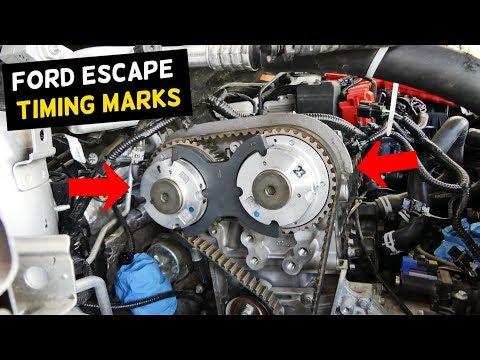




How to Replace the Timing Belt on a 2017 Ford Escape 1.5L EcoBoost (Engine: Inline 4 2.0L)
Step-by-step DIY guide with timing tools, parts, torque specs, coolant refill, and safety tips for 2017
How to Replace the Timing Belt on a 2017 Ford Escape 1.5L EcoBoost (Engine: Inline 4 2.0L)
Step-by-step DIY guide with timing tools, parts, torque specs, coolant refill, and safety tips for 2017


🔧 Escape - Timing Belt Replacement
Your Escape’s 1.5L turbo engine uses a timing belt system that keeps the crankshaft and camshafts synchronized. This repair requires locking the engine in the correct timing position, supporting the engine, removing the right engine mount, replacing the belt components, and verifying timing by hand before startup.
Difficulty Level: Advanced | Estimated Time: 5-7 hours
⚠️ Safety & Precautions
- ⚠️ Incorrect timing can cause major engine damage. Do not rely on paint marks alone.
- ⚠️ Disconnect the negative battery cable before beginning.
- ⚠️ Support the engine before removing the right engine mount.
- ⚠️ Allow the engine to cool fully before draining coolant.
- ⚠️ Never rotate the crankshaft or camshafts separately with the belt removed.
- ⚠️ Use Ford-compatible timing locking tools. These hold the engine parts in exact alignment.
🔧 Required Tools
You'll need the following tools for this repair:
- Metric socket set 8mm-21mm
- Metric wrench set 8mm-19mm
- 1/4-inch drive ratchet
- 3/8-inch drive ratchet
- 1/2-inch drive ratchet
- 1/2-inch drive breaker bar
- 3/8-inch drive torque wrench 5-80 Nm
- 1/2-inch drive torque wrench 20-200 Nm
- Torque angle gauge (specialty)
- Ford 1.5L EcoBoost timing tool kit (specialty)
- Camshaft alignment tool (specialty)
- Crankshaft timing pin (specialty)
- Flywheel locking tool (specialty)
- Crankshaft pulley holding tool (specialty)
- Serpentine belt tool 15mm
- Torx T30 socket
- Torx T40 socket
- E-Torx socket set E8-E14
- Trim clip removal tool
- Flat blade screwdriver
- Needle nose pliers
- Floor jack rated 2-ton minimum
- Jack stands rated 2-ton minimum
- Engine support bar rated 500kg minimum
- Drain pan 10-quart minimum
- Coolant funnel kit
- Paint marker
- Shop towels
- Safety glasses
- Nitrile gloves
🔩 Required Parts
HowToo sells all the parts you need for this repair:
- Timing belt kit - Qty: 1
- Timing belt tensioner - Qty: 1
- Timing belt idler pulley - Qty: 1
- Water pump with gasket - Qty: 1
- Crankshaft pulley bolt - Qty: 1
- Engine mount bolt set - Qty: 1
- Accessory drive belt - Qty: 1
- Engine coolant meeting Ford specification - Qty: 2 gallons
- Timing cover seal set - Qty: 1
📋 Before You Begin
- 🅿️ Park your Escape on level ground, shift to Park, and set the parking brake.
- 🔋 Use a 10mm socket to disconnect the negative battery cable.
- 🧰 A timing tool kit locks the crankshaft and camshafts so the engine timing cannot move while the belt is off.
- 🧰 A torque angle gauge measures extra bolt rotation after torque is applied.
- 📸 Take photos before removing hoses, covers, and brackets.
- 🚫 Do not start the engine until timing has been checked by hand.
🔨 Step-by-Step Instructions
Follow these steps in order:
Step 1: Disconnect Battery and Raise Vehicle
- Use a 10mm socket to loosen and remove the negative battery cable.
- Use a floor jack rated 2-ton minimum to raise the front of your Escape.
- Place jack stands rated 2-ton minimum under the front support points.
- Confirm the vehicle is stable before working underneath it.
Step 2: Remove Right Front Wheel and Splash Shield
- Use a 19mm socket to remove the right front wheel lug nuts.
- Remove the right front wheel.
- Use an 8mm socket and trim clip removal tool to remove the right inner splash shield.
- Set the clips aside so they do not get lost.
Step 3: Drain Coolant
- Place a 10-quart drain pan below the radiator drain area.
- Use needle nose pliers or a flat blade screwdriver to release the lower hose clamp if needed.
- Drain enough coolant to bring the level below the water pump.
- Reinstall the hose or close the drain before continuing.
Step 4: Remove Intake Ducting and Engine Cover
- Use an 8mm socket to loosen the air intake duct clamps.
- Use a flat blade screwdriver to release plastic retainers carefully.
- Lift the engine cover straight upward.
- Take pictures as you go.
Step 5: Remove Accessory Drive Belt
- Use a 15mm serpentine belt tool to rotate the belt tensioner.
- Slide the belt off one pulley while holding the tensioner released.
- Slowly release the tensioner back to its stop.
- Remove the belt from the engine bay.
Step 6: Support Engine
- Install an engine support bar rated 500kg minimum across the upper body support area.
- Attach the support hook to a safe engine lifting point.
- Tighten the support bar until it just holds the engine weight.
- Do not lift the engine more than necessary.
Step 7: Remove Right Engine Mount
- Use 15mm, 18mm, and E-Torx sockets as fitted to remove the right engine mount fasteners.
- Remove the right engine mount and bracket.
- Keep each bolt grouped by its location.
- Discard one-time-use bolts if your replacement kit includes new ones.
Step 8: Remove Timing Covers
- Use an 8mm socket, 10mm socket, Torx T30 socket, and Torx T40 socket as fitted to remove the upper timing cover fasteners.
- Remove the upper timing cover.
- Use the same tools to remove accessible lower cover fasteners.
- Do not pry hard on plastic covers; check for hidden bolts first.
Step 9: Lock Engine Timing
- Use a 21mm socket and 1/2-inch breaker bar on the crankshaft pulley bolt.
- Rotate the engine clockwise only.
- Install the crankshaft timing pin from the Ford 1.5L EcoBoost timing tool kit.
- Install the camshaft alignment tool at the rear of the camshafts.
- If the camshaft tool does not slide in, rotate the crankshaft one full clockwise turn and try again.
- Never force the timing tools into place.
Step 10: Remove Crankshaft Pulley
- Install the flywheel locking tool or crankshaft pulley holding tool.
- Use a 21mm socket and 1/2-inch breaker bar to loosen the crankshaft pulley bolt.
- Remove the crankshaft pulley bolt.
- Remove the crankshaft pulley.
- Discard the old crankshaft pulley bolt.
Step 11: Remove Lower Timing Cover
- Use an 8mm socket, 10mm socket, Torx T30 socket, or Torx T40 socket as fitted to remove the lower timing cover bolts.
- Remove the lower timing cover carefully.
- Check for wiring clips before pulling the cover away.
Step 12: Remove Old Timing Belt
- Use the correct metric socket to slowly release the timing belt tensioner.
- Slide the timing belt off the sprockets and pulleys.
- Do not rotate the crankshaft, camshafts, or pulleys after the belt is removed.
Step 13: Replace Water Pump, Idler, and Tensioner
- Use an 8mm or 10mm socket to remove the water pump bolts.
- Remove the old water pump and gasket.
- Clean the sealing surface with shop towels.
- Install the new water pump and gasket.
- Torque water pump bolts to 10 Nm (89 in-lbs).
- Use the correct metric socket to remove and install the new idler pulley.
- Torque idler pulley bolt to 25 Nm (18 ft-lbs).
- Use the correct metric socket to install the new tensioner loosely.
Step 14: Install New Timing Belt
- Confirm the crankshaft timing pin and camshaft alignment tool are installed.
- Route the new timing belt around the crankshaft sprocket first.
- Continue around the idler pulley, camshaft sprockets, water pump, and tensioner.
- Keep the belt tight on the side opposite the tensioner.
- No slack between crank and cams.
Step 15: Set Belt Tension
- Use the correct metric socket to rotate the tensioner until its pointer aligns with the index mark.
- Use a 3/8-inch drive torque wrench to tighten the tensioner bolt.
- Torque tensioner bolt to 25 Nm (18 ft-lbs).
- Check that the belt teeth sit fully in all sprockets.
Step 16: Verify Timing by Hand
- Remove the camshaft alignment tool and crankshaft timing pin.
- Use a 21mm socket and 1/2-inch breaker bar to rotate the crankshaft clockwise two full turns.
- Reinstall the crankshaft timing pin.
- Reinstall the camshaft alignment tool.
- The tools must fit smoothly without force.
- If they do not fit, stop and reset the belt timing before continuing.
Step 17: Reinstall Crankshaft Pulley
- Install the crankshaft pulley.
- Thread in a new crankshaft pulley bolt by hand.
- Use the crankshaft pulley holding tool to prevent movement.
- Use a 1/2-inch drive torque wrench and torque angle gauge to tighten the bolt.
- Use the torque-plus-angle specification supplied with the new bolt or current Ford service data.
Step 18: Reinstall Covers and Engine Mount
- Use an 8mm socket, 10mm socket, Torx T30 socket, and Torx T40 socket as fitted to reinstall the timing covers.
- Use 15mm, 18mm, and E-Torx sockets as fitted to reinstall the right engine mount and bracket.
- Use new engine mount bolts where supplied.
- Torque engine mount fasteners to the current Ford specification for each bolt location.
- Remove the engine support bar only after the mount is fully tightened.
Step 19: Install Accessory Drive Belt
- Route the new accessory drive belt over the pulleys.
- Use the 15mm serpentine belt tool to rotate the tensioner.
- Slip the belt over the final pulley.
- Release the tensioner slowly.
- Confirm the belt ribs are seated in every pulley groove.
Step 20: Reinstall Splash Shield and Wheel
- Use the trim clip removal tool and 8mm socket to reinstall the right splash shield.
- Install the right front wheel.
- Use a 19mm socket to snug the lug nuts in a star pattern.
- Lower your Escape to the ground.
- Use a 1/2-inch drive torque wrench to tighten the lug nuts.
- Torque wheel lug nuts to 135 Nm (100 ft-lbs).
Step 21: Refill Coolant and Reconnect Battery
- Use a coolant funnel kit to refill the cooling system with Ford-approved coolant.
- Use a 10mm socket to reconnect the negative battery cable.
- Start the engine and set the heater to hot.
- Let the engine idle while air leaves the cooling system.
- Top off coolant as needed.
✅ After Repair
- ✅ Listen for rubbing, chirping, rattling, knocking, or rough running.
- ✅ Watch the temperature gauge during warm-up.
- ✅ Check for coolant leaks around the water pump and hoses.
- ✅ Recheck coolant level after the engine cools completely.
- ✅ Scan for trouble codes if the check engine light comes on.
- ✅ Shut the engine off immediately if it misfires, runs rough, or makes abnormal mechanical noise.
💰 DIY vs Shop Cost
Shop Cost: $900-$1,500 (parts + labor)
DIY Cost: $250-$550 (parts only)
You Save: $650-$950 by doing it yourself!
Shop labor rates vary but typically run $100-$150/hour. This repair takes a shop approximately 5-7 hours.
🎯 Ready to get started?
HowToo makes it easy: same-day/2-day shipping on every part, plus all the tools and specialty tools you need! Check out the parts and tools sections below to add everything to your cart.