

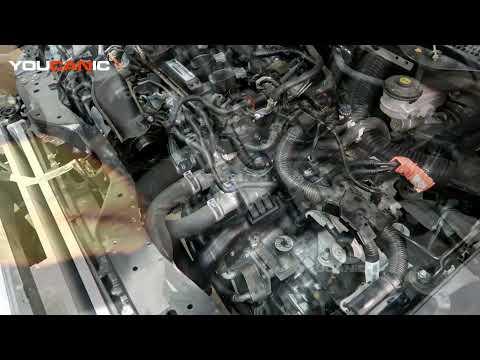






How to Replace the Thermostat on a 2022 Honda CR-V 1.5L Turbo
Step-by-step DIY thermostat replacement with tools, parts list, coolant bleeding, torque specs, safety tips, and cost savings for 1997, 1998, 1999, 2000, 2001
How to Replace the Thermostat on a 2022 Honda CR-V 1.5L Turbo
Step-by-step DIY thermostat replacement with tools, parts list, coolant bleeding, torque specs, safety tips, and cost savings for 1997, 1998, 1999, 2000, 2001


🔧 CR-V - Thermostat Replacement
You’ll be removing the thermostat housing on the front of the engine, swapping in a new thermostat with a fresh seal, then refilling and bleeding the coolant. This helps fix slow warm-up, overheating, or temperature fluctuation issues.
Difficulty Level: Intermediate | Estimated Time: 2-3 hours
⚠️ Safety & Precautions
- 🔥 Only work on the cooling system when the engine is completely cool to avoid serious burns.
- 🧊 Coolant is toxic; keep it off skin, paint, and away from children or pets.
- 🚗 Support your CR-V with jack stands, never just a floor jack.
- 🔌 Battery disconnect is not strictly required, but you may disconnect the negative terminal with a 10mm wrench for extra safety while working near the fan area.
- 🌬️ The radiator fan can start automatically; do not put hands or tools near the fan unless the key is out of the ignition.
- ♻️ Collect old coolant in a drain pan and dispose of it properly; do not pour it on the ground or down drains.
🔧 Required Tools
You'll need the following tools for this repair:
- 🛠️ Floor jack (rated 3-ton minimum)
- 🛠️ Jack stands (rated 3-ton minimum)
- 🛠️ Wheel chocks
- 🛠️ 10mm socket
- 🛠️ 12mm socket
- 🛠️ 3/8" drive ratchet
- 🛠️ 3/8" drive extension (3"-6")
- 🛠️ Torque wrench (5-60 Nm range)
- 🛠️ Flathead screwdriver (medium size)
- 🛠️ Hose clamp pliers (specialty)
- 🛠️ Needle-nose pliers
- 🛠️ Drain pan (8+ liters)
- 🛠️ Coolant funnel or spill-free funnel (specialty)
- 🛠️ Plastic trim clip remover tool
- 🛠️ Shop towels or rags
- 🛠️ Work light
- 🛠️ Safety glasses
- 🛠️ Mechanic gloves
🔩 Required Parts
HowToo sells all the parts you need for this repair:
- 🔩 Engine thermostat (1.5L turbo) - Qty: 1
- 🔩 Thermostat O-ring / seal - Qty: 1
- 🔩 Honda Type 2 premixed coolant (blue) - Qty: 2 gallons
- 🔩 Radiator drain plug washer - Qty: 1
- 🔩 Hose clamps (lower radiator hose, if old/rusty) - Qty: 2
- 🔩 Shop towels / absorbent pads - Qty: 1 pack
📋 Before You Begin
- Park your CR-V on a level surface, set the parking brake, and place wheel chocks behind the rear wheels.
- Let the engine cool completely (at least 1-2 hours after driving).
- Raise the front of the vehicle with a floor jack and support it securely on jack stands at the factory jack points.
- Turn the ignition OFF and remove the key.
- Inside the cabin, set the heater to full HOT and the fan to LOW; leave it there for bleeding later.
- If you choose, disconnect the negative battery cable using a 10mm socket or 10mm wrench.
🔨 Step-by-Step Instructions
Follow these steps in order:
Step 1: Remove the engine undercover (splash shield)
- Use the floor jack to lift the front, then set jack stands under the pinch welds.
- Use a 10mm socket and ratchet to remove the bolts holding the front plastic undercover.
- Use a plastic trim clip remover tool to pop out any plastic clips and lower the shield out of the way.
- Keep bolts and clips grouped by location.
Step 2: Drain the coolant
- Place a drain pan under the radiator drain plug (bottom of radiator, driver side).
- Use a flathead screwdriver to carefully open the radiator drain plug until coolant flows into the pan.
- Open the coolant reservoir cap by hand to let air in and speed draining.
- Once drained, use the flathead screwdriver to gently close the drain plug; do not overtighten.
- Expect 4-5 liters to come out.
Step 3: Remove intake air ducting for access
- From above, locate the plastic air intake duct between the airbox and front grille.
- Use a 10mm socket and ratchet to remove the bolts securing the upper air duct and lift it out.
- If needed, use the plastic trim clip remover tool to release any clips.
- This opens up space to see the thermostat housing where the lower radiator hose meets the engine.
Step 4: Locate and remove the lower radiator hose from the thermostat housing
- Follow the lower radiator hose from the bottom of the radiator to where it connects to the engine—this fitting is the thermostat housing.
- Use hose clamp pliers to compress the spring clamp on the hose at the thermostat housing, then slide the clamp back on the hose.
- Gently twist the hose by hand to break it free, then pull it off the housing; use needle-nose pliers if needed to help move the clamp further back.
- Have shop towels ready; some extra coolant will spill out.
Step 5: Remove the thermostat housing cover
- Identify the thermostat housing cover—usually held on by 2-3 small bolts where the hose attached.
- Use a 10mm socket, extension, and ratchet to remove the housing bolts.
- Gently pull the housing cover away; you may need to wiggle it slightly by hand.
- Note bolt lengths and positions so they go back in the same locations.
Step 6: Remove the old thermostat
- Pull the thermostat straight out of the engine by hand; note its orientation (which side faces out/up).
- Remove the old O-ring or seal from the housing or the thermostat with your fingers.
- Use shop towels to clean the mating surfaces on the housing and engine—no old rubber or corrosion should remain.
- Do not scratch the aluminum surfaces.
Step 7: Install the new thermostat and seal
- Fit the new O-ring/seal onto the new thermostat by hand, seated evenly in its groove.
- Install the new thermostat into the engine in the same orientation as the old one; usually the “jiggle pin” or small bleed hole faces upward.
- Lightly coat the O-ring with a bit of clean coolant using a shop towel to help it seat and avoid pinching.
Step 8: Reinstall the thermostat housing cover
- Position the housing cover back over the thermostat by hand, ensuring the O-ring stays in place.
- Install the housing bolts by hand first to avoid cross-threading.
- Use a 10mm socket, extension, and ratchet to snug each bolt evenly.
- Then use a torque wrench with a 10mm socket to tighten the bolts to 10 Nm (7.4 ft-lbs).
- Tighten bolts in a crisscross pattern.
Step 9: Reattach the lower radiator hose
- Push the lower radiator hose fully onto the thermostat housing by hand until it seats against the stop.
- Use hose clamp pliers to compress the clamp and slide it back into its original position over the hose end.
- Double-check by hand that the hose is fully seated and the clamp is centered over the hose barb.
Step 10: Reinstall intake ducting and undercover
- From above, reinstall the plastic air intake duct and line up the mounting holes.
- Use a 10mm socket and ratchet to reinstall the duct bolts and snug them; no torque spec is critical here, just firm hand tight.
- Underneath, position the engine undercover back in place.
- Use the plastic trim clip remover tool (by hand) to seat clips, then use a 10mm socket and ratchet to reinstall all shield bolts.
Step 11: Refill the cooling system
- Lower the vehicle back to the ground using the floor jack and remove the jack stands.
- Remove the radiator cap (if accessible) or use the reservoir opening and place a coolant funnel in the neck.
- Slowly pour Honda Type 2 coolant into the funnel by hand until the radiator and reservoir are full.
- Squeeze the upper and lower radiator hoses by hand to help push air out.
Step 12: Bleed air from the cooling system
- With the funnel still in place, start the engine using the key.
- Set the cabin heater to full HOT and fan to MEDIUM using the control knobs.
- Let the engine idle, occasionally raising RPM to about 2000–2500 using the accelerator pedal for 20–30 seconds at a time.
- Watch for air bubbles coming up through the coolant funnel; keep adding coolant by hand to maintain the level.
- Continue until the radiator fan comes on and goes off at least twice, and you get steady heat inside the cabin.
- Turn off the engine with the key, let it cool, then remove the funnel and install the radiator/reservoir caps by hand.
Step 13: Final checks for leaks and coolant level
- Once the engine has cooled, check the coolant reservoir level and top off to the “MAX” line by hand if needed.
- Use a work light and visually inspect the thermostat housing area, lower hose connection, and drain plug for any leaks.
- Wipe any wet spots with shop towels and recheck after a short drive.
✅ After Repair
- Start the engine and watch the temperature gauge; it should warm up to normal and stay steady.
- Confirm strong, steady heat from the cabin vents with the heater on HOT.
- After your first 10–15 minute drive and full cool-down, recheck the coolant level and top off to the “MAX” line if needed.
- Look under your CR-V and around the thermostat housing for any fresh coolant leaks for the next few drives.
💰 DIY vs Shop Cost
Shop Cost: $300-$450 (parts + labor)
DIY Cost: $60-$120 (parts only)
You Save: $240-$330 by doing it yourself!
Shop labor rates vary but typically run $100-$150/hour. This repair takes a shop approximately 1.5-2.0 hours.
🎯 Ready to get started?
HowToo makes it easy: same-day/2-day shipping on every part, plus all the tools and specialty tools you need! Check out the parts and tools sections above to add everything to your cart.