

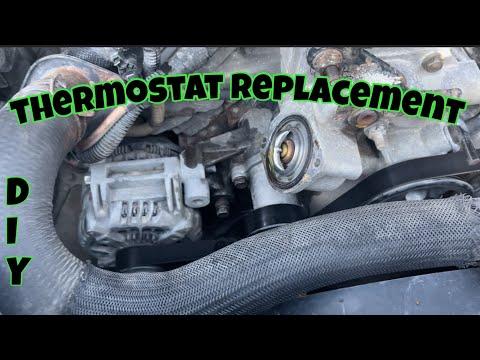





How to Replace the Thermostat on a 2019 Jeep Grand Cherokee 5.7L
Step-by-step DIY thermostat replacement with tools, parts list, torque specs, coolant bleed, safety tips, and cost savings
How to Replace the Thermostat on a 2019 Jeep Grand Cherokee 5.7L
Step-by-step DIY thermostat replacement with tools, parts list, torque specs, coolant bleed, safety tips, and cost savings


🔧 Grand Cherokee - Thermostat Replacement
You’ll be removing the thermostat housing at the front of the engine, swapping in a new thermostat and seal, then refilling and bleeding the cooling system. This fixes problems like running too cold, overheating, or uneven heater performance when the thermostat is stuck.
Difficulty Level: Intermediate | Estimated Time: 2–3 hours
⚠️ Safety & Precautions
- ⚠️ Let the engine cool completely (at least 1–2 hours). Hot coolant can cause serious burns.
- ⚠️ Never open the coolant reservoir cap when the engine is hot or under pressure.
- ⚠️ Coolant is poisonous to people and animals. Keep in a closed container and clean spills immediately.
- ⚠️ Support the front of the Grand Cherokee on jack stands if you raise it. Never work under a vehicle held only by a jack.
- ⚠️ Avoid getting coolant on the drive belt or electrical connectors; wipe any spills right away.
- Battery disconnect is not required, but keep the key off and fob away from the vehicle while working.
🔧 Required Tools
You'll need the following tools for this repair:
- Metric socket set (8mm–15mm) with ratchet
- 3/8" drive torque wrench (5–80 ft-lbs range)
- Short extension (3"–6") for 3/8" ratchet
- 10mm socket
- 13mm socket
- Flathead screwdriver (medium size)
- Hose clamp pliers (specialty)
- Needle-nose pliers
- Plastic trim tool set
- Drain pan (at least 10-liter capacity)
- Funnel with long neck
- Small pick or hook tool
- Shop towels or rags
- Floor jack (rated 3-ton minimum)
- Jack stands (rated 3-ton minimum)
- Work light or flashlight
- Safety glasses
- Nitrile or mechanic’s gloves
🔩 Required Parts
HowToo sells all the parts you need for this repair:
- Engine coolant thermostat with housing seal/gasket (5.7L) - Qty: 1
- Lower radiator hose clamp (spring type or screw type, matching original) - Qty: 1–2
- Engine coolant (OAT, HOAT-free, FCA-spec, concentrate) - Qty: 2 gallons
- Distilled water - Qty: 2 gallons
- Coolant-safe RTV sealant (only if specified with non-OEM housing) - Qty: 1
- Shop towels - Qty: 1 pack
📋 Before You Begin
- Park the Grand Cherokee on level ground, engage the parking brake, and shift to P.
- Let the engine cool until the upper radiator hose is cool to the touch.
- Open the hood and remove the engine cover by pulling upward at the corners.
- Turn the heater controls inside the vehicle to full hot; this helps coolant flow through the heater core during bleeding.
- If you need more room under the front, raise the front with the floor jack and support it securely on jack stands under the proper frame points.
🔨 Step-by-Step Instructions
Follow these steps in order:
Step 1: Locate the thermostat housing
- Use the work light or flashlight and look at the front of the 5.7L engine, low and toward the passenger side.
- Find where the lower radiator hose connects to the engine block; that metal piece is the thermostat housing.
- Note the routing of the lower hose and any nearby wiring or brackets.
Step 2: Drain enough coolant
- Place the drain pan under the lower radiator area.
- Slowly loosen the coolant reservoir cap by hand to release pressure, but keep it sitting loosely on top to reduce splashing.
- Use the hose clamp pliers or needle-nose pliers to squeeze the lower radiator hose clamp at the radiator and slide it back along the hose.
- Gently twist the lower radiator hose off the radiator using your hands or a flathead screwdriver as a lever, being careful not to damage the plastic nipple.
- Let coolant drain into the pan until the flow slows to a drip. This usually drains several liters.
- Mark the pan “used coolant” clearly.
Step 3: Access the thermostat housing area
- Follow the lower radiator hose back to the thermostat housing on the engine.
- Use the hose clamp pliers again to slide the clamp away from the housing.
- Carefully twist and pull the hose off the thermostat housing by hand; use the flathead screwdriver gently if stuck.
- Move the hose aside where it won’t drip on you while working.
Step 4: Remove the thermostat housing
- Use the 10mm socket with ratchet and short extension to remove the two bolts securing the thermostat housing to the engine.
- Keep one hand supporting the housing as you remove the last bolt so it doesn’t drop.
- Gently pull the housing away from the engine; a little coolant will spill, so keep the drain pan directly underneath.
- Note the exact position and orientation of the thermostat before removing it. Take a quick photo for reference.
Step 5: Remove the old thermostat and seal
- Pull the old thermostat straight out of the engine by hand.
- Use the small pick or hook tool to carefully remove the old rubber seal or O-ring from the housing or engine groove, depending on design.
- Be gentle with the pick; do not scratch the aluminum surfaces.
- Use shop towels to wipe both mating surfaces (housing and engine) clean and dry.
Step 6: Install the new thermostat and seal
- Compare the new thermostat to the old one to confirm same size and shape.
- Install the new seal or O-ring into the groove on the housing or around the thermostat, matching the original orientation.
- Lightly moisten the O-ring with clean coolant using your finger; this helps it seat correctly.
- Place the new thermostat into the engine with the same orientation as the old one (spring end toward the engine, jiggle pin/vent up if present).
- Orientation matters; refer to your photo.
Step 7: Reinstall the thermostat housing
- Position the housing over the new thermostat, lining up the bolt holes.
- Install the two housing bolts by hand to avoid cross-threading.
- Use the 10mm socket and ratchet to snug both bolts evenly, alternating side to side.
- Use the torque wrench with 10mm socket to tighten the housing bolts to 11 N·m (97 in-lbs, about 8 ft-lbs).
- Do not overtighten; the housing can crack.
Step 8: Reattach the lower radiator hose
- Slide the lower radiator hose fully onto the thermostat housing nipple until it stops.
- Use the hose clamp pliers to move the clamp back to its original position over the nipple ridge.
- Reattach the hose to the radiator end if you removed it there, again positioning the clamp correctly.
- Check that both clamps are centered and tight on the hose.
Step 9: Check and close any coolant bleed screw (if equipped)
- Some 5.7L setups have a small bleed screw on a coolant tube near the thermostat or upper hose.
- If you see a small hex or screw with a boss labeled for bleed, use the flathead screwdriver or appropriate socket to confirm it is gently closed for now (snug only, not over-tightened).
Step 10: Mix and fill new coolant
- In a clean container, mix the OAT coolant concentrate with distilled water at a 50/50 ratio, unless your coolant is premixed.
- Place the funnel into the coolant reservoir opening.
- Slowly pour the 50/50 mix into the reservoir until it reaches the “MAX” or “FULL” mark.
- If you identified a bleed screw earlier, open it slightly now using the flathead screwdriver or small socket until coolant (no air bubbles) starts to come out, then gently tighten it to about 3 N·m (hand snug only).
Step 11: Initial air purge
- Leave the reservoir cap off for the moment.
- Start the engine and let it idle. Keep an eye on the coolant level in the reservoir.
- As the engine warms up, you may see bubbles come up in the reservoir. Add more coolant mix as the level drops, keeping it near the MAX line.
- Lightly squeeze the upper and lower radiator hoses by hand (wear gloves) to help push air pockets out.
- Watch the temperature gauge on the dash to ensure it stays in the normal range.
Step 12: Verify thermostat operation and final bleeding
- After about 10–15 minutes, the thermostat should open. You’ll feel the upper radiator hose get hot and more coolant flow.
- Turn the cabin heater fan on medium and confirm you get good hot air; this shows coolant is circulating through the heater core.
- Once bubbles stop appearing and the level stabilizes near MAX, install the reservoir cap by hand until fully seated.
- Let the engine run another 5–10 minutes, confirming the temperature gauge stays steady at normal mid-range.
Step 13: Clean up and re-check for leaks
- Turn off the engine and let it cool for at least 30–60 minutes.
- Use shop towels to wipe around the thermostat housing and hose connections so any new leaks are easy to spot.
- Check under the Grand Cherokee and around the lower radiator hose, thermostat housing, and drain area for any signs of dripping.
- If you raised the vehicle, use the floor jack to lift slightly, remove the jack stands, and lower it safely.
- Pour the old coolant from the drain pan into sealed containers for proper disposal at a recycling center or shop.
✅ After Repair
- On the first drive, watch the temperature gauge. It should warm up steadily to the normal middle area and stay there.
- After the engine has fully cooled (later the same day or next morning), check the coolant level in the reservoir and top off with the same 50/50 coolant mix if below the MAX line.
- Inspect around the thermostat housing and lower radiator hose after a couple of drives for any dried coolant traces or wet spots.
- If you notice overheating, no cabin heat, or fluctuating temperature gauge, there may still be air in the system; repeat the bleed steps (engine running at idle, heater on hot, top up as needed).
💰 DIY vs Shop Cost
Shop Cost: $350–$550 (parts + labor)
DIY Cost: $90–$180 (thermostat, coolant, small supplies)
You Save: $170–$460 by doing it yourself!
Shop labor rates vary but typically run $100–$150/hour. This repair takes a shop approximately 1.5–2.0 hours.
🎯 Ready to get started?
HowToo makes it easy: same-day/2-day shipping on every part, plus all the tools and specialty tools you need! Check out the parts and tools sections above to add everything to your cart.