

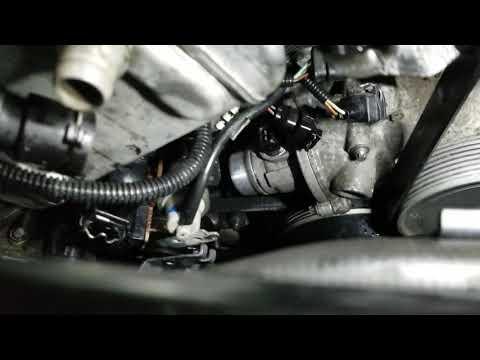







How to Replace the Thermostat on a 2016 BMW 550i (N63TU) - Cooling System Repair
Step-by-step thermostat/housing swap with required tools, parts list, torque specs, and coolant refill & bleed tips for 2011, 2012, 2013, 2014, 2015, 2016
How to Replace the Thermostat on a 2016 BMW 550i (N63TU) - Cooling System Repair
Step-by-step thermostat/housing swap with required tools, parts list, torque specs, and coolant refill & bleed tips for 2011, 2012, 2013, 2014, 2015, 2016


🔧 550i - Thermostat Replacement
The thermostat controls coolant flow to keep your engine at the correct temperature. When it sticks open or closed, you can get slow warm-up, overheating, or fault codes. Replacing it involves draining coolant, removing access components, swapping the thermostat, then refilling and bleeding the cooling system.
Assumption: This is the common N63TU thermostat/housing service on your 550i; access and fastener types can vary slightly by build date.
Difficulty Level: Advanced | Estimated Time: 3-6 hours
⚠️ Safety & Precautions
- ⚠️ Never open the coolant cap on a hot engine; let it cool fully.
- ⚠️ Coolant is toxic; keep it off skin and away from pets.
- ⚠️ The electric fan can run unexpectedly; keep hands/tools clear.
- ⚠️ Support the car with jack stands; never rely on a jack alone.
- Disconnecting the battery is recommended when working near major electrical connectors.
🔧 Required Tools
You'll need the following tools for this repair:
- Safety glasses
- Nitrile gloves
- Wheel chocks
- Floor jack (rated 3-ton minimum)
- Jack stands (rated 3-ton minimum)
- Drain pan (10+ quart)
- Funnel with long neck
- Trim clip removal tool
- Pick tool
- Hose clamp pliers
- 1/4" drive ratchet
- 3/8" drive ratchet
- Socket set 8mm-13mm
- Torx T25 bit
- Torx T30 bit
- E-Torx socket set E8-E12
- Extension set 3" and 6"
- Torque wrench 5-60 Nm
- Cooling system vacuum fill tool (specialty)
- Scan tool capable of BMW coolant bleed function (specialty)
🔩 Required Parts
HowToo sells all the parts you need for this repair:
- Engine thermostat assembly with seal/O-ring - Qty: 1
- Thermostat mounting bolts (recommended if aluminum) - Qty: 1 set
- BMW-compatible coolant concentrate (phosphate/nitrite-free) - Qty: 1 gallon
- Distilled water - Qty: 1 gallon
- Hose O-rings/clips (as needed) - Qty: 1 set
- Intake/throttle body gaskets (only if removed) - Qty: 1 set
- Shop towels/absorbent pads - Qty: 1
📋 Before You Begin
- Park on level ground, set the parking brake, and let the engine cool completely.
- Use wheel chocks at the rear wheels.
- Raise the front with a floor jack and support with jack stands at proper lift points.
- Place a drain pan under the front of the engine/radiator area.
- Recommended: disconnect the negative battery terminal using a 10mm socket.
🔨 Step-by-Step Instructions
Follow these steps in order:
Step 1: Remove the lower splash shield (undertray)
- Use a Torx T25 bit and 8mm socket to remove the fasteners.
- Use a trim clip removal tool for plastic clips so they don’t break.
Step 2: Drain the coolant
- Slowly open the coolant expansion tank cap by hand to release any leftover pressure.
- Use the appropriate socket set 8mm-13mm or hand-turn drain (varies) to open the radiator drain and/or lower hose drain point.
- Use hose clamp pliers to release spring clamps if you’re draining from a hose.
- Save coolant only if it’s clean and new.
Step 3: Remove engine covers and intake ducting for access
- Pull off the top engine cover(s) by hand (they’re usually grommet-mounted).
- Use a socket set 8mm-13mm and Torx T30 bit to loosen intake clamps and remove intake tubes/ducts that block access.
- Unplug any sensors by pressing the locking tab, then pulling straight off (no yanking on wires).
Step 4: Identify the thermostat and disconnect connectors/hoses
- The thermostat is on the front of the engine and has an electrical connector (map-controlled thermostat).
- Disconnect the thermostat electrical connector by releasing the lock tab; use a pick tool gently if needed.
- Place shop towels under the area. Use hose clamp pliers to release hose clamps and remove coolant hoses from the thermostat.
- If a hose is stuck, twist it gently first—don’t pry hard on plastic fittings.
Step 5: Remove the thermostat assembly
- Use an E-Torx socket (commonly E10/E12) with a 3/8" drive ratchet and extensions to remove the thermostat mounting bolts.
- Remove the thermostat and seal/O-ring.
- Clean the mating surface with a shop towel. Do not gouge the aluminum surface.
Step 6: Install the new thermostat
- Lightly wet the new O-ring with fresh coolant so it seats without tearing.
- Install the thermostat in the same orientation as removed.
- Start all bolts by hand to avoid cross-threading.
- Tighten evenly using an E-Torx socket and finish with a torque wrench 5-60 Nm.
- Torque to 10 Nm (7 ft-lbs) unless your included hardware instructions specify otherwise.
Step 7: Reconnect hoses and electrical connector
- Reinstall coolant hoses fully seated, then reinstall clamps using hose clamp pliers.
- Reconnect the thermostat electrical connector until it clicks.
- Reinstall any brackets/lines removed using the same socket set 8mm-13mm and Torx bits.
Step 8: Reinstall intake ducting and undertray
- Reinstall intake tubes and clamps using a socket set 8mm-13mm and Torx T30 bit.
- Reinstall engine cover(s) by pressing them into the grommets.
- Reinstall the undertray using a Torx T25 bit and 8mm socket.
Step 9: Refill and bleed the cooling system
- Mix coolant 50/50 coolant concentrate and distilled water unless your coolant is pre-mixed.
- Best method: use a cooling system vacuum fill tool (specialty) to pull vacuum and refill without air pockets.
- If using a scan tool: run the Scan tool capable of BMW coolant bleed function (specialty) after filling to circulate coolant and purge air.
- Top off coolant as the level drops during bleeding.
- Air pockets can cause overheating fast.
Step 10: Reconnect battery and check for leaks
- If disconnected, reconnect the battery negative terminal using a 10mm socket.
- Start the engine and let it idle while you inspect the thermostat area with a flashlight (no coolant dripping).
- Bring the engine up to operating temperature and verify the heater blows hot.
✅ After Repair
- Check the coolant level again after the first full heat cycle (warm up, then cool down completely).
- Inspect for leaks for the next 2-3 drives, especially around hose connections.
- If you had a check-engine light or coolant thermostat code, clear codes with a scan tool and confirm it does not return.
- If the temperature rises quickly or you lose cabin heat, shut it off and re-bleed (sign of trapped air).
💰 DIY vs Shop Cost
Shop Cost: $900-$1,600 (parts + labor)
DIY Cost: $180-$450 (parts only)
You Save: $720-$1,150 by doing it yourself!
Shop labor rates vary but typically run $100-$150/hour. This repair takes a shop approximately 3-6 hours.
🎯 Ready to get started?
HowToo makes it easy: same-day/2-day shipping on every part, plus all the tools and specialty tools you need! Check out the parts and tools sections below to add everything to your cart.