









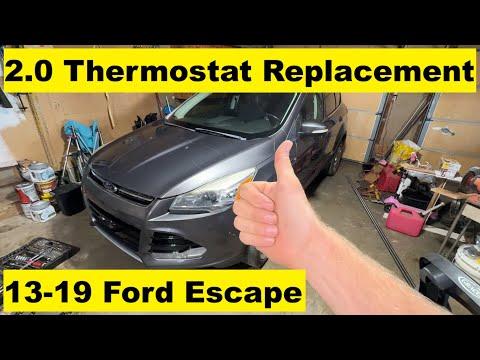





How to Replace the Thermostat on a 2013-2019 Ford Escape (Engine: Inline 4 2.0L)
Step-by-step cooling system repair guide with tools, parts, torque specs, and bleeding tips for 2013, 2014, 2015, 2017, 2018, 2019
How to Replace the Thermostat on a 2013-2019 Ford Escape (Engine: Inline 4 2.0L)
Step-by-step cooling system repair guide with tools, parts, torque specs, and bleeding tips for 2013, 2014, 2015, 2017, 2018, 2019


🔧 Escape - Thermostat Replacement
Replacing the thermostat on your Escape involves draining part of the coolant, removing the thermostat housing, installing a new thermostat and seal, then refilling and bleeding air from the cooling system. This repair is important because a sticking thermostat can cause overheating, poor heater performance, or slow engine warm-up.
Difficulty Level: Intermediate | Estimated Time: 2-3 hours
⚠️ Safety & Precautions
- ⚠️ Let the engine cool completely before starting. Hot coolant can spray out and burn you badly.
- ⚠️ Never remove the coolant reservoir cap while the engine is hot.
- ⚠️ Coolant is toxic. Keep it away from pets, children, and storm drains.
- ⚠️ If you raise your Escape, support it with jack stands. Never work under a vehicle held only by a jack.
- ⚠️ The radiator fan can turn on automatically. Keep hands, sleeves, and tools away from the fan area.
- ⚠️ Battery disconnect is not required for this thermostat replacement.
🔧 Required Tools
You'll need the following tools for this repair:
- 8mm socket
- 10mm socket
- 1/4-inch ratchet
- 3/8-inch ratchet
- 6-inch extension
- Torque wrench rated 5-30 Nm
- Flat-blade screwdriver
- Hose clamp pliers
- Pick tool set
- Drain pan 2-gallon minimum
- Spill-free coolant funnel kit
- Plastic trim clip remover
- Floor jack rated 2-ton minimum
- Jack stands rated 2-ton minimum
- Nitrile gloves
- Safety glasses
- Shop towels
🔩 Required Parts
HowToo sells all the parts you need for this repair:
- Thermostat assembly with seal - Qty: 1
- Thermostat housing gasket or O-ring - Qty: 1
- Motorcraft-compatible orange coolant premix - Qty: 1-2 gallons
- Distilled water - Qty: 1 gallon if using coolant concentrate
- Replacement coolant hose clamps - Qty: As needed
📋 Before You Begin
- 🅿️ Park your Escape on level ground, shift to Park, and set the parking brake.
- ❄️ Wait until the engine is fully cold before opening the cooling system.
- 🧰 A spill-free coolant funnel is a funnel that attaches to the coolant reservoir and helps remove trapped air.
- 🧰 Hose clamp pliers are pliers designed to squeeze spring-style hose clamps safely.
- 🧰 A pick tool is a small hooked tool used to gently loosen stuck hoses or seals.
- 📌 Keep bolts and clips organized as you remove them. A small tray helps a lot.
🔨 Step-by-Step Instructions
Follow these steps in order:
Step 1: Raise and support the front
- Use a floor jack rated 2-ton minimum to lift the front of your Escape enough to access the lower splash shield.
- Place jack stands rated 2-ton minimum under the front support points.
- Lower the vehicle gently onto the jack stands.
- Push the vehicle lightly to make sure it is stable before working underneath.
- Safety first. No jack-only work.
Step 2: Remove the lower splash shield
- Put on safety glasses and nitrile gloves.
- Use a plastic trim clip remover to remove the plastic retaining clips.
- Use an 8mm socket and 1/4-inch ratchet to remove the splash shield screws.
- Lower the splash shield and set it aside.
Step 3: Release cooling system pressure
- Confirm the engine is cold.
- Slowly loosen the coolant reservoir cap by hand.
- Pause if you hear pressure escaping, then remove the cap once pressure is gone.
Step 4: Drain part of the coolant
- Place a drain pan 2-gallon minimum under the radiator drain area.
- If accessible, use a flat-blade screwdriver to open the radiator drain plug slowly.
- If the drain plug is not easy to access, use hose clamp pliers to release the lower radiator hose clamp and carefully loosen the hose enough to drain coolant.
- Drain about 1 gallon of coolant, or enough to lower the level below the thermostat housing.
- Close the drain plug gently with the flat-blade screwdriver, or reinstall the lower hose and clamp using hose clamp pliers.
Step 5: Locate the thermostat housing
- Follow the large radiator hose from the radiator toward the engine.
- The hose connects to the thermostat housing on the engine side.
- Use shop towels to clean dirt and coolant residue around the housing area.
- Clean first. Dirt causes leaks.
Step 6: Remove the coolant hoses
- Use hose clamp pliers to squeeze each spring clamp on the thermostat housing hoses.
- Slide each clamp back along the hose.
- Use a pick tool set gently between the hose and fitting to break the hose loose if it is stuck.
- Twist each hose by hand, then pull it off the housing.
- Use shop towels to catch leftover coolant.
Step 7: Remove the thermostat housing
- Use a 10mm socket, 6-inch extension, and 3/8-inch ratchet to remove the thermostat housing bolts.
- Pull the housing straight away from the engine.
- Remove the old thermostat assembly and old seal.
- Check the engine side carefully to make sure the old O-ring or gasket did not stick in place.
Step 8: Clean the sealing surface
- Use shop towels to wipe the thermostat mounting surface clean.
- If old seal material remains, use the edge of a plastic trim clip remover gently to lift it away.
- Do not use metal scrapers on the aluminum sealing surface.
- The surface should be clean, dry, and smooth before the new thermostat goes in.
Step 9: Install the new thermostat and seal
- Compare the new thermostat assembly with seal to the old one before installing it.
- Install the new thermostat in the same direction as the old thermostat.
- Lightly wet the new O-ring with clean coolant using your gloved finger.
- Seat the thermostat and seal evenly so the seal does not pinch.
Step 10: Reinstall and torque the thermostat housing
- Position the thermostat housing by hand.
- Start all bolts by hand first to avoid cross-threading.
- Use a 10mm socket, 6-inch extension, and torque wrench rated 5-30 Nm to tighten the bolts evenly.
- Torque to 10 Nm (89 in-lbs).
- Do not overtighten. Plastic housings can crack.
Step 11: Reconnect the coolant hoses
- Push each hose fully onto its thermostat housing fitting by hand.
- Use hose clamp pliers to move each spring clamp back to its original position.
- Make sure each clamp sits behind the raised bead on the fitting.
- Replace any weak or rusty clamp with a replacement coolant hose clamp.
Step 12: Refill the cooling system
- Install the spill-free coolant funnel kit onto the coolant reservoir.
- Add Motorcraft-compatible orange coolant premix slowly into the reservoir.
- If using concentrate, mix it 50/50 with distilled water before adding it.
- Fill until the reservoir reaches the MAX line and the funnel has a small amount of coolant in it.
Step 13: Bleed air from the cooling system
- Start the engine with the spill-free coolant funnel kit installed.
- Set the heater temperature to full hot and the blower speed to low.
- Let the engine idle while watching the coolant level in the funnel.
- Add coolant as the level drops and air bubbles come out.
- Wait until the upper radiator hose gets hot and the radiator fan cycles on.
- Keep your hands clear of belts and fans while the engine is running.
Step 14: Seal the system and check for leaks
- Turn the engine off.
- Let it cool until the coolant is safe to handle.
- Remove the spill-free coolant funnel kit and reinstall the coolant reservoir cap by hand.
- Use shop towels to dry the thermostat area.
- Inspect the housing, hose connections, and radiator drain area for leaks.
Step 15: Reinstall the lower splash shield
- Lift the splash shield into place by hand.
- Use an 8mm socket and 1/4-inch ratchet to reinstall the screws.
- Use a plastic trim clip remover to help align and reinstall the plastic clips.
- Snug the screws only. Do not strip the plastic retainers.
Step 16: Lower your Escape
- Use the floor jack rated 2-ton minimum to lift the front slightly off the jack stands.
- Remove the jack stands rated 2-ton minimum.
- Lower the vehicle slowly to the ground.
✅ After Repair
- ✅ Take a short 10-15 minute test drive while watching the temperature gauge.
- ✅ Park, let the engine cool completely, then recheck the coolant level.
- ✅ Top off the coolant reservoir to the MAX line if needed.
- ✅ Recheck for leaks around the thermostat housing and hose connections.
- ✅ Confirm the cabin heater blows hot air once the engine is warm.
- ✅ Dispose of used coolant at a proper recycling or hazardous-waste facility.
💰 DIY vs Shop Cost
Shop Cost: $350-$650 (parts + labor)
DIY Cost: $60-$160 (parts only)
You Save: $290-$490 by doing it yourself!
Shop labor rates vary but typically run $100-$150/hour. This repair takes a shop approximately 1.5-2.5 hours.
🎯 Ready to get started?
HowToo makes it easy: same-day/2-day shipping on every part, plus all the tools and specialty tools you need! Check out the parts and tools sections below to add everything to your cart.