

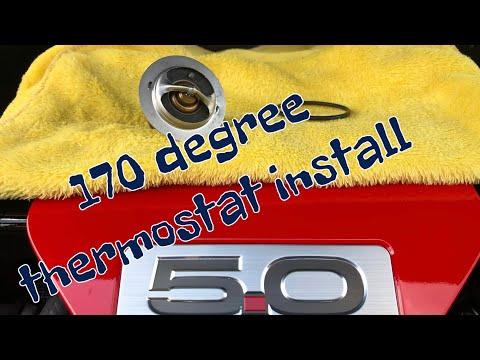





How to Replace the Thermostat on a 2011-2023 Ford Mustang (Engine: V8 5.0L)
Step-by-step cooling system repair guide with tools, parts, torque specs, and safety tips for 2011, 2012, 2013, 2014, 2015, 2016, 2017
How to Replace the Thermostat on a 2011-2023 Ford Mustang (Engine: V8 5.0L)
Step-by-step cooling system repair guide with tools, parts, torque specs, and safety tips for 2011, 2012, 2013, 2014, 2015, 2016, 2017


🔧 Mustang - Thermostat Replacement
Replacing the thermostat on your Mustang helps restore proper engine warm-up and cooling control. The thermostat sits in the coolant outlet/housing area and opens as the engine warms up so coolant can flow through the radiator.
Difficulty Level: Beginner-Intermediate | Estimated Time: 1.5-2.5 hours
⚠️ Safety & Precautions
- ⚠️ Work only on a completely cold engine. Hot coolant can cause serious burns.
- ⚠️ Never remove the coolant reservoir cap when the engine is hot or warm.
- ⚠️ Coolant is toxic to people and animals. Catch all spills and clean them immediately.
- ⚠️ Disconnecting the battery is not normally required for this repair, but keep tools away from the battery terminals.
- ⚠️ Use jack stands if you raise the front of the car. Never rely on a floor jack alone.
🔧 Required Tools
You'll need the following tools for this repair:
- 8mm socket
- 10mm socket
- 1/4-inch drive ratchet
- 3/8-inch drive ratchet
- 6-inch extension
- Flat-blade screwdriver
- Hose clamp pliers
- Drain pan 2-gallon minimum
- Funnel
- Coolant vacuum fill tool (specialty)
- Cooling system pressure tester (specialty)
- Plastic trim tool
- Torque wrench inch-pound range
- Floor jack rated 3-ton minimum
- Jack stands rated 3-ton minimum
- Nitrile gloves
- Safety glasses
- Shop towels
🔩 Required Parts
HowToo sells all the parts you need for this repair:
- Engine coolant thermostat - Qty: 1
- Thermostat housing seal/O-ring - Qty: 1
- Motorcraft Orange-compatible coolant, premixed 50/50 - Qty: 1-2 gallons
- Distilled water - Qty: 1 gallon if using concentrate coolant
📋 Before You Begin
- Park your Mustang on level ground and let the engine cool fully, preferably overnight.
- Set the parking brake and place the manual transmission in 1st gear.
- If you need more room underneath, use a floor jack and support the front of the car with jack stands.
- A hose clamp is a spring-loaded metal clamp that squeezes a hose onto a fitting. Hose clamp pliers make it easier and safer to move.
- A vacuum fill tool removes air from the cooling system before refilling. This helps prevent overheating from trapped air pockets.
- Use the same coolant type already in the system. Mixing incompatible coolants can cause sludge or cooling system damage.
🔨 Step-by-Step Instructions
Follow these steps in order:
Step 1: Relieve Cooling System Pressure
- Put on safety glasses and nitrile gloves.
- Make sure the engine is completely cold.
- Slowly loosen the coolant reservoir cap by hand to release any leftover pressure.
- Reinstall the cap loosely so dirt does not enter the reservoir.
Step 2: Raise the Front if Needed
- Use a floor jack rated 3-ton minimum at the front jacking point if you need more access underneath.
- Place jack stands rated 3-ton minimum under proper support points.
- Gently lower the car onto the jack stands and confirm it is stable before working.
- Shake lightly to confirm stability.
Step 3: Remove the Lower Splash Shield if Equipped
- Use an 8mm socket, 1/4-inch drive ratchet, and plastic trim tool to remove the front lower splash shield fasteners.
- Set the shield and fasteners aside in order.
- This gives you better access to drain coolant cleanly.
Step 4: Drain Some Coolant
- Place a drain pan 2-gallon minimum under the radiator drain area or lower radiator hose area.
- Slowly open the radiator drain if accessible, or loosen the lower hose clamp using hose clamp pliers.
- Drain enough coolant to lower the level below the thermostat housing, usually about 1 gallon.
- Close the drain or reinstall the lower hose and clamp using hose clamp pliers.
- Draining less keeps cleanup easier.
Step 5: Access the Thermostat Housing
- Locate the thermostat housing at the front of the engine where the large coolant hose connects.
- Use hose clamp pliers to move the spring clamp back from the housing neck.
- Twist the hose gently by hand to break it loose.
- If stuck, use a flat-blade screwdriver carefully between the hose and housing edge. Do not gouge the aluminum or plastic sealing surface.
- Pull the hose off and aim it toward the drain pan 2-gallon minimum.
Step 6: Remove the Thermostat Housing
- Use a 10mm socket, 6-inch extension, and 3/8-inch drive ratchet to remove the thermostat housing bolts.
- Pull the housing straight away from the engine.
- Note the thermostat orientation before removal. The spring side normally faces into the engine.
- Remove the old thermostat and seal/O-ring by hand.
Step 7: Clean the Sealing Surfaces
- Use shop towels to wipe the thermostat housing and engine sealing surfaces clean.
- Use a plastic trim tool only if needed to lift old seal material.
- Do not use a metal scraper. Scratches can cause coolant leaks.
- Check that no old O-ring material is stuck in the groove.
Step 8: Install the New Thermostat
- Install the new engine coolant thermostat in the same orientation as the old one.
- Install the new thermostat housing seal/O-ring into its groove.
- Lightly wet the O-ring with clean coolant by hand so it seats without pinching.
- Never use grease on coolant seals.
Step 9: Reinstall the Thermostat Housing
- Position the housing squarely against the engine by hand.
- Start all bolts by hand first to avoid cross-threading.
- Use a 10mm socket, 6-inch extension, and torque wrench inch-pound range to tighten the housing bolts evenly.
- Torque to 10 Nm (89 in-lbs).
Step 10: Reconnect the Coolant Hose
- Slide the coolant hose fully onto the thermostat housing neck by hand.
- Use hose clamp pliers to move the spring clamp back to its original position.
- Make sure the clamp sits behind the raised bead on the housing neck.
Step 11: Refill the Cooling System
- Install a funnel into the coolant reservoir.
- Add Motorcraft Orange-compatible coolant, premixed 50/50 until the level reaches the cold fill mark.
- Best method: use a coolant vacuum fill tool to refill the system and reduce trapped air.
- If using concentrate coolant, mix it with distilled water to a 50/50 blend before filling.
Step 12: Bleed Air from the Cooling System
- Leave the reservoir cap off.
- Start the engine and let it idle.
- Set the cabin heater to full hot and the blower to low using the climate controls.
- Watch the coolant level in the reservoir and add coolant with the funnel as the level drops.
- Let the engine warm up until the upper radiator hose becomes hot, which means the thermostat has opened.
- Install the coolant reservoir cap by hand once the level stabilizes.
Step 13: Check for Leaks
- Use a flashlight if available, or inspect visually around the thermostat housing and hose connection.
- Use shop towels to dry the area, then check again for fresh coolant.
- If available, use a cooling system pressure tester on the reservoir and test to the cap rating shown on the cap.
- Do not exceed the pressure rating on the cap.
Step 14: Reinstall the Splash Shield
- Raise the splash shield into position by hand.
- Use an 8mm socket, 1/4-inch drive ratchet, and plastic trim tool to reinstall the fasteners.
- If any push clips are damaged, replace them before driving.
Step 15: Lower the Vehicle
- Use the floor jack rated 3-ton minimum to lift the car slightly off the jack stands.
- Remove the jack stands rated 3-ton minimum.
- Lower the car slowly and carefully.
✅ After Repair
- ✅ Let the engine cool completely, then recheck the coolant level at the reservoir cold fill mark.
- ✅ Take a short 10-15 minute test drive while watching the temperature gauge.
- ✅ Recheck for leaks around the thermostat housing after the test drive.
- ✅ If the temperature rises above normal, stop driving and let the engine cool before inspecting the coolant level.
- ✅ Dispose of used coolant properly at a recycling or hazardous-waste facility. Do not pour it on the ground or into drains.
💰 DIY vs Shop Cost
Shop Cost: $250-$450 (parts + labor)
DIY Cost: $35-$120 (parts only)
You Save: $215-$330 by doing it yourself!
Shop labor rates vary but typically run $100-$150/hour. This repair takes a shop approximately 1.0-1.5 hours.
🎯 Ready to get started?
HowToo makes it easy: same-day/2-day shipping on every part, plus all the tools and specialty tools you need! Check out the parts and tools sections below to add everything to your cart.