

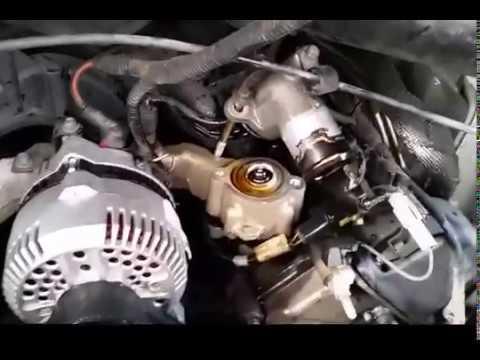





How to Replace the Thermostat on a 2004 Ford E-150 5.4L (Step-by-Step)
Tools, parts, coolant refill/bleeding steps, safety tips, and thermostat housing torque specs for 2003, 2004, 2005, 2006, 2007, 2008, 2009, 2010, 2011, 2012, 2013, 2014
How to Replace the Thermostat on a 2004 Ford E-150 5.4L (Step-by-Step)
Tools, parts, coolant refill/bleeding steps, safety tips, and thermostat housing torque specs for 2003, 2004, 2005, 2006, 2007, 2008, 2009, 2010, 2011, 2012, 2013, 2014


🔧 E-150 - Thermostat Replacement
Your E-150’s thermostat controls engine temperature by opening to let coolant flow to the radiator. If it sticks closed you can overheat; if it sticks open the engine may run too cool and set a check engine light.
Difficulty Level: Intermediate | Estimated Time: 1.0-2.0 hours
⚠️ Safety & Precautions
- 🛑 Never open the coolant cap on a hot engine; hot coolant can spray and burn you.
- 🧤 Wear gloves and safety glasses; coolant is toxic and slippery.
- 🐾 Keep coolant away from pets and kids; even small amounts can be deadly.
- 🧯 Work on level ground and use jack stands if you raise the front.
- 🔋 Battery disconnect is not required, but keep tools away from the fan and belts.
🔧 Required Tools
You'll need the following tools for this repair:
- 8mm socket
- 10mm socket
- 1/4" drive ratchet
- 3/8" drive ratchet
- 3" socket extension
- Torque wrench (inch-pound)
- Flat-blade screwdriver
- Hose clamp pliers
- Trim/pick tool
- Drain pan (at least 3-gallon)
- Funnel
- Shop towels
- Floor jack (rated 3-ton minimum)
- Jack stands (rated 3-ton minimum)
- Wheel chocks
- Nitrile gloves
- Safety glasses
🔩 Required Parts
HowToo sells all the parts you need for this repair:
- Engine thermostat (5.4L) - Qty: 1
- Thermostat O-ring / gasket - Qty: 1
- Engine coolant (Motorcraft Premium Gold or equivalent) - Qty: 2-3 gallons (mix as directed)
- Distilled water - Qty: 2-3 gallons (if mixing concentrate)
📋 Before You Begin
- 🧊 Let the engine cool completely (preferably overnight).
- 🛞 Park on level ground, set the parking brake, and chock the rear wheels.
- 🪣 Set a drain pan under the radiator area (a drain pan is a wide container made to catch fluids).
- 🔧 If you raise the front, lift with a floor jack and support with jack stands before getting underneath.
- 📌 Set your heater controls to HOT later during bleeding so coolant flows through the heater core.
🔨 Step-by-Step Instructions
Follow these steps in order:
Step 1: Relieve any leftover pressure (cold engine only)
- Use gloves and safety glasses.
- Slowly loosen the coolant reservoir/radiator cap by hand until any hiss stops, then remove it.
Step 2: Drain enough coolant to get below the thermostat level
- Place the drain pan (at least 3-gallon) under the radiator drain area.
- Open the radiator drain petcock (if equipped) using a flat-blade screwdriver, and drain 1–2 gallons.
- If your radiator doesn’t have a usable drain, use hose clamp pliers to move the lower hose clamp, then carefully crack the hose loose to drain into the pan.
- Stop draining once flow slows.
Step 3: Access the thermostat housing
- Locate the upper radiator hose at the front of the engine; follow it to the thermostat housing.
- If the air intake tube blocks access, loosen its clamps with an 8mm socket and ratchet, then move the tube aside.
- Use shop towels to cover belts/alternator area to catch drips.
Step 4: Remove the upper radiator hose from the housing
- Use hose clamp pliers to compress the hose clamp and slide it back on the hose.
- Twist the hose gently to break it free, then pull it off the housing.
- If it’s stuck, use a trim/pick tool to carefully lift the hose edge and let it release (don’t gouge the housing).
Step 5: Remove the thermostat housing
- Remove the thermostat housing bolts using a 10mm socket, ratchet, and 3" extension.
- Lift the housing off slowly; more coolant will spill, so keep the drain pan positioned.
Step 6: Replace the thermostat and seal
- Note the thermostat orientation before removal (spring side goes toward the engine).
- Remove the old thermostat by hand.
- Remove the old O-ring / gasket and clean the mating surfaces using shop towels (no scraping with metal tools).
- Install the new thermostat in the same orientation.
- Install the new O-ring / gasket as designed for your thermostat/housing (it should sit flat and not be pinched).
- No RTV unless the part instructions say so.
Step 7: Reinstall the thermostat housing (torque correctly)
- Set the housing in place and hand-start the bolts to avoid cross-threading.
- Tighten the bolts evenly using a 10mm socket and ratchet.
- Final tighten with a torque wrench (inch-pound): Torque to 10 Nm (89 in-lb).
- Torque wrench note: it measures tightening force so you don’t crack the housing.
Step 8: Reinstall the upper radiator hose and any removed intake parts
- Push the hose fully onto the housing, then use hose clamp pliers to reposition the clamp back to its original spot.
- Reinstall the intake tube and tighten clamps using an 8mm socket and ratchet.
Step 9: Refill coolant
- Close the radiator drain petcock using a flat-blade screwdriver (snug, not overtight).
- Use a funnel to refill the system at the reservoir/radiator fill with Motorcraft Premium Gold or equivalent mixed to the bottle directions (typically 50/50 with distilled water).
- Fill to the MAX line (or full cold mark, depending on the tank labeling).
Step 10: Bleed air and verify operation
- Start the engine and let it idle with the cap off for a few minutes (watch the level).
- Set the HVAC to hot and fan to medium so coolant circulates through the heater core.
- As the engine warms up, add coolant as the level drops using the funnel.
- When you feel the upper radiator hose get hot and firm, the thermostat has opened.
- Install the cap by hand once bubbling settles and the level stabilizes.
- Keep hands away from the fan.
✅ After Repair
- 🔍 Check for leaks around the thermostat housing and upper hose with the engine running.
- 🌡️ Verify the temperature gauge stays in the normal range and the heater blows hot.
- 🧯 After a full cool-down, recheck the coolant level and top off as needed.
- 🧼 Dispose of old coolant properly (sealed container, take to a recycling/parts store).
- 🧾 If the check engine light was on for “running too cool,” it may clear after a few drive cycles; scan/clear if needed.
💰 DIY vs Shop Cost
Shop Cost: $250-$450 (parts + labor)
DIY Cost: $40-$120 (parts only)
You Save: $130-$410 by doing it yourself!
Shop labor rates vary but typically run $100-$150/hour. This repair takes a shop approximately 1.0-2.0 hours.
🎯 Ready to get started?
HowToo makes it easy: same-day/2-day shipping on every part, plus all the tools and specialty tools you need! Check out the parts and tools sections below to add everything to your cart.