

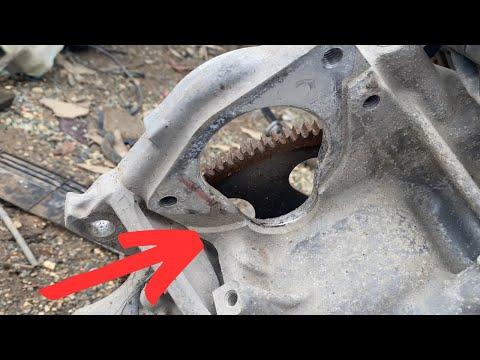






How to Replace the Starter Motor on a 2020 Chevrolet Equinox 1.5L
Step-by-step DIY starter replacement with tools, parts list, torque specs, safety tips, and cost savings for 2018, 2019, 2020, 2021, 2022, 2023
How to Replace the Starter Motor on a 2020 Chevrolet Equinox 1.5L
Step-by-step DIY starter replacement with tools, parts list, torque specs, safety tips, and cost savings for 2018, 2019, 2020, 2021, 2022, 2023


🔧 Equinox - Starter Motor Replacement
You’ll be removing the starter from below the engine on your Equinox and swapping it with a new unit. This involves disconnecting the battery, raising the vehicle, removing the engine under cover, and then unbolting the starter and its wiring.
Difficulty Level: Intermediate | Estimated Time: 2-3 hours
⚠️ Safety & Precautions
- ⚠️ Always disconnect the negative battery cable before working on the starter to avoid electric shock and accidental cranking.
- ⚠️ Support the vehicle with jack stands, never rely only on a floor jack.
- ⚠️ Allow the engine and exhaust to cool completely before working underneath.
- ⚠️ Keep metal tools away from the battery positive terminal when it is connected.
- ⚠️ Wear safety glasses and mechanic gloves to protect your eyes and hands.
🔧 Required Tools
You'll need the following tools for this repair:
- 🛠️ Floor jack (rated 3-ton minimum)
- 🛠️ Jack stands (rated 3-ton minimum, set of 2)
- 🛠️ Wheel chocks
- 🛠️ Ratchet 3/8" drive
- 🛠️ Ratchet 1/4" drive
- 🛠️ Socket set metric (8mm–19mm)
- 🛠️ 10mm socket
- 🛠️ 13mm socket
- 🛠️ 15mm socket
- 🛠️ 6" extension 3/8" drive
- 🛠️ Torx T20 screwdriver
- 🛠️ Torx T30 bit with 3/8" drive
- 🛠️ Flathead screwdriver (medium)
- 🛠️ Torque wrench 3/8" drive (5–80 ft-lbs)
- 🛠️ Torque wrench 1/4" drive (20–80 in-lbs)
- 🛠️ Trim clip removal tool
- 🛠️ Work light or headlamp
- 🛠️ Safety glasses
- 🛠️ Mechanic gloves
- 🛠️ Fender cover
🔩 Required Parts
HowToo sells all the parts you need for this repair:
- 🔩 Starter motor assembly (1.5L) - Qty: 1
- 🔩 Starter mounting bolts - Qty: 2 (recommended new)
- 🔩 Battery terminal cleaning brush - Qty: 1
- 🔩 Dielectric grease - Qty: 1 tube
- 🔩 Penetrating oil - Qty: 1 can
- 🔩 Plastic push-pin clips for engine under cover - Qty: 4-8 (as needed)
- 🔩 Shop towels - Qty: 1 pack
📋 Before You Begin
- Park your Equinox on a flat, solid surface and set the parking brake.
- Place the transmission in PARK and remove the key.
- Chock the rear wheels using wheel chocks so the vehicle cannot roll.
- Open the hood and familiarize yourself with the battery and engine bay layout.
- Make sure you have your radio/infotainment presets written down if you care about them; disconnecting the battery may reset some settings.
🔨 Step-by-Step Instructions
Follow these steps in order:
Step 1: Disconnect the battery
- Open the hood and locate the battery on the left side of the engine bay.
- Use a 10mm socket and 3/8" ratchet to loosen the nut on the negative (black, “-”) battery terminal.
- Pull the negative cable off the terminal and tuck it to the side so it cannot spring back and touch the battery post.
- Always remove negative cable first for safety.
Step 2: Raise and support the front of the vehicle
- Place wheel chocks behind both rear wheels.
- Position the floor jack under the front center jacking point (under the subframe crossmember).
- Lift the front of the vehicle high enough to work comfortably under it.
- Place jack stands under the left and right front subframe points and slowly lower the vehicle onto the stands.
- Give the vehicle a firm shake to make sure it is stable before going underneath.
Step 3: Remove the engine under cover (splash shield)
- Slide under the front of the vehicle with your work light.
- Use a Torx T20 screwdriver and Torx T30 bit with 3/8" ratchet to remove all Torx screws holding the plastic engine under cover.
- Use the trim clip removal tool to release any plastic push-pin clips.
- Lower the under cover and set it aside.
Step 4: Locate the starter motor
- The starter on the 1.5L engine is mounted low on the engine, near where the engine meets the transmission, toward the rear of the engine bay.
- From underneath, follow the large cable coming from the battery area; it connects directly to the starter.
- Clean area with a rag so you see clearly.
Step 5: Disconnect the starter electrical connectors
- Spray a small amount of penetrating oil on the starter terminal nut if it looks rusty and wait a minute.
- Use a 13mm socket and 3/8" ratchet to remove the nut holding the main battery cable to the starter solenoid stud.
- Pull the main cable off the stud and set it aside.
- Locate the smaller plug-style connector on the starter solenoid (this is the control wire).
- Press the locking tab with a flathead screwdriver if needed and gently pull the connector off.
- Do not pull on the wires, only on the plug.
Step 6: Remove the starter mounting bolts
- Locate the two starter mounting bolts that go through the starter into the engine block.
- Use a 15mm socket, 6" extension, and 3/8" ratchet to loosen and remove the lower starter bolt.
- Support the starter with one hand while removing the upper starter bolt with the same 15mm socket and extension.
- Once both bolts are removed, carefully lower the starter out of its position and remove it from the vehicle.
- Note orientation of old starter for reference.
Step 7: Compare old and new starter
- Place the old starter next to the new one on a clean surface.
- Check that the mounting holes, electrical terminals, and gear (pinion) look the same.
- If anything looks different, stop and verify you have the correct part.
Step 8: Install the new starter motor
- Position the new starter in place, lining up the nose of the starter with the opening in the transmission bell housing.
- Install the upper mounting bolt by hand first to hold the starter in place.
- Install the lower mounting bolt by hand.
- Use the 15mm socket, 6" extension, and 3/8" ratchet to snug both bolts evenly.
- Use the 3/8" torque wrench with the 15mm socket to tighten the starter mounting bolts to 50 Nm (37 ft-lbs).
- Start bolts by hand to avoid cross-threading.
Step 9: Reconnect starter electrical connectors
- Apply a small amount of dielectric grease to the small control connector terminals if available.
- Push the small control connector back onto the starter solenoid until it clicks.
- Install the main battery cable onto the solenoid stud.
- Thread the nut onto the stud by hand.
- Use the 13mm socket and 3/8" ratchet to tighten the nut, then use the 3/8" torque wrench to torque to 15 Nm (11 ft-lbs).
- Do not overtighten, you can damage the stud.
Step 10: Reinstall the engine under cover
- Lift the engine under cover back into position under the front of the vehicle.
- Install all Torx screws by hand first to ensure proper alignment.
- Use the Torx T20 screwdriver and Torx T30 bit with 3/8" ratchet to tighten the screws snugly.
- If new plastic clips are used, push them into place by hand.
- Typical small fasteners can be tightened to about 10 Nm (89 in-lbs) with the 1/4" torque wrench if desired.
Step 11: Lower the vehicle
- Position the floor jack back under the front subframe and lift slightly to take the weight off the jack stands.
- Remove the jack stands and then slowly lower the vehicle to the ground.
- Remove the wheel chocks from the rear wheels.
Step 12: Reconnect the battery
- Back under the hood, ensure the negative cable is still away from the terminal.
- Inspect both battery posts and cable ends; clean them with the battery terminal cleaning brush if corroded.
- Place the negative cable back onto the negative battery post.
- Use the 10mm socket and 3/8" ratchet to tighten the clamp just snug; do not crush it.
✅ After Repair
- Turn the ignition to ON without starting for a few seconds, then turn it OFF. This lets systems wake up after the battery reconnect.
- Start your Equinox and listen for smooth cranking and starting without grinding or strange noises.
- Check that no warning lights stay on unexpectedly (besides normal ones that go off after starting).
- With the engine running, look under the vehicle to be sure nothing is hanging down or leaking and that the under cover is secure.
- Re-enter your radio/infotainment presets and clock if they were reset.
💰 DIY vs Shop Cost
Shop Cost: $500-$750 (parts + labor)
DIY Cost: $200-$350 (parts only)
You Save: $300-$400 by doing it yourself!
Shop labor rates vary but typically run $100-$150/hour. This repair takes a shop approximately 1.5-2.0 hours.
🎯 Ready to get started?
HowToo makes it easy: same-day/2-day shipping on every part, plus all the tools and specialty tools you need! Check out the parts and tools sections below to add everything to your cart.