





How to Replace the Starter Motor on a 2019 Toyota Camry
Step-by-step instructions with tools, parts, torque specs, and safety tips for 2018, 2019, 2020
How to Replace the Starter Motor on a 2019 Toyota Camry
Step-by-step instructions with tools, parts, torque specs, and safety tips for 2018, 2019, 2020


🔧 Starter Motor - Replacement
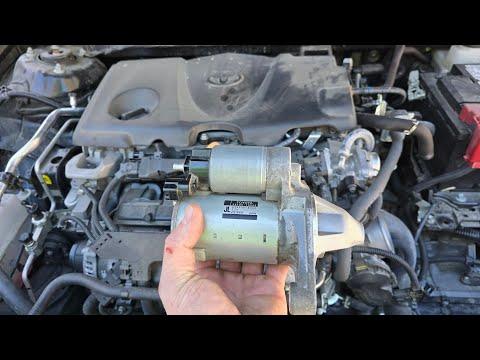
The starter on your Camry sits low on the engine and is partially hidden by the intake area, so access is tighter than a simple bolt-on job. You’ll disconnect the battery, remove intake components for room, swap the starter, then reassemble and verify cranking.
Difficulty Level: Intermediate | Estimated Time: 2-4 hours
⚠️ Safety & Precautions
- Disconnect the negative battery terminal before touching starter wiring. The starter cable is always hot.
- Keep the key/fob far from the vehicle so it cannot crank unexpectedly.
- Let the engine cool fully before working near the intake and exhaust side of the engine bay.
- Support removed parts securely so nothing falls into the intake ports.
- Do not short the starter power cable to ground.
🔧 Required Tools
You'll need the following tools for this repair:
- 10mm wrench
- 10mm socket
- 12mm socket
- 14mm socket
- Socket wrench
- Ratchet extension set
- Torque wrench
- Flat-blade trim tool
- Needle-nose pliers
- Catch pan
- Flashlight
- Safety glasses
- Mechanic gloves
🔩 Required Parts
HowToo sells all the parts you need for this repair:
- Starter motor - Qty: 1
- Starter mounting bolts - Qty: 2
- Intake manifold gasket set - Qty: 1
- Throttle body gasket - Qty: 1
- Air cleaner duct clamp(s) - Qty: 1 set
📋 Before You Begin
- Park on level ground and set the parking brake.
- Open the hood and make sure the engine is fully cool.
- Save radio and memory settings if needed before disconnecting the battery.
- Disconnect the negative battery terminal first, then isolate the cable so it cannot touch the post.
🔨 Step-by-Step Instructions
Follow these steps in order:
Step 1: Disconnect the battery
- Use a 10mm wrench to remove the negative battery cable.
- Move the cable aside so it cannot spring back and reconnect.
- Wait a few minutes before continuing.
Step 2: Remove the air intake assembly
- Use a flat-blade trim tool and 10mm socket to remove the air intake duct and related fasteners.
- Loosen the hose clamps and disconnect the intake tube from the air box and throttle body.
- Remove the air box lid and intake tube to open up working space.
Step 3: Remove the throttle body if needed for access
- Use a 10mm socket to remove the throttle body bolts.
- Carefully move the throttle body aside without straining the connectors or hoses.
- If your replacement parts include a throttle body gasket, replace it during reassembly.
Step 4: Remove the upper intake manifold
- Use a 10mm socket, 12mm socket, and ratchet extension set to remove the intake manifold bolts and brackets.
- Label and disconnect any vacuum lines, harness clips, or hoses attached to the manifold.
- Lift the manifold off carefully and set it on a clean surface.
- Cover open ports right away.
Step 5: Disconnect the starter wiring
- Locate the starter on the engine block near the transmission bellhousing.
- Use a 10mm socket or 10mm wrench to remove the small signal wire nut.
- Use a 12mm socket or 14mm socket to remove the main power cable fastener, depending on hardware used.
- Move the wires aside so they will not snag during removal.
Step 6: Remove the starter motor
- Use a 14mm socket, ratchet extension set, and socket wrench to remove the starter mounting bolts.
- Support the starter with one hand while removing the last bolt.
- Lower the starter out of the engine bay.
- Watch for tight clearances.
Step 7: Install the new starter motor
- Position the new starter in place by hand first.
- Install the mounting bolts finger-tight, then use a torque wrench to tighten them to 40 Nm (30 ft-lbs).
- Reconnect the main cable and signal wire.
- Tighten the small terminal hardware snugly; do not overtighten.
Step 8: Reinstall the intake manifold and throttle body
- Install new intake manifold gaskets.
- Set the manifold back in place and use a torque wrench with a 10mm socket to tighten the bolts in sequence to 22 Nm (16 ft-lbs).
- Reinstall the throttle body with a new gasket if used, then tighten its bolts to 10 Nm (7 ft-lbs).
- Reconnect all hoses, connectors, and brackets.
Step 9: Reinstall the intake duct and battery
- Reinstall the air intake tube, air box lid, and clamps using a 10mm socket and trim tool.
- Reconnect the negative battery terminal with a 10mm wrench.
- Tighten the battery terminal securely.
Step 10: Test the repair
- Turn the key or press the start button and confirm the engine cranks normally.
- Listen for any grinding, clicking, or slow cranking.
- Check for warning lights and verify the engine idles normally.
✅ After Repair
- Start the engine several times to confirm consistent cranking.
- Check around the intake area for vacuum leaks or loose hoses.
- Make sure the battery terminals are tight and clean.
- If the check engine light comes on, scan for stored codes.
💰 DIY vs Shop Cost
Shop Cost: ₹22,000-₹45,000 (parts + labor)
DIY Cost: ₹10,000-₹22,000 (parts only)
You Save: ₹12,000-₹23,000 by doing it yourself!
Shop labor rates vary but typically run ₹1,500-₹3,500/hour. This repair takes a shop approximately 2-4 hours.
🎯 Ready to get started?
HowToo makes it easy: same-day/2-day shipping on every part, plus all the tools and specialty tools you need! Check out the parts and tools sections below to add everything to your cart.