

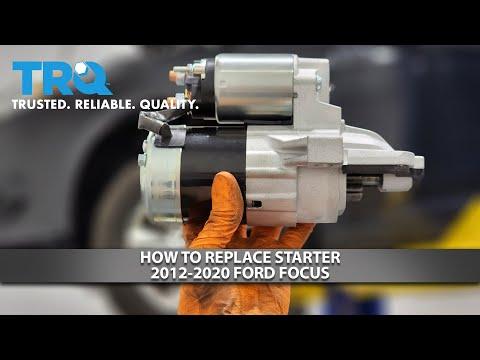




How to Replace the Starter Motor on a 2018 Ford Focus
Step-by-step DIY guide with tools, parts, torque specs, safety tips, and cost savings
How to Replace the Starter Motor on a 2018 Ford Focus
Step-by-step DIY guide with tools, parts, torque specs, safety tips, and cost savings


🔧 Focus - Starter Motor Replacement
Replacing the starter motor on your Focus fixes no-crank, repeated clicking, or slow-crank issues caused by a worn starter. The starter sits low on the transmission side of the engine, so you’ll work from underneath after disconnecting the battery.
Difficulty Level: Intermediate | Estimated Time: 2-3 hours
⚠️ Safety & Precautions
- ⚠️ Disconnect the negative battery cable before touching starter wiring. The starter’s main cable is always battery-powered.
- ⚠️ Let the engine cool fully before starting. The turbo and exhaust area can stay hot long after driving.
- ⚠️ Support your Focus with jack stands before going underneath. Never rely on a jack alone.
- ⚠️ Wear safety glasses because dirt and debris can fall while removing the lower shield.
- ⚠️ Keep the manual transmission in 1st gear with the parking brake set before lifting.
🔧 Required Tools
You'll need the following tools for this repair:
- 10mm socket
- 8mm socket
- 13mm socket
- 15mm socket
- 3/8-inch drive ratchet
- 3/8-inch drive extension set
- 3/8-inch drive universal joint
- Torque wrench 5-80 Nm
- Flat-blade screwdriver
- Trim clip removal tool
- Needle-nose pliers
- Floor jack rated 2-ton minimum
- Jack stands rated 2-ton minimum
- Wheel chocks
- Work light
- Safety glasses
- Mechanic gloves
🔩 Required Parts
HowToo sells all the parts you need for this repair:
- Starter motor - Qty: 1
- Starter terminal nut - Qty: 1 if damaged or corroded
- Battery terminal corrosion protector - Qty: 1
📋 Before You Begin
- Park your Focus on flat, solid ground.
- Set the parking brake firmly and shift the manual transmission into 1st gear.
- Place wheel chocks behind the rear wheels. Wheel chocks are wedge blocks that stop the car from rolling.
- Open the hood and let the engine cool completely.
- A torque wrench tightens bolts to the correct measured tightness so parts are secure without being damaged.
- A universal joint is a small swivel adapter that helps your socket reach bolts at an angle.
🔨 Step-by-Step Instructions
Follow these steps in order:
Step 1: Disconnect the Battery
- Put on safety glasses and mechanic gloves.
- Use a 10mm socket to loosen the negative battery terminal clamp.
- Lift the negative cable off the battery post and move it aside so it cannot spring back.
- Negative cable always comes off first.
Step 2: Raise and Support the Front
- Use a floor jack rated 2-ton minimum to lift the front of your Focus at the front jacking point.
- Place jack stands rated 2-ton minimum under the correct front support points.
- Slowly lower the vehicle onto the jack stands.
- Gently push the vehicle by hand to confirm it is stable before going underneath.
Step 3: Remove the Lower Splash Shield
- Use an 8mm socket to remove the lower splash shield screws.
- Use a trim clip removal tool to release plastic retainers.
- If needed, use a flat-blade screwdriver to gently help release stubborn clips.
- Lower the shield and set it aside with its hardware.
- Put small screws in a cup.
Step 4: Locate the Starter
- Use a work light to look at the lower transmission side of the engine.
- The starter is a short electric motor bolted where the engine and transmission meet.
- This joint area is called the bellhousing, which is the large metal case around the clutch/flywheel area.
Step 5: Disconnect the Small Starter Connector
- Use your fingers to press the lock tab on the small electrical connector at the starter solenoid.
- If access is tight, use needle-nose pliers gently on the connector lock.
- Pull the connector straight off by the plastic body, not by the wire.
- The solenoid is the small electrical switch attached to the starter motor.
Step 6: Disconnect the Main Starter Cable
- Use a 13mm socket, 3/8-inch drive ratchet, and 3/8-inch drive extension set to remove the nut from the large starter cable terminal.
- Lift the cable eyelet off the starter stud.
- Move the cable aside so it does not catch on the starter during removal.
- Check the cable eyelet for corrosion, looseness, or burn marks.
Step 7: Remove the Starter Mounting Bolts
- Use a 15mm socket, 3/8-inch drive ratchet, 3/8-inch drive extension set, and 3/8-inch drive universal joint to loosen the starter mounting bolts.
- Remove the lower bolt first if access allows.
- Support the starter with one hand while removing the final bolt.
- Slide the starter straight out from the bellhousing.
- If it is stuck, wiggle it gently by hand. Do not pry hard against the aluminum transmission case.
Step 8: Compare the Old and New Starter
- Set both starter motors side by side on the ground.
- Make sure the mounting holes, starter gear nose, and electrical terminals match.
- Use a flat-blade screwdriver only to remove a protective cap if the new starter has one.
- Do not install the new starter if the shape or terminals are different.
Step 9: Install the New Starter
- Lift the new starter into position by hand.
- Start the mounting bolts by hand first to avoid cross-threading.
- Use a 15mm socket, 3/8-inch drive extension set, and torque wrench 5-80 Nm to tighten the starter mounting bolts.
- Torque to 48 Nm (35 ft-lbs).
- Hand-start every bolt first.
Step 10: Reconnect the Main Starter Cable
- Place the large cable eyelet onto the starter terminal stud.
- Thread the nut on by hand first.
- Use a 13mm socket and torque wrench 5-80 Nm to tighten the starter cable nut.
- Torque to 12 Nm (106 in-lbs).
- Do not overtighten the nut because the starter terminal can crack internally.
Step 11: Reconnect the Small Starter Connector
- Push the small connector onto the starter solenoid until it clicks.
- Use needle-nose pliers only if your hand cannot reach the connector.
- Gently tug the connector body to confirm it is locked.
Step 12: Reinstall the Lower Splash Shield
- Lift the splash shield into place by hand.
- Use a trim clip removal tool or your fingers to reinstall the plastic clips.
- Use an 8mm socket to reinstall the splash shield screws.
- Tighten the screws snug only. Do not overtighten plastic retainers.
Step 13: Lower the Vehicle
- Use the floor jack rated 2-ton minimum to lift the front slightly off the jack stands.
- Remove the jack stands rated 2-ton minimum.
- Lower your Focus slowly to the ground.
- Remove the wheel chocks from the rear wheels.
Step 14: Reconnect the Battery
- Place the negative battery cable back onto the battery post.
- Use a 10mm socket and torque wrench 5-80 Nm to tighten the clamp.
- Torque to 6 Nm (53 in-lbs).
- Apply battery terminal corrosion protector after the clamp is tight.
✅ After Repair
- Start your Focus and listen for a strong, smooth crank.
- If it only clicks, recheck the battery charge, battery terminals, and main starter cable connection.
- If it cranks slowly, test the battery before replacing any more parts.
- Make sure no warning lights stay on after the engine starts.
- Reset the clock and radio presets if they changed after the battery was disconnected.
- If one-touch window operation stops working, hold the switch fully down, then fully up, for several seconds at each stop.
💰 DIY vs Shop Cost
Shop Cost: $450-$800 (parts + labor)
DIY Cost: $180-$380 (parts only)
You Save: $270-$420 by doing it yourself!
Shop labor rates vary but typically run $100-$150/hour. This repair takes a shop approximately 1.5-2.5 hours.
🎯 Ready to get started?
HowToo makes it easy: same-day/2-day shipping on every part, plus all the tools and specialty tools you need! Check out the parts and tools sections below to add everything to your cart.