

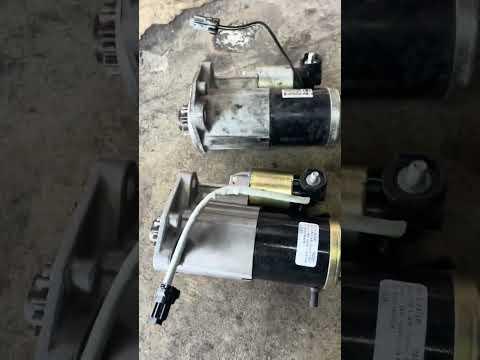





How to Replace the Starter Motor on a 2015 Nissan Rogue (AWD QR25DE)
Step-by-step DIY starter replacement with tools, parts list, torque specs, safety tips, and cost savings for 2014, 2015, 2016, 2017, 2018, 2019
How to Replace the Starter Motor on a 2015 Nissan Rogue (AWD QR25DE)
Step-by-step DIY starter replacement with tools, parts list, torque specs, safety tips, and cost savings for 2014, 2015, 2016, 2017, 2018, 2019


🔧 Rogue - Starter Motor Replacement
You’ll remove the old starter motor from the front of the engine where it meets the transmission, then install and tighten a new one. This restores reliable engine cranking when you turn the key or push the start button.
Difficulty Level: Intermediate | Estimated Time: 2-3 hours
⚠️ Safety & Precautions
- ⚠️ Always disconnect the negative battery cable before working on the starter to avoid electric shock or short circuits.
- ⚠️ The starter cable goes directly to the battery; touching it with tools while connected can cause strong sparks and burns.
- ⚠️ Raise the front of your Rogue securely with a floor jack and support it on jack stands; never rely on the jack alone.
- ⚠️ Let the engine and exhaust cool completely before working underneath the vehicle.
- ⚠️ Wear safety glasses and gloves to protect your eyes and hands from dirt, rust, and sharp edges.
🔧 Required Tools
You'll need the following tools for this repair:
- 🛠️ 3/8" drive ratchet
- 🛠️ 1/2" drive ratchet
- 🛠️ 3/8" drive extension (6")
- 🛠️ 1/2" drive extension (6")
- 🛠️ 10mm socket
- 🛠️ 12mm socket
- 🛠️ 13mm socket
- 🛠️ 14mm socket
- 🛠️ 12mm combination wrench
- 🛠️ Flathead screwdriver (medium)
- 🛠️ Needle-nose pliers
- 🛠️ Torque wrench (3/8" drive, 5-80 Nm range)
- 🛠️ Torque wrench (1/2" drive, 20-150 Nm range)
- 🛠️ Floor jack (rated 3-ton minimum)
- 🛠️ Jack stands (rated 3-ton minimum)
- 🛠️ Wheel chocks
- 🛠️ Creeper or mat
- 🛠️ Work light or flashlight
- 🛠️ Battery terminal brush
- 🛠️ Safety glasses
- 🛠️ Mechanic gloves
🔩 Required Parts
HowToo sells all the parts you need for this repair:
- 🔩 Starter motor (QR25DE engine, AWD) - Qty: 1
- 🔩 Starter mounting bolts - Qty: 2 (recommended new)
- 🔩 Starter electrical terminal nut - Qty: 1 (if not included)
- 🔩 Dielectric grease - Qty: 1 small tube
- 🔩 Battery terminal protector spray - Qty: 1
- 🔩 Cable tie set - Qty: 1 pack
📋 Before You Begin
- Park your Rogue on level ground, shift to PARK, and set the parking brake firmly.
- Place wheel chocks behind the rear wheels to prevent rolling.
- Open the hood and make sure you have good lighting in the engine bay and under the vehicle.
- Note radio presets and any custom settings; disconnecting the battery may reset them.
- Disconnect the negative battery terminal with a 10mm socket and move the cable aside so it cannot spring back.
🔨 Step-by-Step Instructions
Follow these steps in order:
Step 1: Raise and Support the Front
- Position the floor jack (3-ton) under the front center jacking point (behind the front bumper on the subframe crossmember).
- Raise the front of your Rogue high enough to comfortably reach the underside.
- Place jack stands (3-ton) under the left and right front pinch welds or frame points and slowly lower the vehicle onto them.
- Gently rock the vehicle by hand to confirm it is stable before going underneath.
Step 2: Remove Lower Engine Splash Shield
- Use a 10mm socket to remove the bolts securing the plastic splash shield under the engine area.
- Use a flathead screwdriver or needle-nose pliers to carefully pop out any plastic push clips.
- Lower the splash shield and set it aside in order so reinstallation is easier later.
Step 3: Locate the Starter
- The starter is mounted at the front side of the transmission bellhousing, near where the engine and transmission meet, on the radiator side.
- From underneath, look up between the engine and radiator; you’ll see a cylindrical motor with a smaller cylinder (solenoid) attached and heavy cables bolted to it.
- Take a picture of the wiring before removal.
Step 4: Disconnect Starter Electrical Connectors
- Confirm the negative battery cable is still disconnected.
- On the starter solenoid, locate the small push-on connector (signal wire). Gently pull it off using your fingers or needle-nose pliers; do not yank on the wire.
- Locate the larger main battery cable attached with a nut.
- Use a 12mm socket or 12mm combination wrench to remove the nut from the main terminal.
- Pull the cable eyelet off the stud and gently move the cable aside so it cannot touch the starter or metal parts.
Step 5: Remove Starter Mounting Bolts
- There are usually two main mounting bolts holding the starter to the transmission housing.
- Use a 14mm socket with a 3/8" drive ratchet and 6" extension to loosen and remove the lower mounting bolt.
- Use the same 14mm socket and extension to reach and remove the upper mounting bolt from underneath (you may need to reach around hoses).
- Support the starter with one hand as you remove the last bolt so it does not fall.
Step 6: Remove the Old Starter
- With both bolts removed, carefully pull the starter straight away from the transmission.
- You may need to twist and wiggle it slightly to clear nearby wiring or brackets; be patient and avoid forcing it.
- Lower the starter out of the engine bay and compare it to the new starter to ensure mounting holes and electrical connections match.
Step 7: Prepare the New Starter
- Lightly clean the starter mounting surface on the transmission with a rag so it is free of dirt and corrosion.
- Apply a very thin smear of dielectric grease to the electrical terminal faces on the new starter to help prevent corrosion.
- Do not get grease on the starter gear.
Step 8: Install the New Starter
- Position the new starter in the same orientation as the old one and guide the nose of the starter into the opening on the transmission.
- Align the bolt holes in the starter flange with the holes in the transmission housing.
- Hand-thread the upper mounting bolt a few turns to hold the starter in place; use your fingers only at first.
- Hand-thread the lower mounting bolt a few turns.
- Use a 14mm socket and 3/8" drive ratchet to snug both bolts evenly.
- Then use a torque wrench (1/2" drive) with a 14mm socket to tighten both starter mounting bolts to 49 Nm (36 ft-lbs).
Step 9: Reconnect Starter Wiring
- Slide the main battery cable eyelet onto the large starter terminal stud.
- Install the new or original nut and tighten it with a 12mm socket or 12mm combination wrench to 9 Nm (80 in-lbs). Do not overtighten; it is a small stud.
- Push the small signal wire connector back onto its terminal until it clicks or feels fully seated.
- Check that neither wire is stretched or rubbing sharply on metal. Use cable ties to secure loose wiring if needed.
Step 10: Reinstall Splash Shield
- Lift the lower engine splash shield back into position under the front of your Rogue.
- Install the bolts with a 10mm socket, threading them in by hand first to avoid cross-threading.
- Reinstall any plastic push clips using your fingers or a flathead screwdriver to press centers flush.
- Snug the 10mm bolts with the 3/8" drive ratchet; do not overtighten, as the shield is plastic.
Step 11: Lower the Vehicle
- Position the floor jack under the front center jacking point again and raise the vehicle slightly to lift it off the jack stands.
- Remove the jack stands from both sides.
- Slowly lower the front of the vehicle back to the ground.
- Remove the wheel chocks from the rear wheels.
Step 12: Reconnect the Battery
- At the battery, slide the negative cable back onto the negative terminal.
- Use a 10mm socket to tighten the clamp bolt until snug; the terminal should not rotate by hand. Torque to about 5 Nm (44 in-lbs).
- Use a battery terminal brush if needed to clean corrosion before tightening.
- Spray a light coat of battery terminal protector on both terminals.
✅ After Repair
- Turn the ignition to ON without starting and check the dash lights; listen for any unusual buzzing or clicking near the starter.
- Start the engine; it should crank strongly and start quickly without grinding noises.
- With the engine running, look underneath (without going fully under) to confirm there are no loose wires or parts hanging down.
- Re-enter your radio presets and clock settings if they were reset.
- If you hear grinding, repeated rapid clicks, or no crank at all, turn the key off immediately and recheck starter wiring and battery connections.
💰 DIY vs Shop Cost
Shop Cost: $550-$750 (parts + labor)
DIY Cost: $180-$280 (parts only)
You Save: $270-$570 by doing it yourself!
Shop labor rates vary but typically run $100-$150/hour. This repair takes a shop approximately 1.5-2.0 hours.
🎯 Ready to get started?
HowToo makes it easy: same-day/2-day shipping on every part, plus all the tools and specialty tools you need! Check out the parts and tools sections below to add everything to your cart.