

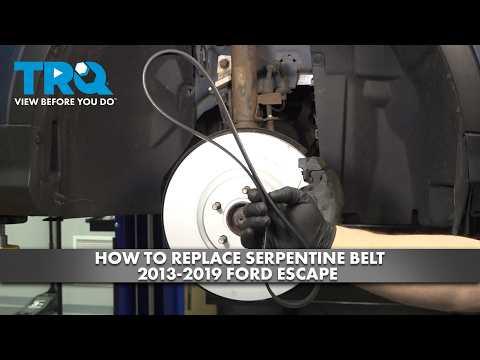




How to Replace the Serpentine Belt on a 2013-2019 Ford Escape (Engine: Inline 4 2.5L)
Step-by-step main generator belt guide with required tools, routing, and safety tips for 2013, 2014, 2015, 2016, 2017, 2018, 2019
How to Replace the Serpentine Belt on a 2013-2019 Ford Escape (Engine: Inline 4 2.5L)
Step-by-step main generator belt guide with required tools, routing, and safety tips for 2013, 2014, 2015, 2016, 2017, 2018, 2019


🔧 Escape - Serpentine Belt Replacement
This is a straightforward job once you reach the spring-loaded tensioner. Your Escape has a main generator serpentine belt and a separate stretch-fit air-conditioning belt, so these instructions cover the main generator belt only. fordpartsdeal.com)
Difficulty Level: Beginner | Estimated Time: 45–90 minutes
Assumption: You’re replacing the main tensioner-operated belt, not the separate A/C stretch belt.
⚠️ Safety & Precautions
- ⚠️ Let the engine cool completely before working beside the belt and pulleys.
- 🛑 Keep your fingers out of the belt path while moving the spring-loaded tensioner.
- 🔒 Never work beneath your Escape while it’s supported only by a floor jack.
- 🔑 Keep the ignition switched off and the key away from the vehicle.
- 🔋 Battery disconnection isn’t normally required for this repair.
- 👓 Wear safety glasses because dirt can fall from the wheel well.
🔧 Required Tools
You’ll need the following tools for this repair:
- 15mm socket
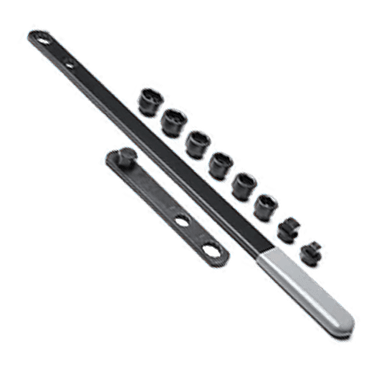
- Serpentine belt tool with 15mm adapter (specialty)
- 1/2-inch drive breaker bar
- 19mm wheel socket
- 8mm socket
- 10mm socket
- Flat-blade screwdriver
- Plastic trim-clip removal tool
- Torque wrench rated 20–200 Nm
- Floor jack rated 3-ton minimum
- Jack stands rated 3-ton minimum
- Wheel chocks
- LED flashlight
- Mechanic gloves
- Safety glasses
🔩 Required Parts
HowToo sells all the parts you need for this repair:
- Main generator serpentine belt - Qty: 1
- Replacement splash-shield clips - Qty: As needed
The belt aisle is open beside this guide. Match the new belt to the old belt’s rib count and approximate length before installation. The separate A/C stretch belt isn’t required unless it’s also cracked, damaged, or contaminated.
📋 Before You Begin
- 🅿️ Park on level, solid ground. Shift into Park and engage the parking brake.
- 🧱 Place wheel chocks securely behind both rear wheels.
- 📷 Photograph the existing belt routing before removing anything.
- 🔍 Ford identifies the generator belt as the belt closest to the engine. The A/C belt sits farther outward. fordservicecontent.com
- 🧰 A serpentine belt tool is a long, thin handle designed to reach a tensioner in a narrow space.
- 📱 No infotainment service mode or scan-tool command is required.
🔨 Step-by-Step Instructions
Follow these steps in order:
Step 1: Check Access From Above
- 🔦 Use the LED flashlight to look down the passenger side of the engine and locate the belt tensioner.
- 🔧 Check whether the tensioner’s tool feature is reachable with the serpentine belt tool with 15mm adapter.
- ✅ If you have clear access, you may perform the belt release from above. Otherwise, continue through the passenger wheel well.
Step 2: Raise and Support the Passenger Side
- 🚗 Use the 19mm wheel socket and 1/2-inch drive breaker bar to loosen the passenger-front lug nuts about one turn.
- ⬆️ Raise the front passenger side with the floor jack rated 3-ton minimum at the designated jacking point.
- 🛡️ Position a jack stand rated 3-ton minimum beneath the approved support point, then lower the vehicle onto it.
- 🔩 Use the 19mm wheel socket to remove the lug nuts and wheel.
Step 3: Remove the Inner Splash Shield
- 👓 Put on the safety glasses and mechanic gloves.
- 🔧 Use the 8mm socket or 10mm socket, as fitted, to remove the splash-shield screws.
- 📌 Use the plastic trim-clip removal tool to release the push clips without breaking them.
- 🪛 Use the flat-blade screwdriver only if a clip cannot be reached with the trim tool.
- 📦 Move the shield aside and keep the fasteners organized.
Step 4: Record the Belt Routing
- 📷 Use your phone and the LED flashlight to take a clear picture showing every pulley.
- 🔍 Confirm which pulley has grooves and which pulley is smooth. The belt’s ribbed side rides on grooved pulleys, while its flat back rides on smooth pulleys.
- 📝 Make a quick sketch if any part of the routing is hidden. Five seconds here can save half an hour later.
Step 5: Release the Belt Tension
- 🔧 Fit the serpentine belt tool with 15mm adapter or the 15mm socket onto the tensioner’s tool feature.
- 💪 Rotate the tensioner smoothly in the direction that moves it away from the belt. Don’t loosen the center pulley bolt.
- 🛑 Hold the tool firmly because the tensioner contains a strong spring.
- 🔓 While holding the tensioner released, slip the belt off an easy-to-reach smooth pulley.
- ↩️ Slowly return the tensioner to its resting position. Never let it snap back.
Step 6: Remove and Inspect the Old Belt
- 🧤 Use your mechanic gloves to work the old belt around the remaining pulleys and out through the wheel well.
- 🔍 Check it for missing ribs, frayed edges, shiny glazed areas, oil contamination, or cracks.
- 🧪 Compare the old and new belts side by side. Confirm the same rib count and nearly identical working length.
- ⚙️ Spin the accessible idler and tensioner pulleys by hand. Replace any pulley that feels rough, loose, or noisy.
Step 7: Route the New Belt
- 🗺️ Follow your photograph and route the new belt around every pulley except one easy-to-reach smooth pulley.
- 🔍 Use the LED flashlight to confirm every rib sits inside its matching pulley groove.
- 📏 Keep the belt flat. It must not be twisted between pulleys.
- 💡 Leave the easiest smooth pulley until last. That’s the cleanest way to finish the job.
Step 8: Seat the Belt
- 🔧 Use the serpentine belt tool with 15mm adapter to rotate the tensioner again.
- 🧤 Slip the belt over the final smooth pulley while keeping your fingers away from pinch points.
- ↩️ Slowly release the tensioner until it applies full pressure to the belt.
- 🔦 Use the LED flashlight to inspect every pulley from multiple angles.
- ✅ Correct any rib hanging over a pulley edge before starting the engine.
Step 9: Reinstall the Splash Shield and Wheel
- 🔩 Use the 8mm socket or 10mm socket to reinstall the splash-shield screws snugly.
- 📌 Use the plastic trim-clip removal tool by hand to position and reinstall all reusable clips.
- 🛞 Install the wheel and start the lug nuts by hand to prevent cross-threading.
- 🔧 Use the 19mm wheel socket to snug the lug nuts in a crisscross pattern.
- ⬇️ Raise your Escape slightly with the floor jack rated 3-ton minimum, remove the jack stand, and lower the vehicle.
- 📐 Use the torque wrench rated 20–200 Nm and 19mm wheel socket to tighten the lug nuts in a crisscross pattern to 135 Nm (100 ft-lbs). howtoo.com
✅ After Repair
- 👀 From a safe position, start the engine and watch the belt for 20–30 seconds.
- 🔄 The belt should run centrally without wandering, flapping, or jumping.
- 👂 Shut the engine off immediately if you hear slapping, grinding, or persistent squealing.
- 🔍 Switch the engine off and perform one final check that every rib remains fully seated.
- ❄️ Turn on the air conditioning briefly and listen for abnormal noises from the separate outer A/C belt.
- 🛞 Recheck the wheel-lug torque after approximately 80–160 km.
💰 DIY vs Shop Cost
Shop Cost: $130–$260 (parts + labor)
DIY Cost: $20–$65 (belt only)
You Save: $65–$240 by doing it yourself!
Local labor pricing varies. A professional typically needs approximately 0.5–1.0 hour for the main belt.
🎯 Ready to get started?
HowToo makes it easy: same-day/2-day shipping on every part, plus all the tools and specialty tools you need! Check out the parts and tools sections below to add everything to your cart.