

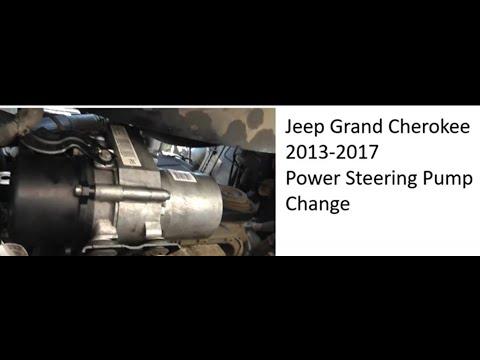



How to Replace the Power Steering Pump on a 2011-2015 Jeep Grand Cherokee (Engine: V6 3.6L)
Step-by-step DIY guide with tools, parts, fluid specs, bleeding tips, and torque specs for 2011, 2012, 2013, 2014, 2015
How to Replace the Power Steering Pump on a 2011-2015 Jeep Grand Cherokee (Engine: V6 3.6L)
Step-by-step DIY guide with tools, parts, fluid specs, bleeding tips, and torque specs for 2011, 2012, 2013, 2014, 2015


🔧 Grand Cherokee - Power Steering Pump Replacement
The power steering pump on your Grand Cherokee provides hydraulic pressure to help the steering turn smoothly. Replacing it involves removing the serpentine belt, disconnecting the steering fluid lines, swapping the pump, refilling the system, and bleeding air out of the steering system.
Difficulty Level: Intermediate | Estimated Time: 2.5-4 hours
⚠️ Safety & Precautions
- ⚠️ Let the engine cool completely before working near the belt drive, radiator fan, or exhaust areas.
- ⚠️ Disconnect the negative battery cable before working near the accessory drive.
- ⚠️ Keep hands, tools, hair, and clothing away from the serpentine belt path.
- ⚠️ Use jack stands if raising the front of the vehicle. Never rely on a jack alone.
- ⚠️ Power steering fluid is slippery and flammable. Wipe spills immediately.
- ⚠️ Do not start the engine with the power steering system empty. Pump damage can happen quickly.
🔧 Required Tools
You'll need the following tools for this repair:
- 10mm socket
- 13mm socket
- 15mm socket
- 16mm line wrench
- 18mm wrench
- 3/8-inch drive ratchet
- 1/2-inch drive ratchet
- 6-inch socket extension
- Serpentine belt tool (specialty)
- Power steering pulley remover and installer kit (specialty)
- Torque wrench foot-pound
- Torque wrench inch-pound
- Fluid transfer pump
- Drain pan
- Shop towels
- Fender cover
- Floor jack rated 3-ton minimum
- Jack stands rated 3-ton minimum
- Wheel chocks
- Nitrile gloves
- Safety glasses
🔩 Required Parts
HowToo sells all the parts you need for this repair:
- Power steering pump - Qty: 1
- Power steering pump pulley - Qty: 1 if damaged or not reusable
- Power steering pressure hose sealing O-ring - Qty: 1
- Power steering return hose clamp - Qty: 1 if damaged
- Power steering fluid meeting Chrysler MS-5931 specification - Qty: 2 quarts
- Serpentine belt - Qty: 1 if cracked, glazed, or oil-soaked
📋 Before You Begin
- 🚗 Park your Grand Cherokee on a flat surface and set the parking brake.
- 🧱 Place wheel chocks behind the rear wheels.
- 🔋 Use a 10mm socket to disconnect the negative battery cable.
- 🧊 Make sure the engine is cool before removing the belt or opening the power steering reservoir.
- 🧰 A line wrench is a wrench that grips more sides of a fluid fitting so the fitting is less likely to round off.
- 🧰 A pulley remover/installer is required because the power steering pulley is pressed onto the pump shaft, not bolted on.
🔨 Step-by-Step Instructions
Follow these steps in order:
Step 1: Remove Power Steering Fluid from the Reservoir
- Open the hood and place a fender cover over the front fender.
- Remove the power steering reservoir cap by hand.
- Use a fluid transfer pump to remove as much old fluid as possible from the reservoir.
- Drain the fluid into a drain pan.
- Use shop towels to wipe any spilled fluid.
Step 2: Raise the Front Wheels
- Use a floor jack rated 3-ton minimum to lift the front of the vehicle at the proper front crossmember lift point.
- Place jack stands rated 3-ton minimum under the approved front support points.
- Lower the vehicle gently onto the jack stands.
- Leave the front wheels off the ground. This makes bleeding the steering easier later.
Step 3: Record the Belt Routing
- Look for the belt routing label in the engine bay.
- If the label is missing, take a clear photo of the belt path with your phone.
- The serpentine belt is the single long belt that drives accessories like the alternator, water pump, and power steering pump.
Step 4: Remove the Serpentine Belt
- Place a serpentine belt tool or 1/2-inch drive ratchet into the belt tensioner.
- Rotate the tensioner to release belt tension.
- Slide the belt off the power steering pump pulley by hand.
- Slowly release the tensioner.
- Remove the belt from the accessory pulleys if replacing it.
- Do not let the tensioner snap back.
Step 5: Remove the Power Steering Pump Pulley
- Install the power steering pulley remover and installer kit onto the pump pulley hub.
- Use an 18mm wrench with the pulley tool to press the pulley off the pump shaft.
- Keep the pulley straight while removing it.
- Inspect the pulley grooves for cracks, bends, or damage.
- Replace the pulley if it is damaged.
Step 6: Disconnect the Return Hose
- Place a drain pan under the power steering pump area.
- Use needle-nose pliers if equipped with a spring clamp, or a 10mm socket if equipped with a screw clamp.
- Slide the clamp back from the pump nipple.
- Twist the return hose gently by hand and pull it off the pump.
- Plug or raise the hose end to reduce fluid loss.
Step 7: Disconnect the Pressure Line
- Use a 16mm line wrench to loosen the high-pressure line fitting at the power steering pump.
- Turn the fitting slowly to avoid damaging the threads.
- Remove the pressure line from the pump by hand once loose.
- Remove the old sealing O-ring from the line fitting.
- Use shop towels to catch fluid drips.
Step 8: Remove the Power Steering Pump Bolts
- Support the pump with one hand.
- Use a 13mm socket, 6-inch socket extension, and 3/8-inch drive ratchet to remove the pump mounting bolts.
- Some bolts are accessed through the pulley opening area after pulley removal.
- Lift the pump out of the engine bay carefully.
Step 9: Transfer Parts if Needed
- Compare the old and new pump on the bench.
- If brackets must be transferred, use a 13mm socket or 15mm socket as needed.
- Install transferred brackets onto the new pump.
- Tighten bracket fasteners with a torque wrench foot-pound.
- Torque to 28 Nm (21 ft-lbs).
Step 10: Install the New Power Steering Pump
- Set the new pump into position by hand.
- Start all pump mounting bolts by hand first to avoid cross-threading.
- Use a 13mm socket, 6-inch socket extension, and torque wrench foot-pound to tighten the pump mounting bolts.
- Torque to 28 Nm (21 ft-lbs).
Step 11: Reconnect the Pressure Line
- Install a new power steering pressure hose sealing O-ring onto the pressure line fitting.
- Thread the pressure line fitting into the pump by hand first.
- Use a 16mm line wrench to snug the fitting.
- Use a torque wrench foot-pound with a crowfoot line wrench adapter if available.
- Torque to 27 Nm (20 ft-lbs).
- If you do not have a crowfoot adapter, tighten the fitting firmly without forcing it.
Step 12: Reconnect the Return Hose
- Push the return hose fully onto the pump nipple by hand.
- Use needle-nose pliers or a 10mm socket to move the clamp back into its original position.
- Replace the clamp if it is weak, rusty, or loose.
Step 13: Install the Pulley on the New Pump
- Use the power steering pulley remover and installer kit to press the pulley onto the new pump shaft.
- Use an 18mm wrench to turn the installer tool slowly.
- Press the pulley on until the pulley face is flush with the end of the pump shaft.
- Check alignment with the other pulleys by eye.
- Never hammer the pulley on.
Step 14: Reinstall the Serpentine Belt
- Route the serpentine belt around all pulleys using the belt routing label or your photo.
- Use a serpentine belt tool or 1/2-inch drive ratchet to rotate the belt tensioner.
- Slip the belt over the power steering pump pulley last.
- Slowly release the tensioner.
- Use a flashlight if needed and confirm the belt ribs are seated correctly in every pulley groove.
Step 15: Refill the Power Steering Reservoir
- Fill the reservoir with power steering fluid meeting Chrysler MS-5931 specification.
- Fill only to the COLD mark on the dipstick or reservoir indicator.
- Leave the cap off for the first bleeding step.
Step 16: Bleed Air with Engine Off
- Keep the front wheels raised on jack stands rated 3-ton minimum.
- With the engine OFF, slowly turn the steering wheel from full left to full right 15-20 times.
- Do not hold the wheel hard against the stops.
- Check the fluid level often and add power steering fluid meeting Chrysler MS-5931 specification as needed.
- This pushes trapped air out before the pump runs.
Step 17: Bleed Air with Engine Running
- Reconnect the negative battery cable using a 10mm socket.
- Start the engine and let it idle.
- Slowly turn the steering wheel left and right several times.
- Do not hold the wheel at full lock.
- Watch the fluid level. Add fluid if it drops.
- If the fluid becomes foamy, shut the engine off and let it sit for 10 minutes.
Step 18: Lower the Vehicle and Final Check
- Install the power steering reservoir cap by hand.
- Use a floor jack rated 3-ton minimum to lift the vehicle slightly off the jack stands.
- Remove the jack stands rated 3-ton minimum.
- Lower the vehicle to the ground with the floor jack rated 3-ton minimum.
- Turn the steering wheel smoothly while parked and check for normal assist.
- Inspect the pressure line, return hose, and pump body for leaks.
✅ After Repair
- ✅ Recheck the power steering fluid level after the first short drive.
- ✅ Inspect under the front of the engine for leaks after the vehicle sits for 10-15 minutes.
- ✅ If whining noise continues, there may still be air in the system. Repeat the bleeding process.
- ✅ If steering assist is still poor, check the pressure hose, rack, fluid condition, and belt tensioner operation.
- ✅ Dispose of old power steering fluid properly at a fluid recycling location.
💰 DIY vs Shop Cost
Shop Cost: $500-$850 (parts + labor)
DIY Cost: $160-$350 (parts only)
You Save: $340-$500 by doing it yourself!
Shop labor rates vary but typically run $100-$150/hour. This repair takes a shop approximately 2.0-3.0 hours.
🎯 Ready to get started?
HowToo makes it easy: same-day/2-day shipping on every part, plus all the tools and specialty tools you need! Check out the parts and tools sections below to add everything to your cart.