

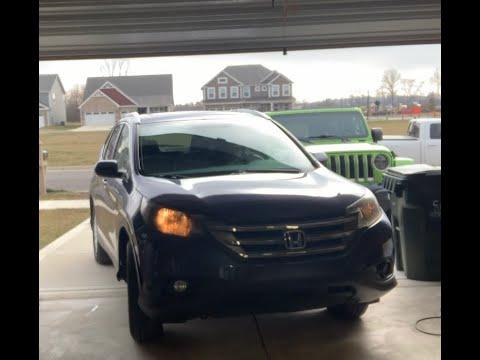







How to Replace the Outer Tie Rod End on a 2013 Honda CR-V
Step-by-step instructions with tools, parts, torque specs, safety tips, and alignment advice for 2012, 2013, 2014, 2015, 2016
How to Replace the Outer Tie Rod End on a 2013 Honda CR-V
Step-by-step instructions with tools, parts, torque specs, safety tips, and alignment advice for 2012, 2013, 2014, 2015, 2016


🔧 CR-V - Tie Rod End Replacement
Replacing the outer tie rod end restores steering precision and removes looseness at the front wheels. On your CR-V, this repair changes toe angle, so a front-end alignment is required right after the job.
Difficulty Level: Intermediate | Estimated Time: 1.5-2.5 hours
⚠️ Safety & Precautions
- Support the vehicle securely with jack stands before removing the wheel.
- Use wheel chocks so the vehicle cannot roll.
- Keep hands clear when separating the tie rod from the steering knuckle.
- Do not let the knuckle hang from the brake hose or ABS wire.
- An alignment is required after this repair.
🔧 Required Tools
You'll need the following tools for this repair:
- Floor jack (rated 3-ton minimum)
- Jack stands
- Wheel chocks
- Safety glasses
- Mechanic gloves
- 19mm lug wrench or socket
- 12mm wrench
- 17mm socket
- Ratchet
- Torque wrench
- Pliers
- Paint marker
- Pickle fork (specialty)
- Ball joint separator (specialty)
- Penetrating oil
🔩 Required Parts
HowToo sells all the parts you need for this repair:
- Outer tie rod end - Qty: 1
- Jam nut - Qty: 1
- Cotter pin - Qty: 1
📋 Before You Begin
- Park on a level surface and set the parking brake.
- Center the steering wheel and keep it straight.
- Loosen the front wheel lug nuts before lifting the vehicle.
- Mark the old tie rod position before removal so the replacement is close enough to drive to alignment.
🔨 Step-by-Step Instructions
Follow these steps in order:
Step 1: Loosen the front wheel lug nuts
- Use a 19mm lug wrench or socket to loosen the lug nuts while the tire is still on the ground.
- Do not remove the lug nuts yet.
Step 2: Raise and support the vehicle
- Use a floor jack (rated 3-ton minimum) to lift the front of the vehicle.
- Set the vehicle onto jack stands.
- Remove the wheel with the 19mm lug wrench or socket.
Step 3: Mark the tie rod position
- Use a paint marker to mark the outer tie rod position on the threads.
- Match the thread count for a close toe setting.
Step 4: Remove the cotter pin and castle nut
- Use pliers to pull the cotter pin from the tie rod stud.
- Use a 17mm socket and ratchet to remove the castle nut.
Step 5: Separate the tie rod end from the knuckle
- Use a ball joint separator (specialty) or pickle fork (specialty) to separate the tie rod end from the steering knuckle.
- Protect the boot on nearby components.
Step 6: Remove the old tie rod end
- Use a 12mm wrench to loosen the jam nut.
- Spin the tie rod end off the inner tie rod and count the turns as you remove it.
Step 7: Install the new tie rod end
- Thread the new tie rod end on the same number of turns as the old one.
- Insert the stud into the steering knuckle.
- Install the new castle nut by hand.
Step 8: Tighten and secure the joint
- Use a 17mm socket and torque wrench to tighten the tie rod end nut to 49 Nm (36 ft-lbs).
- If needed, tighten slightly more to align the cotter pin hole; do not loosen to make it line up.
- Install the new cotter pin and bend the ends with pliers.
- Use a 12mm wrench to tighten the jam nut to 49 Nm (36 ft-lbs).
Step 9: Reinstall the wheel
- Reinstall the wheel and hand-start the lug nuts.
- Lower the vehicle until the tire just touches the ground.
- Use a 19mm lug wrench or socket and torque wrench to tighten the lug nuts to 108 Nm (80 ft-lbs) in a star pattern.
✅ After Repair
- Turn the steering wheel left and right to confirm smooth operation.
- Check that the jam nut and cotter pin are secure.
- Test drive slowly and verify the vehicle tracks straight.
- Schedule a front-wheel alignment as soon as possible.
💰 DIY vs Shop Cost
Shop Cost: $180-$320 (parts + labor)
DIY Cost: $35-$85 (parts only)
You Save: $145-$235 by doing it yourself!
Shop labor rates vary but typically run $100-$150/hour. This repair takes a shop approximately 1-2 hours.
🎯 Ready to get started?
HowToo makes it easy: same-day/2-day shipping on every part, plus all the tools and specialty tools you need! Check out the parts and tools sections below to add everything to your cart.