

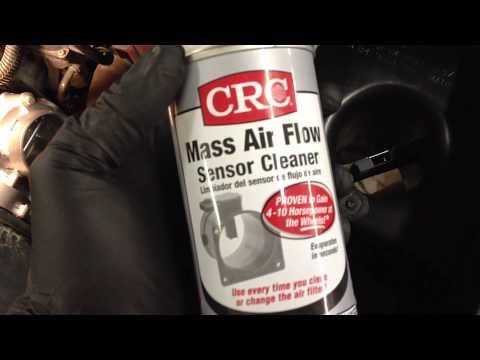







How to Replace the Mass Air Flow (MAF) Sensor on a 2016 Jeep Patriot
Step-by-step DIY instructions with tools, parts list, safety tips, and torque specs
How to Replace the Mass Air Flow (MAF) Sensor on a 2016 Jeep Patriot
Step-by-step DIY instructions with tools, parts list, safety tips, and torque specs


🔧 Patriot - Mass Air Flow (MAF) Sensor Replacement
Replacing the MAF sensor means unplugging the sensor on the intake duct, removing its screws, and installing a new sensor with a good seal. A bad MAF can cause rough idle, stalling, poor acceleration, and “check engine” lights.
Assumption: Your Patriot is equipped with a MAF sensor in the air intake tube/airbox outlet. (Many Patriots use a MAP sensor on the intake manifold instead of a MAF.)
Difficulty Level: Beginner | Estimated Time: 0.5-1.0 hours
⚠️ Safety & Precautions
- 🧤 Let the engine cool before working near the intake and radiator area.
- 🔌 Disconnect the negative battery cable to prevent accidental shorts and to help the computer relearn after installation.
- 🛑 Do not touch the MAF sensing element (it’s delicate and can be damaged by fingerprints).
- 🧼 Keep dirt out of the intake tube; anything that falls in can get pulled into the engine.
🔧 Required Tools
You'll need the following tools for this repair:
- Safety glasses
- Nitrile gloves
- 10mm socket
- 1/4" drive ratchet
- 6" 1/4" drive extension
- Flathead screwdriver (medium)
- Torx T20 bit
- 1/4" drive torque wrench (inch-pound)
- OBD2 scan tool
🔩 Required Parts
HowToo sells all the parts you need for this repair:
- Mass air flow (MAF) sensor - Qty: 1
- MAF sensor O-ring seal - Qty: 1
- Dielectric grease (small packet) - Qty: 1
📋 Before You Begin
- 🅿️ Park on level ground, put the transmission in 1st gear, and set the parking brake.
- 🔑 Turn the key OFF and remove it.
- 🔌 Open the hood and disconnect the battery negative terminal using a 10mm socket.
🔨 Step-by-Step Instructions
Follow these steps in order:
Step 1: Locate the MAF sensor
- Look at the air intake tube between the air box (air filter housing) and the engine.
- The MAF is typically a small sensor body installed in the tube/airbox outlet with an electrical connector.
- MAF measures incoming air for fueling.
Step 2: Unplug the electrical connector
- Press the connector lock tab and pull the plug straight off the sensor.
- If it’s stubborn, wiggle gently—do not pull on the wires.
- Add a tiny amount of dielectric grease to the connector seal during reassembly (a thin film only).
Step 3: Make room by loosening the intake duct (if needed)
- Use a flathead screwdriver (medium) to loosen the hose clamp(s) on the intake tube near where you’re working.
- If there’s a clamp bolt style instead, use a 10mm socket with a 1/4" drive ratchet.
- Slide the tube slightly back to get clear access to the sensor screws.
Step 4: Remove the MAF sensor retaining screws
- Use a Torx T20 bit with a 1/4" drive ratchet and 6" extension to remove the screws.
- Set the screws aside where they won’t fall into the engine bay.
- Don’t drop screws into the intake.
Step 5: Remove the old MAF sensor
- Carefully pull the sensor straight out.
- Remove the old MAF sensor O-ring seal if it stayed behind in the housing.
- Wipe the mounting bore lightly with a clean, dry cloth if dusty (do not spray anything into the intake).
Step 6: Install the new MAF sensor
- Install the new MAF sensor O-ring seal (lightly lubricating with a tiny bit of clean engine oil is OK if it helps it seat).
- Insert the new sensor straight in—do not force it.
- Reinstall screws using the Torx T20 bit.
- Torque to 3 Nm (27 in-lbs) using a 1/4" drive torque wrench (inch-pound).
Step 7: Re-secure the intake tube and clamps
- Reposition the intake tube fully onto its mating surfaces.
- Tighten hose clamps using a flathead screwdriver (medium) or 10mm socket (whichever your clamps use).
- Torque to 4 Nm (35 in-lbs) if using a torque wrench; otherwise tighten snug and stop.
Step 8: Reconnect the sensor and battery
- Plug the connector back into the sensor until it clicks.
- Reconnect the battery negative terminal using a 10mm socket.
Step 9: Clear codes and verify the fix
- Use an OBD2 scan tool to clear any stored MAF-related codes.
- Start the engine and let it idle for 2-3 minutes.
- Listen for hissing (vacuum leak sound) around the intake tube and clamps.
✅ After Repair
- 🚗 Test drive 10-15 minutes with gentle acceleration, then a few medium accelerations.
- 🔍 Recheck for a check-engine light and rescan for pending codes with an OBD2 scan tool.
- 🧯 If you get lean codes (P0171) or idle issues, recheck intake tube seating/clamps for air leaks.
💰 DIY vs Shop Cost
Shop Cost: $180-$350 (parts + labor)
DIY Cost: $60-$200 (parts only)
You Save: $120-$150+ by doing it yourself!
Shop labor rates vary but typically run $100-$150/hour. This repair takes a shop approximately 0.5-1.0 hours.
🎯 Ready to get started?
HowToo makes it easy: same-day/2-day shipping on every part, plus all the tools and specialty tools you need! Check out the parts and tools sections below to add everything to your cart.