

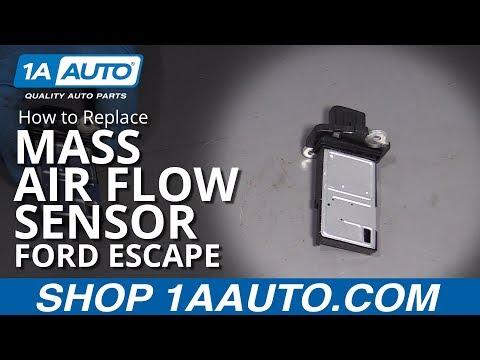







How to Replace the Mass Air Flow (MAF) Sensor on a 2013 Ford Escape
Step-by-step DIY MAF replacement with tools/parts list, safety tips, and torque specs for 2013, 2014, 2015, 2016, 2017, 2018, 2019
How to Replace the Mass Air Flow (MAF) Sensor on a 2013 Ford Escape
Step-by-step DIY MAF replacement with tools/parts list, safety tips, and torque specs for 2013, 2014, 2015, 2016, 2017, 2018, 2019


🔧 Escape - Mass Air Flow (MAF) Sensor Replacement
The MAF sensor measures how much air enters your Escape so the engine computer can add the right amount of fuel. When it fails or gets contaminated, you can get rough idle, hesitation, poor MPG, or a check engine light. Replacement is usually quick because it sits in the air intake tube near the air filter box.
Difficulty Level: Beginner | Estimated Time: 0.3-0.8 hours
⚠️ Safety & Precautions
- ⚠️ Work on a cool engine; the turbo area can stay hot.
- ⚠️ Turn ignition OFF and keep the key away from the vehicle while unplugging sensors.
- ⚠️ Do not touch the MAF sensing element (the tiny wire/film inside); it’s fragile.
- ⚠️ If you disconnect the battery, you may lose radio presets.
🔧 Required Tools
You'll need the following tools for this repair:
- Safety glasses
- Nitrile gloves
- 10mm socket
- 1/4" drive ratchet
- 1/4" drive extension 3"
- Torx T20 bit
- Torx T25 bit
- Flat-blade screwdriver (medium)
- Pick tool (small)
- Torque wrench (inch-pound, 20–200 in-lb range)
- OBD-II scan tool
🔩 Required Parts
HowToo sells all the parts you need for this repair:
- Mass air flow (MAF) sensor - Qty: 1
- MAF sensor O-ring/seal (if not included with sensor) - Qty: 1
- Dielectric grease (optional) - Qty: 1
📋 Before You Begin
- Park on level ground, shift to Park, and set the parking brake.
- Open the hood and locate the air filter box and the intake tube running toward the turbo/engine.
- If you choose to disconnect the battery: use a 10mm socket to remove the negative battery cable and keep it from touching the terminal.
🔨 Step-by-Step Instructions
Follow these steps in order:
Step 1: Locate the MAF sensor
- Look at the air intake tube right after the air filter box. The MAF is the small sensor with an electrical connector and usually 2 screws.
- MAF is the “airflow meter” sensor.
Step 2: Unplug the electrical connector
- Press the connector lock tab by hand. If it’s stubborn, use a pick tool (small) to gently lift the lock while pulling the connector straight off.
- If you apply any, use a tiny dab of dielectric grease on the connector seal only (not on metal pins).
Step 3: Loosen the intake tube if access is tight (as needed)
- Use a flat-blade screwdriver (medium) to loosen the hose clamp(s) around the section of tube where the MAF sits.
- Wiggle the tube just enough to get a straight shot at the MAF screws. Do not force or crack the plastic tube.
- Torque to 4 Nm (35 in-lb) when re-tightening hose clamps.
Step 4: Remove the MAF sensor screws
- Use a Torx T20 bit to remove the two screws.
- If your screws don’t fit T20, use a Torx T25 bit instead (Ford uses both styles depending on supplier).
- Set the screws aside where they won’t fall into the engine bay.
Step 5: Remove the old MAF sensor
- Pull the sensor straight out of the housing/tube by hand.
- If it feels stuck, gently twist while pulling. Don’t pry on the sensor tip.
- Remove the old O-ring/seal if it stayed in the tube.
Step 6: Install the new MAF sensor
- Make sure the new O-ring/seal is installed and not pinched.
- Slide the new sensor straight into place, matching the orientation of the old one (it should sit flush).
- Install the screws by hand first to avoid cross-threading, then tighten with the Torx T20 bit or Torx T25 bit.
- Torque to 2 Nm (18 in-lb) for the MAF screws.
Step 7: Reassemble the intake and reconnect
- If you loosened the intake tube, re-seat it fully and tighten clamps using a flat-blade screwdriver (medium).
- Reconnect the MAF electrical connector until it clicks.
- If you disconnected the battery, reconnect the negative cable using a 10mm socket.
✅ After Repair
- Use an OBD-II scan tool to clear any MAF-related codes and turn off the check engine light (if present).
- Start the engine and let it idle 2–3 minutes. Listen for hissing (an air leak) around the intake tube and clamps.
- Take a short test drive. Verify normal power and no warning lights.
- If it runs worse, re-check connector and clamps.
💰 DIY vs Shop Cost
Shop Cost: $200-$450 (parts + labor)
DIY Cost: $60-$200 (parts only)
You Save: $140-$250 by doing it yourself!
Shop labor rates vary but typically run $100-$150/hour. This repair takes a shop approximately 0.5-1.0 hours.
🎯 Ready to get started?
HowToo makes it easy: same-day/2-day shipping on every part, plus all the tools and specialty tools you need! Check out the parts and tools sections below to add everything to your cart.