






How to Replace the MAP or IAT Sensor (MAF Alternative) on a 2020 Chevrolet Blazer
Step-by-step troubleshooting to confirm MAF vs MAP/IAT, plus tools, parts, and torque specs for 2019, 2020, 2021
How to Replace the MAP or IAT Sensor (MAF Alternative) on a 2020 Chevrolet Blazer
Step-by-step troubleshooting to confirm MAF vs MAP/IAT, plus tools, parts, and torque specs for 2019, 2020, 2021


🔧 Blazer - Intake Air Sensor Replacement (MAF vs MAP/IAT)
Your Blazer’s 3.6L setup typically does not use a traditional MAF sensor in the air tube like some older vehicles. Instead, it usually calculates airflow using a MAP sensor (on the intake manifold) and an IAT sensor (intake air temperature, often in the air duct).
Before you buy parts, I need to confirm which sensor you mean so you don’t replace the wrong one. Quick questions: (1) What check-engine code(s) are you getting (example: P0101, P0106)? (2) Can you upload a clear photo of the sensor you want to replace?
Difficulty Level: Beginner | Estimated Time: 0.5-1.0 hours
⚠️ Safety & Precautions
- ⚠️ Work on a cool engine to avoid burns.
- ⚠️ Turn ignition fully OFF and keep the key fob away from the vehicle.
- ⚠️ Disconnect the negative battery cable to prevent accidental shorts.
- ⚠️ Do not touch sensor tips with fingers or tools; oils can damage readings.
🔧 Required Tools
You'll need the following tools for this repair:
- 10mm socket
- 10mm wrench
- 7mm socket
- 1/4" drive ratchet
- 3" extension (1/4" drive)
- Torx T20 bit
- Torx T25 bit
- Small flat-blade screwdriver
- Trim clip remover
- Flashlight
- Torque wrench (inch-pound)
- OBD2 scan tool
- Nitrile gloves
- Safety glasses
🔩 Required Parts
HowToo sells all the parts you need for this repair:
- MAP sensor - Qty: 1
- IAT sensor - Qty: 1
- Throttle body air duct clamp - Qty: 1
- Air intake duct clamp - Qty: 1
📋 Before You Begin
- Park on level ground and set the parking brake.
- Open the hood and remove any top engine cover if equipped (pull straight up if it’s a push-on style).
- Use a 10mm wrench to disconnect the negative battery cable and move it aside so it can’t spring back.
- If you have codes stored, plug in an OBD2 scan tool and write down codes and freeze-frame data before you clear anything.
🔨 Step-by-Step Instructions
Follow these steps in order:
Step 1: Confirm which sensor you have (MAF vs MAP vs IAT)
- Use a flashlight and look at the large air tube between the air box and the throttle body.
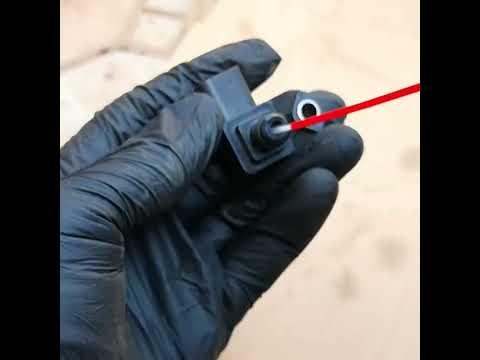
- If you see a sensor mounted in the air tube with a plug (often rectangular), that’s usually an IAT sensor on your Blazer.
- Now look at the intake manifold (upper engine area). If you see a small sensor with an electrical connector held by 1 screw/bolt, that’s usually the MAP sensor.
- If you upload a photo, I’ll point to it.
Step 2: Remove the air intake duct (helps access on most setups)
- Use a 7mm socket with a ratchet to loosen the clamp at the throttle body.
- Use a 7mm socket to loosen the clamp at the air box/duct connection.
- Disconnect any small breather tube(s) by releasing the clip with a small flat-blade screwdriver.
- Lift the duct out carefully and set it aside.
Step 3A: Replace the IAT sensor (if that’s what you meant)
- IAT sensor = Intake Air Temperature sensor. It measures incoming air temperature.
- Press the connector tab and unplug it (use a small flat-blade screwdriver only if the tab is stubborn).
- Remove the sensor from the duct:
- If it’s twist-lock: rotate it gently by hand and pull it out.
- If it’s screw-held: use a Torx T20 bit or Torx T25 bit to remove the screw, then pull the sensor out.
- Install the new sensor fully seated, then reconnect the electrical connector until it clicks.
Step 3B: Replace the MAP sensor (if that’s what you meant)
- MAP sensor = Manifold Absolute Pressure sensor. It reads intake manifold pressure for fueling.
- Locate the sensor on the intake manifold and unplug the connector (press the tab; use a small flat-blade screwdriver if needed).
- Remove the retaining fastener using either:
- 10mm socket with a ratchet and extension, or
- Torx T20 bit or Torx T25 bit (varies by supplier).
- Pull the sensor straight out (gentle wiggle only). Do not pry on plastic.
- Install the new sensor straight in, then install the fastener and Torque to 10 Nm (89 in-lbs).
- Reconnect the electrical connector until it clicks.
Step 4: Reinstall the air intake duct
- Refit the duct onto the throttle body and air box.
- Reconnect any breather tube(s) until they click.
- Use a 7mm socket to tighten both clamps snugly (do not strip them).
Step 5: Reconnect battery and clear codes (if needed)
- Reconnect the negative battery cable using a 10mm wrench.
- Use an OBD2 scan tool to clear codes, then start the engine.
✅ After Repair
- Start the engine and let it idle for 1-2 minutes. Listen for hissing (vacuum leak) around the intake duct.
- With the engine running, confirm there’s no check-engine light and no “Reduced Engine Power” message.
- Road test 10-15 minutes with normal acceleration, then re-scan with your OBD2 scan tool to confirm codes do not return.
💰 DIY vs Shop Cost
Shop Cost: $180-$450 (parts + labor)
DIY Cost: $40-$180 (parts only)
You Save: $140-$270 by doing it yourself!
Shop labor rates vary but typically run $100-$150/hour. This repair takes a shop approximately 0.5-1.0 hours.
🎯 Ready to get started?
HowToo makes it easy: same-day/2-day shipping on every part, plus all the tools and specialty tools you need! Check out the parts and tools sections below to add everything to your cart.