

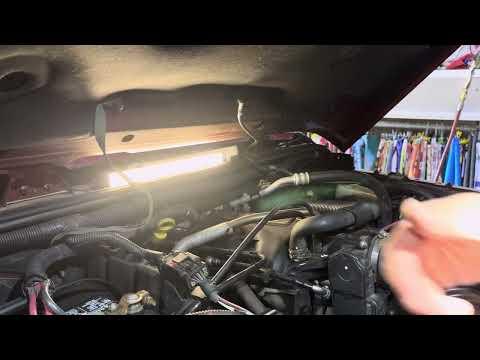







How to Replace the MAP & IAT Sensors (MAF Alternative) on a 2008 Jeep Wrangler 3.8L
Step-by-step sensor replacement guide with tools, parts list, torque specs, and code-clearing tips for 2008, 2009, 2010, 2011
How to Replace the MAP & IAT Sensors (MAF Alternative) on a 2008 Jeep Wrangler 3.8L
Step-by-step sensor replacement guide with tools, parts list, torque specs, and code-clearing tips for 2008, 2009, 2010, 2011


🔧 Wrangler - Air Metering Sensor Replacement (MAF vs MAP/IAT)
Your Wrangler’s 3.8L does not use a Mass Air Flow (MAF) sensor from the factory. It uses a MAP sensor (manifold absolute pressure) to calculate engine load, and an IAT sensor (intake air temperature) in the intake tube/airbox area.
If you were told “MAF,” you almost always need to replace/inspect the MAP and/or IAT sensor instead. This guide shows both procedures.
Difficulty Level: Beginner | Estimated Time: 0.3-0.8 hours
⚠️ Safety & Precautions
- ⚠️ Work on a cool engine to avoid burns around the intake and throttle body.
- ⚠️ Keep tools/clothing clear of the fan and belt area.
- ⚠️ Disconnect the battery if you’re prone to bumping the starter wiring: remove the negative (-) cable first.
- ⚠️ Do not use oily cleaners on sensors unless labeled sensor-safe.
🔧 Required Tools
You'll need the following tools for this repair:
- Safety glasses
- Nitrile gloves
- 1/4" drive ratchet
- 1/4" drive extension (3")
- 8mm socket
- 10mm socket
- Torx T20 bit
- Flat-blade screwdriver (medium)
- Needle-nose pliers
- Shop towel
- OBD2 scan tool
🔩 Required Parts
HowToo sells all the parts you need for this repair:
- MAP sensor - Qty: 1
- IAT sensor - Qty: 1
- Dielectric grease (electrical connector safe) - Qty: 1
- Throttle body/intake cleaner (sensor-safe) - Qty: 1
📋 Before You Begin
- Park on level ground, transmission in neutral, and set the parking brake.
- Open the hood and locate the intake tube from the air box to the throttle body.
- If disconnecting the battery: use a 10mm socket and remove the negative (-) cable, then isolate it so it can’t spring back.
🔨 Step-by-Step Instructions
Follow these steps in order:
Step 1: Confirm which sensor you’re replacing (MAP vs IAT)
- MAP sensor: mounted on the intake manifold (usually near the throttle body area) with an electrical connector and a small mounting screw/bolt.
- IAT sensor: mounted in the plastic intake tube/airbox area, twists/locks into place with an electrical connector.
- If you have a trouble code, share it.
Step 2 (MAP path): Unplug the MAP sensor connector
- Press the connector lock tab and pull the connector straight off.
- If it’s stuck, use needle-nose pliers gently on the tab (don’t pull on the wires).
- Wipe dirt away with a shop towel so nothing falls into the port.
Step 3 (MAP path): Remove the MAP sensor
- Remove the mounting fastener using a Torx T20 bit (some are hex—use an 8mm socket if yours is hex).
- Pull the sensor straight out with a gentle wiggle.
- Inspect the sensor O-ring (the rubber seal). If it’s damaged, replace the sensor (most replacements include a new seal).
Step 4 (MAP path): Install the new MAP sensor
- Lightly clean the mounting area with a shop towel. Do not drop debris into the opening.
- Push the new sensor straight in until it fully seats.
- Install the fastener using a Torx T20 bit (or 8mm socket if equipped) and Torque to 4 Nm (35 in-lbs).
- Apply a tiny amount of dielectric grease to the connector seal (not the metal pins), then reconnect the plug until it clicks.
Step 5 (IAT path): Access the IAT sensor on the intake tube
- If needed for access, loosen the intake tube clamp at the throttle body using an 8mm socket or flat-blade screwdriver (medium).
- Move the tube slightly for room—don’t force it.
Step 6 (IAT path): Unplug and remove the IAT sensor
- Press the connector lock tab and remove the plug.
- Twist the sensor counterclockwise and pull it out (it’s a twist-lock style on most setups).
- Make sure the old rubber seal/O-ring comes out with the sensor (don’t leave it stuck in the tube).
Step 7 (IAT path): Install the new IAT sensor
- Insert the new sensor into the opening, then twist clockwise until it locks.
- Reconnect the electrical plug until it clicks.
- Re-tighten the intake clamp using an 8mm socket or flat-blade screwdriver (medium) (snug—do not strip the clamp).
Step 8: Clear codes and verify the fix
- If you disconnected the battery, reconnect the negative cable using a 10mm socket.
- Use an OBD2 scan tool to clear any stored codes.
- Start the engine and let it idle for 2–3 minutes. Watch for rough idle, check engine light, or hissing (vacuum leak sound).
✅ After Repair
- Test drive 10–15 minutes with a few gentle accelerations.
- Re-scan using an OBD2 scan tool to confirm no codes return.
- If you still have lean codes (P0171/P0174), inspect for cracked intake tube, loose clamps, or vacuum leaks.
💰 DIY vs Shop Cost
Shop Cost: $150-$350 (parts + labor)
DIY Cost: $30-$120 (parts only)
You Save: $120-$230 by doing it yourself!
Shop labor rates vary but typically run $100-$150/hour. This repair takes a shop approximately 0.3-0.8 hours.
🎯 Ready to get started?
HowToo makes it easy: same-day/2-day shipping on every part, plus all the tools and specialty tools you need! Check out the parts and tools sections below to add everything to your cart.