

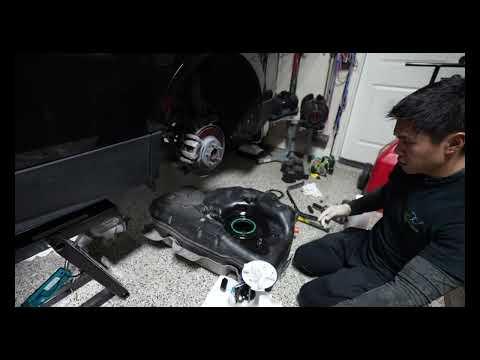






How to Replace the In-Tank Fuel Pump on a 2019 Chevrolet Equinox
Step-by-step diesel fuel pump replacement with tools, parts list, safety tips, and torque specs for DIY repair for 2018, 2019, 2020, 2021
How to Replace the In-Tank Fuel Pump on a 2019 Chevrolet Equinox
Step-by-step diesel fuel pump replacement with tools, parts list, safety tips, and torque specs for DIY repair for 2018, 2019, 2020, 2021


🔧 Equinox - Fuel Pump Replacement
Your Equinox has more than one fuel pump: a low-pressure pump in the tank and a high-pressure pump on the engine. The replacement steps are very different for each.
Difficulty Level: Advanced | Estimated Time: 3-5 hours
⚠️ Safety & Precautions
- ⚠️ Diesel fuel is flammable; work in a well-ventilated area away from open flames or sparks.
- ⚠️ Always support the vehicle with jack stands if you raise it; never rely only on a jack.
- ⚠️ Fuel system will be under pressure; release pressure slowly to avoid spray into eyes/skin.
- ⚠️ Disconnect the negative battery cable before working near fuel lines or electrical connectors.
- ⚠️ Wear safety glasses and fuel-resistant gloves; diesel can irritate skin and eyes.
🔧 Required Tools
You'll need the following tools for this repair:
- ⚙️ Floor jack (rated 3-ton minimum)
- ⚙️ Jack stands (rated 3-ton minimum)
- ⚙️ Wheel chocks
- ⚙️ 10mm socket
- ⚙️ 13mm socket
- ⚙️ Ratchet handle 3/8"
- ⚙️ Socket extension 6"
- ⚙️ Flathead screwdriver medium
- ⚙️ Trim removal tool plastic
- ⚙️ Fuel line quick-disconnect tool set (diesel) (specialty)
- ⚙️ Fuel pump lock ring tool (GM-style) (specialty)
- ⚙️ Torque wrench 5-80 Nm range
- ⚙️ Needle nose pliers
- ⚙️ Shop rags
- ⚙️ Drain pan fuel-safe
- ⚙️ Plastic fuel-safe container
- ⚙️ Safety glasses
- ⚙️ Nitrile gloves
- ⚙️ OBD2 scan tool basic
🔩 Required Parts
HowToo sells all the parts you need for this repair:
- 🧩 In-tank diesel fuel pump module assembly - Qty: 1
- 🧩 Fuel pump module seal/O-ring - Qty: 1
- 🧩 Fuel pump lock ring (recommended) - Qty: 1
- 🧩 Diesel-compatible fuel line clips - Qty: 2-4
- 🧩 Diesel fuel (to top off tank after repair) - Qty: 10-15 liters
- 🧩 Shop towels absorbent - Qty: 1 pack
📋 Before You Begin
- 🧭 Park the Equinox on level ground, set the parking brake, and place wheel chocks behind the rear wheels.
- 🧭 Reduce fuel level if possible to under 1/4 tank; a lighter tank is safer and easier to work around.
- 🧭 Open the fuel filler door to relieve any vapor pressure in the tank.
- 🧭 Disconnect the negative battery terminal using a 10mm socket.
- 🧭 Have good lighting; the pump is accessed from under the vehicle, above the fuel tank area.
🔨 Step-by-Step Instructions
Follow these steps in order:
Step 1: Relieve Fuel System Pressure
- Use the OBD2 scan tool only to check and note any fuel system fault codes before you begin.
- Remove the fuel tank cap by hand to release any pressure in the tank.
- Place a drain pan fuel-safe under the area where fuel lines are located to catch any drips.
Step 2: Safely Raise and Support the Vehicle
- Use the floor jack (rated 3-ton minimum) to lift the rear of the Equinox at the specified rear jacking point (center of rear crossmember).
- Place jack stands (rated 3-ton minimum) under the rear pinch welds or frame points recommended by GM.
- Lower the vehicle gently onto the jack stands with the floor jack.
- Shake vehicle slightly to confirm it is stable.
Step 3: Access the Top of the Fuel Tank
- The in-tank pump on this Equinox is accessed from above the tank, from under the vehicle (no interior access panel).
- Use a 13mm socket and ratchet handle 3/8" to remove any plastic shields or covers protecting the fuel tank top, if equipped.
- Use a trim removal tool plastic to pop out any plastic clips holding the shields.
Step 4: Disconnect Electrical Connector and Fuel Lines
- Locate the fuel pump module on top of the tank (round plastic top with electrical connector and fuel lines).
- Use a flathead screwdriver medium to gently lift the locking tab on the electrical connector, then unplug it by hand.
- Place shop rags around the fuel line connections.
- Use the fuel line quick-disconnect tool set (diesel) (specialty) to release the fuel supply and return lines from the pump module.
- Pull lines straight off to avoid cracking fittings.
Step 5: Clean the Area Around the Pump
- Use shop rags to wipe away dirt and dust from the top of the pump module.
- If available, use low-pressure compressed air (do not list as tool) to blow away debris, keeping it out of the tank.
Step 6: Remove the Pump Lock Ring
- Install the fuel pump lock ring tool (GM-style) (specialty) over the lock ring tabs.
- Use the ratchet handle 3/8" and possibly a socket extension 6" to rotate the lock ring counterclockwise to unlock it.
- If you do not have the specialty tool, you may gently tap the ring using a flathead screwdriver medium and a plastic mallet, but the proper tool is strongly recommended.
- Remove the lock ring and set it aside; expect some residual fuel around the opening.
Step 7: Remove the Old Fuel Pump Module
- Carefully lift the pump module straight up by hand.
- As you raise it, tilt it slightly to remove the fuel level float arm without bending it.
- Allow excess fuel to drain from the module into the tank; hold it over the opening for a few moments.
- Transfer the old module to the drain pan fuel-safe.
Step 8: Remove and Inspect the Old Seal
- Use needle nose pliers to carefully remove the old O-ring seal from the tank opening.
- Clean the sealing surface with shop rags until it is free of dirt and old fuel film.
Step 9: Install the New Seal and Pump Module
- Lightly lubricate the new O-ring seal with clean diesel fuel using a shop rag.
- Set the new O-ring in the groove around the tank opening by hand, making sure it lies flat.
- Carefully lower the new pump module into the tank, guiding the fuel level float arm in without bending it.
- Align the marks or tabs on the pump module with the tank (note the orientation from the old module).
Step 10: Reinstall and Torque the Lock Ring
- Place the new or cleaned lock ring over the pump module by hand.
- Use the fuel pump lock ring tool (GM-style) (specialty) and ratchet handle 3/8" to rotate the ring clockwise until it fully locks.
- On this GM design, tighten until the lock ring aligns with the stop marks; typical spec is approximately Torque to 60-70 Nm (44-52 ft-lbs) for similar GM rings, but follow the ring’s alignment marks as primary guide.
- Do not overtighten; plastic can crack.
Step 11: Reconnect Fuel Lines and Electrical Connector
- Push the fuel supply and return lines back onto their fittings by hand until you hear/feel a click.
- Gently tug each line to confirm they are locked.
- Install new diesel-compatible fuel line clips if any were damaged, using needle nose pliers.
- Reconnect the electrical connector by hand until the locking tab engages.
Step 12: Reinstall Any Shields or Covers
- Reposition any plastic shields over the tank.
- Use the trim removal tool plastic to reinstall any plastic clips.
- Use a 13mm socket and ratchet handle 3/8" to reinstall and tighten shield bolts to approximately Torque to 10 Nm (7 ft-lbs).
Step 13: Lower the Vehicle
- Use the floor jack (rated 3-ton minimum) to raise the vehicle slightly off the jack stands.
- Remove the jack stands (rated 3-ton minimum) by hand.
- Lower the vehicle fully to the ground with the floor jack.
Step 14: Reconnect Battery and Prime the Fuel System
- Reconnect the negative battery terminal with a 10mm socket and tighten to approximately Torque to 6-8 Nm (4-6 ft-lbs).
- Turn the ignition to ON (do not start) for 10-15 seconds to allow the pump to prime the system.
- Turn ignition OFF, then repeat this ON/OFF priming cycle 3-4 times.
- Listen for pump sound from rear each cycle.
Step 15: Start the Engine and Check for Leaks
- Start the engine and let it idle for several minutes.
- Check under the rear of the vehicle for any fuel leaks around the tank area.
- If safe to do so, gently raise the rear again with the floor jack and visually inspect the pump area for leaks while the engine idles.
✅ After Repair
- ✅ Use the OBD2 scan tool to clear any stored fuel system or low-pressure codes.
- ✅ Add diesel fuel to at least half a tank to ensure good pump cooling and accurate fuel gauge readings.
- ✅ Take a short, gentle test drive (10-15 minutes), watching for warning lights and monitoring engine power.
- ✅ After the drive, recheck for any fuel smell or damp spots under the rear of the vehicle.
💰 DIY vs Shop Cost
Shop Cost: $650-$950 (parts + labor)
DIY Cost: $220-$380 (parts only)
You Save: $430-$570 by doing it yourself!
Shop labor rates vary but typically run $100-$150/hour. This repair takes a shop approximately 2-3 hours.
🎯 Ready to get started?
HowToo makes it easy: same-day/2-day shipping on every part, plus all the tools and specialty tools you need! Check out the parts and tools sections below to add everything to your cart.