

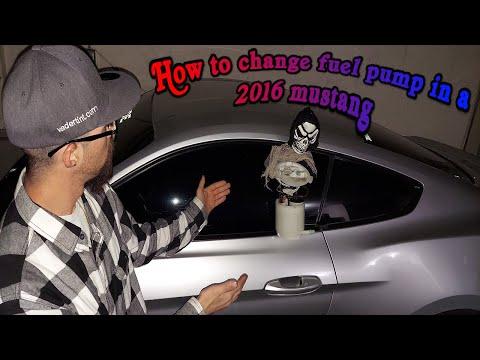





How to Replace the Fuel Pump on a 2015-2024 Ford Mustang (Engine: Inline 4 2.3L)
Step-by-step in-tank fuel pump module guide with tools, parts, safety tips, and leak checks for 2015, 2016, 2017, 2018, 2019, 2020, 2021, 2022, 2023, 2024
How to Replace the Fuel Pump on a 2015-2024 Ford Mustang (Engine: Inline 4 2.3L)
Step-by-step in-tank fuel pump module guide with tools, parts, safety tips, and leak checks for 2015, 2016, 2017, 2018, 2019, 2020, 2021, 2022, 2023, 2024


🔧 Mustang - Fuel Pump Module Replacement
Replacing the fuel pump module on your Mustang means removing the rear seat cushion, opening the access panel, disconnecting the fuel lines and wiring, then replacing the in-tank pump module. This repair is more serious than a basic bulb or filter job because gasoline vapors are flammable and the fuel system must be depressurized first.
Difficulty Level: Advanced | Estimated Time: 2-4 hours
⚠️ Safety & Precautions
- ⚠️ Work outside or in a very well-ventilated area. Gasoline vapor can ignite easily.
- ⚠️ Keep all flames, heaters, cigarettes, sparks, and power tools that can spark away from the vehicle.
- ⚠️ Wear safety glasses and fuel-resistant gloves.
- ⚠️ Disconnect the negative battery cable before opening the fuel tank access area.
- ⚠️ Depressurize the fuel system before disconnecting any fuel line.
- ⚠️ Have a Class B fire extinguisher nearby. Class B means it is rated for flammable liquids like gasoline.
- ⚠️ Do not use a steel punch or steel hammer on the fuel pump lock ring because they can create sparks.
- ⚠️ Clean around the pump opening before removal so dirt does not fall into the fuel tank.
🔧 Required Tools
You'll need the following tools for this repair:
- 8mm socket
- 10mm socket
- 1/4-inch ratchet
- 3/8-inch ratchet
- 3-inch extension
- Fuel line disconnect tool set (specialty)
- Fuel pump lock ring tool (specialty)
- Torque wrench inch-pound
- Trim clip removal tool
- Flat-blade screwdriver
- Plastic scraper
- Shop towels
- Drain pan
- Hand siphon pump
- Approved gasoline container
- Class B fire extinguisher
- Fuel-resistant gloves
- Safety glasses
🔩 Required Parts
HowToo sells all the parts you need for this repair:
- Fuel pump module assembly - Qty: 1
- Fuel pump tank seal - Qty: 1
- Fuel line retaining clips - Qty: As needed
- Fuel-safe cleaner - Qty: 1
📋 Before You Begin
- 🚗 Park your Mustang outside on level ground.
- 🅿️ Set the parking brake.
- ⛽ Run the fuel level as low as practical before starting. Less fuel makes the job safer and cleaner.
- 🔋 Open the trunk and make sure you can access the battery area before starting.
- 🧯 Place a Class B fire extinguisher within reach.
- 📌 A fuel line disconnect tool releases the spring-lock fitting without breaking the fuel line.
- 📌 A fuel pump lock ring tool turns the large retaining ring that holds the pump module in the tank.
🔨 Step-by-Step Instructions
Follow these steps in order:
Step 1: Depressurize the Fuel System
- Use the vehicle controls to turn the ignition off.
- Open the hood by using the interior hood release.
- Use the trim clip removal tool or your fingers to remove the underhood fuse box cover.
- Use the diagram on the fuse box cover to locate the fuel pump fuse or fuel pump relay.
- Use your fingers or the fuse puller from the fuse box to remove the fuel pump fuse or relay.
- Start the engine and let it run until it stalls.
- Crank the engine for 3-5 seconds more to release remaining pressure.
- Turn the ignition off.
- Pressure must be gone before opening lines.
Step 2: Disconnect the Battery
- Open the trunk and access the battery.
- Use the 10mm socket and 3/8-inch ratchet to loosen the negative battery cable clamp.
- Remove the negative cable from the battery post.
- Position the cable so it cannot spring back and touch the battery post.
- Torque on installation: 5 Nm (44 in-lbs)
Step 3: Remove the Rear Seat Cushion
- Open both doors for more working room.
- Use your hands to feel along the front lower edge of the rear seat cushion for the release points.
- Pull upward firmly at each release point to pop the cushion free.
- Lift the front of the cushion, then slide it out of the vehicle.
- Set the cushion somewhere clean so gasoline smell does not transfer to it.
Step 4: Remove the Fuel Pump Access Cover
- Use the 8mm socket, 1/4-inch ratchet, and 3-inch extension to remove the access cover fasteners.
- Use the trim clip removal tool if any carpet retainers or clips are in the way.
- Lift the access cover off carefully.
- Use shop towels to wipe loose dust from the area.
Step 5: Clean Around the Pump Module
- Use fuel-safe cleaner and shop towels to clean the top of the fuel pump module and surrounding tank area.
- Use the plastic scraper only if dirt is stuck around the lock ring area.
- Do not let dirt fall into the tank opening.
- Clean first. Open second.
Step 6: Disconnect the Electrical Connector
- Use your fingers to press the lock tab on the fuel pump electrical connector.
- Pull the connector straight off the pump module.
- If the connector is tight, use the flat-blade screwdriver gently to help lift the lock tab.
- Do not pry on the wiring itself.
Step 7: Disconnect the Fuel Line
- Place shop towels around the fuel line connection to catch drips.
- Place the drain pan nearby.
- Use the fuel line disconnect tool set to release the spring-lock fuel line fitting.
- Pull the fuel line straight off the pump nipple once the fitting releases.
- Cap or wrap the line end with a clean shop towel to keep dirt out.
- Expect a small amount of fuel to spill even after depressurizing.
Step 8: Remove the Fuel Pump Lock Ring
- Use the fuel pump lock ring tool and 3/8-inch ratchet to turn the lock ring counterclockwise.
- If the ring is stuck, apply steady pressure. Do not hammer it with steel tools.
- Remove the lock ring and set it aside.
- Inspect the lock ring for damage or heavy corrosion.
Step 9: Remove the Old Fuel Pump Module
- Use both hands to lift the fuel pump module slowly out of the tank.
- Tilt the module slightly as needed so the fuel level float clears the tank opening.
- Keep the drain pan and shop towels under the module because fuel will drip from it.
- Remove the old fuel pump tank seal from the tank opening.
- Do not reuse the old seal.
Step 10: Transfer Required Pieces if Needed
- Compare the old fuel pump module to the new fuel pump module assembly.
- Use the flat-blade screwdriver only if a small clip or retaining tab must be released.
- Transfer any required rubber isolators or protective pieces only if the new assembly does not include them.
- Make sure the new float arm moves freely and is not bent.
Step 11: Install the New Tank Seal
- Use clean fuel-resistant gloves to place the new fuel pump tank seal onto the tank opening.
- Make sure the seal sits flat all the way around.
- Do not use silicone, grease, or sealer unless the part instructions specifically require it.
Step 12: Install the New Fuel Pump Module
- Use both hands to lower the new fuel pump module assembly into the tank.
- Guide the float arm carefully through the opening so it does not bend.
- Align the pump module tabs or marks with the tank marks.
- Hold the module down evenly so the seal stays flat.
Step 13: Reinstall the Lock Ring
- Use your hands to start the lock ring onto the tank tabs.
- Use the fuel pump lock ring tool and 3/8-inch ratchet to turn the lock ring clockwise until fully seated.
- Make sure the lock ring reaches its stop position and the pump module is clamped evenly.
- Torque to manufacturer lock-ring seated position
Step 14: Reconnect the Fuel Line and Connector
- Use your hands to push the fuel line straight onto the pump nipple until it clicks.
- Gently pull back on the line by hand to confirm it is locked.
- Install new fuel line retaining clips if any original clips were damaged.
- Push the electrical connector onto the fuel pump module until the lock tab clicks.
Step 15: Reconnect the Battery and Prime the System
- Use the 10mm socket and 3/8-inch ratchet to reconnect the negative battery cable.
- Torque to 5 Nm (44 in-lbs)
- Reinstall the fuel pump fuse or relay by hand.
- Turn the ignition to ON without starting the engine for 5 seconds.
- Turn the ignition off for 10 seconds.
- Repeat this ON/OFF cycle 3 times to fill the lines with fuel.
Step 16: Check for Leaks
- Use safety glasses and fuel-resistant gloves while inspecting the pump area.
- Look closely around the fuel line fitting and pump seal area.
- Smell for strong fresh gasoline odor.
- If you see wet fuel, turn the ignition off immediately and fix the connection before continuing.
Step 17: Start the Engine
- Use the start button or key to start your Mustang.
- Let the engine idle for 1-2 minutes.
- Use safety glasses and visually check the fuel pump area again for leaks.
- Turn the engine off before reinstalling the access cover.
Step 18: Reinstall the Access Cover and Rear Seat
- Use the 8mm socket, 1/4-inch ratchet, and 3-inch extension to reinstall the access cover fasteners.
- Torque to snug hand-tight only
- Place the rear seat cushion back into position.
- Push down firmly at the front latch points until the cushion locks into place.
- Pull gently upward on the cushion to confirm it is secured.
✅ After Repair
- ✅ Start your Mustang and confirm it starts normally without long cranking.
- ✅ Check again for fuel smell inside the cabin and around the rear seat area.
- ✅ Test drive gently for 5-10 minutes, then recheck for fuel odor or leaks.
- ✅ If the check engine light remains on, scan for fuel pressure or pump circuit codes.
- ✅ Dispose of fuel-contaminated towels safely according to local rules.
💰 DIY vs Shop Cost
Shop Cost: $650-$1,150 (parts + labor)
DIY Cost: $250-$600 (parts only)
You Save: $400-$550 by doing it yourself!
Shop labor rates vary but typically run $100-$150/hour. This repair takes a shop approximately 2-3 hours.
🎯 Ready to get started?
HowToo makes it easy: same-day/2-day shipping on every part, plus all the tools and specialty tools you need! Check out the parts and tools sections below to add everything to your cart.