



How to Replace the Fuel Pump on a 2011-2017 Jeep Wrangler (Engine: V6 3.6L)
Step-by-step fuel pump module guide with tools, parts, torque specs, and safety tips for 2011
How to Replace the Fuel Pump on a 2011-2017 Jeep Wrangler (Engine: V6 3.6L)
Step-by-step fuel pump module guide with tools, parts, torque specs, and safety tips for 2011


🔧 Wrangler - Fuel Pump Module Replacement
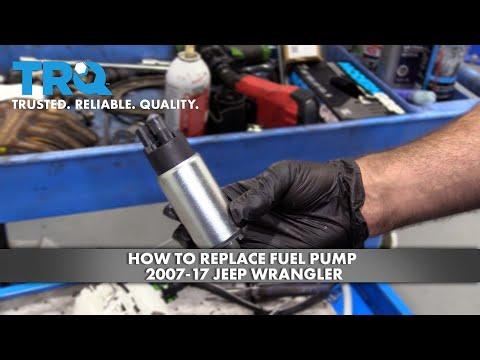
The fuel pump on your Wrangler is part of a complete fuel pump module mounted inside the fuel tank. To replace it, you will support and lower the fuel tank, disconnect the fuel and electrical connections, remove the pump module from the top of the tank, and install the new module with a fresh seal.
Difficulty Level: Advanced | Estimated Time: 3-5 hours
⚠️ Safety & Precautions
- ⚠️ Gasoline is highly flammable. Work outside or in a well-ventilated area away from flames, sparks, heaters, and cigarettes.
- ⚠️ Disconnect the negative battery cable before opening the fuel system.
- ⚠️ Relieve fuel pressure before disconnecting any fuel line.
- ⚠️ Use a jack and jack stands on solid, level ground. Never work under a vehicle supported only by a jack.
- ⚠️ Lower the fuel tank only when it is properly supported. A tank with fuel in it is heavy and unstable.
- ⚠️ Keep a Class B fire extinguisher nearby. Class B means it is rated for flammable liquids like gasoline.
- ⚠️ Avoid using steel punches or tools that can spark near fuel vapors.
🔧 Required Tools
You'll need the following tools for this repair:
- 8mm socket
- 10mm socket
- 10mm wrench
- 13mm socket
- 15mm socket
- 18mm socket
- 3/8-inch ratchet
- 3/8-inch extension set
- Flat-blade screwdriver
- Fuel line disconnect tool set (specialty)
- Fuel pressure gauge with Schrader adapter (specialty)
- Fuel pump lock ring tool (specialty)
- Brass drift punch (specialty)
- Dead-blow hammer
- Torque wrench 10-80 ft-lb
- Floor jack (rated 3-ton minimum)
- Jack stands (rated 3-ton minimum)
- Transmission jack (specialty)
- Wood block 12-inch by 12-inch
- Wheel chocks
- Drain pan rated for gasoline
- Parts cleaning brush
- Shop towels
- Nitrile gloves
- Safety glasses
- Class B fire extinguisher
🔩 Required Parts
HowToo sells all the parts you need for this repair:
- Fuel pump module assembly - Qty: 1
- Fuel pump module seal/O-ring - Qty: 1
- Fuel pump module lock ring - Qty: 1
- Fuel tank strap bolts - Qty: 2
- Fuel line retainer clips - Qty: as needed
- Gasoline-safe absorbent pads - Qty: 1 pack
📋 Before You Begin
- 🅿️ Park your Wrangler on level ground, set the parking brake, and place wheel chocks at the front wheels.
- ⛽ Do this job with the fuel tank as close to empty as possible.
- 🔋 Use a 10mm wrench to disconnect the negative battery cable.
- 🧼 Clean around the tank area before lowering it so dirt does not fall into the fuel tank.
- 📸 Take photos of hose and connector routing before unplugging anything.
🔨 Step-by-Step Instructions
Follow these steps in order:
Step 1: Relieve fuel pressure
- Open the hood and locate the fuel rail service port on the engine fuel rail.
- The fuel rail is the metal tube that sends fuel to the injectors.
- Wrap the area with shop towels.
- Connect the fuel pressure gauge with Schrader adapter to the service port.
- Bleed the fuel pressure into a drain pan rated for gasoline.
- Remove the gauge after pressure reaches zero.
Step 2: Raise the rear of your Wrangler
- Use a floor jack rated 3-ton minimum under the rear axle center section.
- Raise the rear high enough to safely work under the fuel tank.
- Place jack stands rated 3-ton minimum under the frame rails.
- Lower your Wrangler onto the jack stands and gently shake the vehicle to confirm it is stable.
- Safety first. Stability matters.
Step 3: Remove the fuel filler cap and filler fasteners
- Remove the fuel filler cap by hand.
- Use an 8mm socket and 3/8-inch ratchet to remove the filler neck fasteners at the fuel door area if equipped.
- Use a flat-blade screwdriver to loosen the filler hose clamp if the hose must be separated while lowering the tank.
Step 4: Support the fuel tank
- Position a transmission jack under the fuel tank.
- If using a floor jack, place a wood block 12-inch by 12-inch between the jack and tank.
- Raise the jack until it lightly supports the tank.
- Do not dent the tank.
Step 5: Remove the fuel tank skid plate if equipped
- Use a 15mm socket, 3/8-inch ratchet, and 3/8-inch extension set to remove the skid plate fasteners.
- Support the skid plate as the last fasteners are removed.
- Set the skid plate aside.
Step 6: Remove the fuel tank strap bolts
- Use a 15mm socket or 18mm socket with a 3/8-inch ratchet to loosen the fuel tank strap bolts.
- Remove the bolts slowly while confirming the tank is still supported by the jack.
- Do not lower the tank fully yet.
Step 7: Lower the tank slightly
- Use the transmission jack or floor jack to lower the tank a few inches.
- Look above the tank for the electrical connector, fuel line, EVAP vapor lines, and filler hoses.
- EVAP lines carry fuel vapors to the emissions system.
- Stop lowering if any hose or wire becomes tight.
Step 8: Disconnect the fuel pump connections
- Unplug the fuel pump electrical connector by hand.
- Use the fuel line disconnect tool set to release the fuel supply line from the pump module.
- Use a flat-blade screwdriver only to gently lift plastic safety locks if needed.
- Disconnect EVAP vapor lines by hand at their quick-connect fittings.
- Place shop towels and a drain pan rated for gasoline under the connections.
- Take photos before disconnecting.
Step 9: Lower and remove the fuel tank
- Use the transmission jack or floor jack to lower the tank slowly.
- Keep the tank level to reduce fuel spill risk.
- Slide the tank out from under your Wrangler once it is fully lowered.
Step 10: Clean the pump area
- Use a parts cleaning brush to clean dirt from around the fuel pump module opening.
- Wipe the area with shop towels.
- Do not let dirt fall into the tank.
Step 11: Remove the fuel pump lock ring
- Use the fuel pump lock ring tool to turn the lock ring counterclockwise.
- If needed, use a brass drift punch and dead-blow hammer to tap the ring counterclockwise.
- A brass drift punch is a soft punch that reduces spark risk near fuel vapors.
- Remove the lock ring from the tank.
Step 12: Remove the old fuel pump module
- Lift the old fuel pump module assembly straight up from the tank.
- Tilt it slightly only to clear the fuel level float arm.
- The float arm is the small moving arm that reads fuel level for the gauge.
- Let fuel drain from the module back into the tank.
- Remove the old fuel pump module seal/O-ring.
Step 13: Install the new seal and pump module
- Wipe the tank sealing surface clean with shop towels.
- Install the new fuel pump module seal/O-ring by hand into the tank groove.
- Lower the new fuel pump module assembly into the tank.
- Align the new module in the same position as the original.
- Do not bend the float arm.
Step 14: Lock the new pump module in place
- Install the new fuel pump module lock ring.
- Use the fuel pump lock ring tool to turn the lock ring clockwise until fully seated against the stops.
- If using a brass drift punch and dead-blow hammer, tap evenly around the ring until it locks.
- Torque to fully seated at the lock stops; do not force past the stops.
Step 15: Raise the tank partway and reconnect everything
- Place the tank back on the transmission jack or floor jack with the wood block 12-inch by 12-inch.
- Raise the tank partway into position.
- Push the fuel line onto the pump fitting until it clicks.
- Plug in the electrical connector by hand until locked.
- Reconnect the EVAP vapor lines by hand.
- Use a flat-blade screwdriver to tighten the filler hose clamp if removed.
Step 16: Reinstall the tank straps
- Raise the tank fully into position with the jack.
- Start the new fuel tank strap bolts by hand.
- Use a 15mm socket or 18mm socket to snug the strap bolts.
- Use a torque wrench 10-80 ft-lb for final tightening.
- Torque to 40 Nm (30 ft-lbs)
Step 17: Reinstall the skid plate if equipped
- Raise the skid plate into position by hand.
- Start all fasteners by hand first.
- Use a 15mm socket, 3/8-inch ratchet, and 3/8-inch extension set to tighten the fasteners evenly.
- Use a torque wrench 10-80 ft-lb for final tightening.
- Torque to 54 Nm (40 ft-lbs)
Step 18: Reinstall filler parts
- Use an 8mm socket to reinstall filler neck fasteners if removed.
- Install the fuel filler cap by hand until it clicks.
Step 19: Reconnect the battery
- Use a 10mm wrench to reconnect the negative battery cable.
- Use a torque wrench 10-80 ft-lb carefully if available.
- Torque to 7 Nm (62 in-lbs)
Step 20: Prime and start the engine
- Turn the ignition key to ON for 3 seconds without starting.
- Turn the key OFF for 10 seconds.
- Repeat this 3-4 times to prime the fuel system.
- Start the engine and let it idle.
✅ After Repair
- ✅ Check under your Wrangler for fuel leaks with the engine idling.
- ✅ Shut the engine off immediately if you smell raw fuel or see wet fuel.
- ✅ Confirm the fuel gauge reads normally.
- ✅ Take a short, gentle road test, then recheck for leaks.
- ✅ Dispose of fuel-soaked towels and absorbent pads according to local hazardous-waste rules.
💰 DIY vs Shop Cost
Shop Cost: $750-$1,200 parts + labor
DIY Cost: $180-$450 parts only
You Save: $570-$750 by doing it yourself!
Shop labor rates vary but typically run $100-$150/hour. This repair takes a shop approximately 2.5-4.0 hours.
🎯 Ready to get started?
HowToo makes it easy: same-day/2-day shipping on every part, plus all the tools and specialty tools you need! Check out the parts and tools sections below to add everything to your cart.