

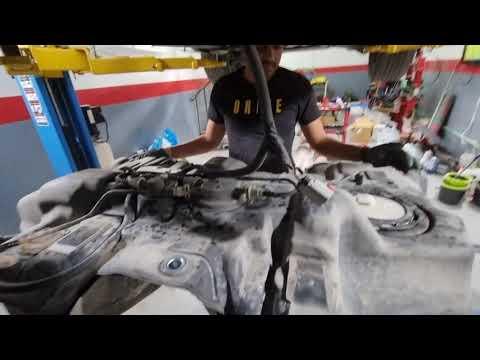





How to Replace the Fuel Pump on a 2011-2017 Jeep Grand Cherokee (Engine: V6 3.6L)
Step-by-step in-tank fuel pump module guide with tools, parts, torque specs, and safety tips for 2011, 2012, 2013, 2014, 2015, 2016, 2017
How to Replace the Fuel Pump on a 2011-2017 Jeep Grand Cherokee (Engine: V6 3.6L)
Step-by-step in-tank fuel pump module guide with tools, parts, torque specs, and safety tips for 2011, 2012, 2013, 2014, 2015, 2016, 2017


🔧 Grand Cherokee - Fuel Pump Module Replacement
Replacing the fuel pump on your Grand Cherokee means removing the fuel tank and replacing the in-tank fuel pump module. The pump module sends fuel from the tank to the engine, and a weak or failed pump can cause long cranking, stalling, no-start, or low fuel pressure.
Difficulty Level: Advanced | Estimated Time: 3-5 hours
⚠️ Safety & Precautions
- 🔥 Gasoline is extremely flammable. Work outside or in a very well-ventilated area away from sparks, cigarettes, heaters, and open flames.
- 👓 Wear safety glasses and fuel-resistant gloves. Fuel may spill when lines are disconnected.
- 🔋 Disconnect the negative battery cable before opening the fuel system.
- ⛽ Relieve fuel system pressure before disconnecting any fuel line.
- 🧯 Keep a Class B fire extinguisher nearby.
- 🚗 Support your Grand Cherokee securely with jack stands. Never rely on a jack alone.
- 📉 The fuel tank is heavy. Run the tank as low as possible before starting, ideally below 1/4 tank.
🔧 Required Tools
You'll need the following tools for this repair:
- 10mm socket
- 13mm socket
- 15mm socket
- Ratchet
- 6-inch extension
- Flathead screwdriver
- Fuel line disconnect tool set (specialty)
- Fuel pump lock ring tool (specialty)
- Torque wrench inch-pound
- Torque wrench foot-pound
- Floor jack rated 3-ton minimum
- Jack stands rated 3-ton minimum
- Transmission jack or wide wood board
- Wheel chocks
- Drain pan
- Shop towels
- Fuel-resistant gloves
- Safety glasses
- Class B fire extinguisher
🔩 Required Parts
HowToo sells all the parts you need for this repair:
- Fuel pump module assembly - Qty: 1
- Fuel pump module tank seal - Qty: 1
- Fuel pump lock ring - Qty: 1
- Fuel line retaining clips - Qty: As needed
- Evaporative emissions hose clips - Qty: As needed
📋 Before You Begin
- Park your Grand Cherokee on level ground and set the parking brake.
- Run the fuel level down as low as safely possible before starting.
- Place wheel chocks at the front wheels.
- Open the fuel filler cap to release tank vapor pressure.
- A fuel line disconnect tool releases the spring clip inside quick-connect fuel fittings without breaking them.
- A fuel pump lock ring tool turns the large metal retaining ring that holds the pump module to the fuel tank.
- Take photos of hose and connector locations before disconnecting them. This helps during reassembly.
🔨 Step-by-Step Instructions
Follow these steps in order:
Step 1: Relieve Fuel Pressure
- Use your hand to remove the fuel filler cap.
- Open the hood and locate the fuse/relay box.
- Use the fuse box cover diagram to identify the fuel pump fuse or relay.
- Use needle-style fingers or a fuse puller if equipped to remove the fuel pump fuse or relay.
- Start the engine and let it run until it stalls. This uses up pressure in the fuel line.
- Crank the engine for 3-5 seconds more.
- Turn the ignition off.
- Less pressure means less fuel spray.
Step 2: Disconnect the Battery
- Use a 10mm socket and ratchet to loosen the negative battery cable clamp.
- Remove the negative cable from the battery post and move it aside so it cannot spring back.
- Torque on reassembly: 5 Nm (44 in-lbs)
Step 3: Raise and Support the Vehicle
- Use a floor jack rated 3-ton minimum to lift the rear of your Grand Cherokee at the rear lift point.
- Place jack stands rated 3-ton minimum under the proper rear support points.
- Lower the vehicle gently onto the jack stands.
- Shake the vehicle lightly by hand to confirm it is stable.
- Never work under a jack-only vehicle.
Step 4: Remove Fuel Tank Shield or Skid Plate
- Use a 13mm socket, ratchet, and 6-inch extension to remove the fuel tank shield or skid plate fasteners if equipped.
- Support the shield by hand while removing the last fastener.
- Set the shield aside.
- Torque on reassembly: 28 Nm (21 ft-lbs)
Step 5: Support the Fuel Tank
- Position a transmission jack or floor jack with a wide wood board under the fuel tank.
- Raise the jack just enough to support the tank. Do not crush the tank.
- A transmission jack is a wide, stable lifting jack designed to hold large parts like tanks and transmissions.
Step 6: Disconnect Filler Neck and Vent Hoses
- Use a flathead screwdriver to loosen the filler neck hose clamp.
- Slide the filler hose off the tank neck by hand.
- Use a flathead screwdriver to release vent hose clips if fitted.
- Mark hose positions with tape if needed.
- Torque hose clamps on reassembly: 4 Nm (35 in-lbs)
Step 7: Disconnect Electrical Connectors and EVAP Lines
- Use your fingers to press the release tabs on the fuel pump electrical connector and fuel tank pressure sensor connector.
- Use a flathead screwdriver gently if a connector lock needs to be lifted.
- Use the fuel line disconnect tool set to release EVAP quick-connect lines.
- Do not pull on wires. Pull only on the connector body.
- EVAP means evaporative emissions. These hoses route fuel vapors to the emissions system.
Step 8: Disconnect the Fuel Supply Line
- Place a drain pan and shop towels under the fuel line connection.
- Use the correct-size fuel line disconnect tool from the fuel line disconnect tool set.
- Push the tool into the quick-connect fitting, then pull the line straight off.
- Cap or cover the open line with a clean shop towel.
- Expect a small fuel spill.
Step 9: Lower the Fuel Tank
- Use a 15mm socket, ratchet, and 6-inch extension to remove the fuel tank strap bolts.
- Keep one hand on the tank or have a helper steady it.
- Slowly lower the jack a few inches.
- Check for any still-connected hoses or wiring before lowering fully.
- Lower the tank enough to access the top of the fuel pump module.
- Torque on reassembly: 47 Nm (35 ft-lbs)
Step 10: Clean Around the Fuel Pump Module
- Use shop towels to clean dirt from the top of the fuel tank around the pump module.
- Do not let dirt fall into the tank.
- Cleanliness protects the new pump.
Step 11: Remove the Fuel Pump Lock Ring
- Use the fuel pump lock ring tool and ratchet to turn the lock ring counterclockwise.
- Remove the lock ring from the tank.
- Lift the fuel pump module straight up slowly.
- Tilt the module carefully to drain fuel from the reservoir into the tank.
- Remove and discard the old tank seal.
Step 12: Install the New Fuel Pump Module
- Install the new fuel pump module tank seal into the tank opening by hand.
- Lower the new fuel pump module into the tank carefully.
- Align the pump module marks with the tank marks.
- Install the new lock ring by hand first.
- Use the fuel pump lock ring tool and torque wrench foot-pound to tighten the lock ring.
- Torque to 75 Nm (55 ft-lbs)
Step 13: Raise and Secure the Fuel Tank
- Use the transmission jack or floor jack with wide wood board to lift the fuel tank into position.
- Make sure no hoses or wires are trapped above the tank.
- Use a 15mm socket and ratchet to install the fuel tank strap bolts.
- Use a torque wrench foot-pound with 15mm socket to tighten the strap bolts.
- Torque to 47 Nm (35 ft-lbs)
Step 14: Reconnect Fuel Lines, EVAP Lines, and Connectors
- Push the fuel supply line onto the pump fitting by hand until it clicks.
- Pull back lightly by hand to confirm it is locked.
- Reconnect EVAP lines by hand until each fitting clicks.
- Reconnect electrical connectors by hand until the locks click.
- Use a flathead screwdriver only if a connector safety lock must be slid closed.
Step 15: Reconnect Filler Neck and Vent Hoses
- Slide the filler hose fully onto the tank neck by hand.
- Use a flathead screwdriver to tighten the hose clamp.
- Reconnect vent hoses by hand and make sure clips are fully seated.
- Use a torque wrench inch-pound if the clamp uses a screw clamp.
- Torque to 4 Nm (35 in-lbs)
Step 16: Reinstall Fuel Tank Shield or Skid Plate
- Lift the shield into place by hand.
- Use a 13mm socket, ratchet, and 6-inch extension to install the fasteners.
- Use a torque wrench foot-pound with 13mm socket to tighten the fasteners.
- Torque to 28 Nm (21 ft-lbs)
Step 17: Lower the Vehicle
- Use the floor jack rated 3-ton minimum to lift the rear slightly off the jack stands.
- Remove the jack stands.
- Lower your Grand Cherokee slowly to the ground.
Step 18: Reconnect Battery and Prime the Fuel System
- Use a 10mm socket and ratchet to reconnect the negative battery cable.
- Use a torque wrench inch-pound with 10mm socket to tighten the battery terminal.
- Torque to 5 Nm (44 in-lbs)
- Reinstall the fuel pump fuse or relay by hand.
- Turn the ignition to ON for 5 seconds without starting.
- Turn the ignition OFF for 10 seconds.
- Repeat this ON/OFF cycle 3 times to prime the fuel system.
✅ After Repair
- Start the engine and let it idle.
- Check under your Grand Cherokee for fuel leaks near the tank, fuel line connection, and filler hose.
- If the engine cranks longer than normal, turn the key off and repeat the prime cycle.
- Confirm the fuel gauge reads normally.
- Road test for 10-15 minutes, then recheck for leaks.
- If the check engine light is on, scan for codes and clear them after confirming the repair is leak-free.
💰 DIY vs Shop Cost
Shop Cost: $650-$1,050 USD equivalent (parts + labor)
DIY Cost: $180-$450 USD equivalent (parts only)
You Save: $470-$600 USD equivalent by doing it yourself!
Shop labor rates vary but typically run $100-$150/hour. This repair takes a shop approximately 2.5-4.0 hours.
🎯 Ready to get started?
HowToo makes it easy: same-day/2-day shipping on every part, plus all the tools and specialty tools you need! Check out the parts and tools sections below to add everything to your cart.