

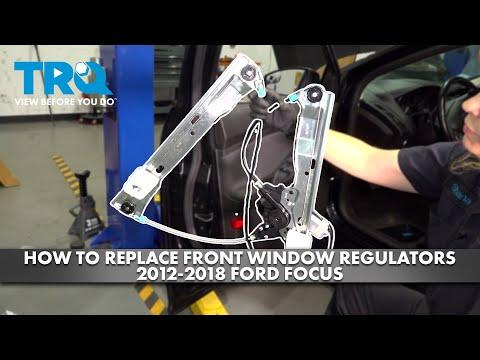




How to Replace the Front Window Regulator on a 2018 Ford Focus (Driver or Passenger)
Step-by-step door panel removal, rivet vs bolt install, tools/parts list, and key torque specs for 2012, 2013, 2014, 2015, 2016, 2017, 2018
How to Replace the Front Window Regulator on a 2018 Ford Focus (Driver or Passenger)
Step-by-step door panel removal, rivet vs bolt install, tools/parts list, and key torque specs for 2012, 2013, 2014, 2015, 2016, 2017, 2018


🔧 Focus - Front Window Regulator Replacement
Your Focus uses a window regulator (and usually a motor) to move the front door glass up and down. When the regulator wears out, the window may drop, bind, move crooked, or stop moving.
Difficulty Level: Intermediate | Estimated Time: 2-3 hours (one door)
⚠️ Safety & Precautions
- ⚠️ Disconnect the 12V battery negative cable to prevent accidental window movement and electrical shorts.
- ⚠️ Support the window glass before loosening clamps; the glass can drop suddenly.
- ⚠️ Wear gloves; door inner metal edges are sharp.
- ⚠️ Do not tear the vapor barrier (plastic sheet); it prevents water leaks into the cabin.
🔧 Required Tools
You'll need the following tools for this repair:
- Safety glasses
- Mechanic gloves
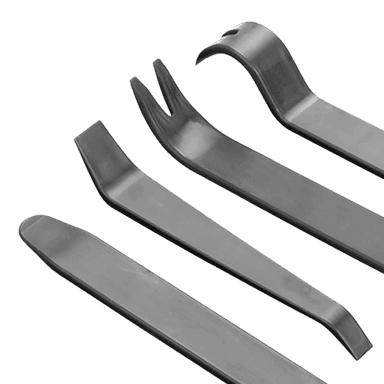
- Trim removal tool set
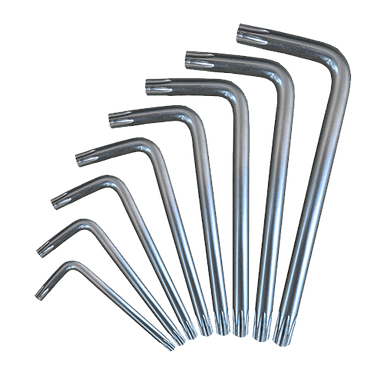
- Torx T20 screwdriver
- Torx T25 screwdriver
- Torx T30 screwdriver
- 7mm socket
- 8mm socket
- 10mm socket
- 1/4" drive ratchet
- 3" extension (1/4" drive)
- Pick tool
- Needle-nose pliers
- Painters tape (1"-2" wide)
- Plastic razor blade
- Torque wrench (in-lb)
- Drill
- 1/4" drill bit
- Rivet gun (1/4") (specialty)
- 1/4" aluminum rivets
🔩 Required Parts
HowToo sells all the parts you need for this repair:
- Front window regulator (driver/left) - Qty: 1
- Front window regulator (passenger/right) - Qty: 1
- Front window motor (if not included with regulator) - Qty: 1
- Door trim panel retainer clips - Qty: 1 set
- Vapor barrier butyl seal tape - Qty: 1
📋 Before You Begin
- Park on level ground and turn the ignition off.
- Lower the window until you can access the glass clamp bolts through the door access holes (if the window still moves).
- Disconnect the battery: use a 10mm socket to remove the negative terminal and isolate it so it can’t spring back.
- If the window is stuck up, plan to support the glass after the door panel is off (you’ll tape it to the door frame).
🔨 Step-by-Step Instructions
Follow these steps in order:
Step 1: Remove the front door trim panel
- Use a trim removal tool set to carefully pop off the small trim covers near the handle/armrest area (clips release with gentle prying).
- Remove screws you uncover using a Torx T20 screwdriver or Torx T25 screwdriver (varies by panel location).
- Remove any lower/edge screws using a 7mm socket with a 1/4" drive ratchet.
- Use the trim removal tool set to pop the panel clips around the perimeter, then lift the panel up and off the window ledge.
- Disconnect electrical connectors using a pick tool to release locking tabs. Don’t pull on the wires.
Step 2: Remove the vapor barrier (plastic water shield)
- Use a plastic razor blade to separate the butyl adhesive while peeling the barrier back slowly.
- Support the barrier so it doesn’t fold onto itself and get contaminated with dirt.
Step 3: Support and secure the window glass
- If the glass is still attached to the regulator, move it to where the clamp bolts are visible through the access holes.
- Use painters tape (1"-2" wide) to tape the glass to the door frame (run several long strips over the top of the door and onto the glass).
- If the glass can’t be positioned, be ready to hold it by hand while you loosen the clamps.
Step 4: Disconnect the glass from the regulator
- Through the access holes, loosen the glass clamp bolts using an 8mm socket or 10mm socket (some regulators use different fasteners).
- Once loose, slide the glass fully up by hand and re-tape it securely.
- Torque on reassembly: Torque to 9 Nm (80 in-lb)
Step 5: Disconnect and remove the regulator/motor assembly
- Unplug the window motor connector using a pick tool if needed to release the lock.
- If your regulator is bolted in: remove the fasteners using a 10mm socket and 1/4" drive ratchet.
- If your regulator is riveted in: drill the rivet heads using a drill with a 1/4" drill bit, then push the rivet bodies out with a pick tool or needle-nose pliers.
- Carefully maneuver the regulator out through the largest access opening.
- Torque on reassembly (if bolted): Torque to 9 Nm (80 in-lb)
Step 6: Transfer the motor (only if your new regulator doesn’t include it)
- Remove the motor screws using a Torx T30 screwdriver.
- Install the motor onto the new regulator using the Torx T30 screwdriver.
- Torque: Torque to 5 Nm (44 in-lb)
Step 7: Install the new regulator
- Position the new regulator into the door and align mounting points.
- If bolted: start all bolts by hand, then tighten with a 10mm socket and torque wrench (in-lb). Torque to 9 Nm (80 in-lb)
- If riveted: install new rivets using a rivet gun (1/4") (specialty) and 1/4" aluminum rivets. Keep the regulator flat while riveting.
- Reconnect the motor connector.
Step 8: Reattach the glass to the regulator
- Carefully lower the glass into the regulator clamps while keeping it aligned in the front and rear window channels.
- Tighten the glass clamp bolts using an 8mm socket or 10mm socket.
- Torque: Torque to 9 Nm (80 in-lb)
Step 9: Function test before reassembly
- Reconnect the battery negative cable using a 10mm socket.
- Turn the ignition on and run the window up/down slowly while watching for binding or twisting.
- If it tilts or binds, loosen the glass clamps with an 8mm socket, re-seat the glass in the channels, then re-torque.
- Turn ignition off and disconnect the battery again using a 10mm socket before reinstalling the vapor barrier and panel.
Step 10: Reinstall the vapor barrier and door panel
- Press the vapor barrier back into place; add vapor barrier butyl seal tape where the original adhesive is missing.
- Reconnect all electrical connectors.
- Hang the door panel on the top edge, then press clips in around the perimeter using hand pressure.
- Reinstall screws using a Torx T20 screwdriver/Torx T25 screwdriver and 7mm socket as removed.
✅ After Repair
- Reconnect the battery negative cable using a 10mm socket.
- Test the window for smooth operation and listen for clicking/grinding.
- If auto-up/auto-down acts odd, “relearn” it: run the window all the way down, hold the switch 2 seconds; run all the way up, hold 2 seconds.
- Check for water leaks after the next car wash/rain (a poorly sealed vapor barrier is the usual cause).
💰 DIY vs Shop Cost
Shop Cost: ₹12,000-₹25,000 (parts + labor)
DIY Cost: ₹4,500-₹12,000 (parts only)
You Save: ₹7,500-₹13,000 by doing it yourself!
Shop labor rates vary but typically run $100-$150/hour. This repair takes a shop approximately 2-3 hours.
🎯 Ready to get started?
HowToo makes it easy: same-day/2-day shipping on every part, plus all the tools and specialty tools you need! Check out the parts and tools sections below to add everything to your cart.