









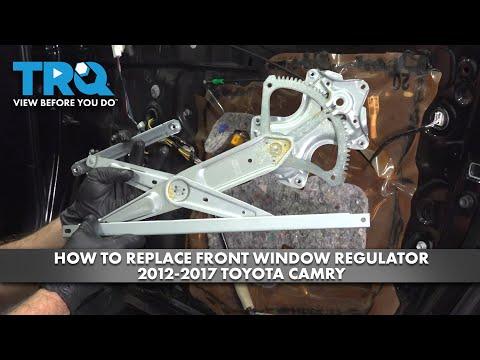





How to Replace the Front Window Regulator on a 2017 Toyota Camry
Step-by-step instructions with tools, parts, safety tips, and torque specs for a smooth DIY repair for 2012, 2013, 2014, 2015, 2016, 2017
How to Replace the Front Window Regulator on a 2017 Toyota Camry
Step-by-step instructions with tools, parts, safety tips, and torque specs for a smooth DIY repair for 2012, 2013, 2014, 2015, 2016, 2017


🔧 Front Window Regulator - Replacement
The front window regulator is the mechanism that moves the glass up and down inside the door. On your Camry, the front regulators are electric, and a failed unit usually causes slow movement, noise, or a window that falls down.
Difficulty Level: Intermediate | Estimated Time: 2-4 hours
⚠️ Safety & Precautions
- Disconnect the negative battery cable before working inside the door. This helps prevent accidental airbag or window switch operation.
- The front door contains a side airbag. Do not probe yellow wiring or use test lights near airbag connectors.
- Support the glass with tape before removing the regulator. The glass can drop suddenly.
- Keep hands clear of the regulator tracks. The mechanism can pinch fingers.
🔧 Required Tools
You'll need the following tools for this repair:
- 10mm socket
- 12mm socket
- Ratchet
- Extension bar
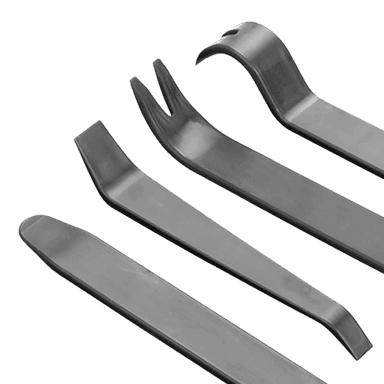
- Trim panel tool
- Phillips screwdriver
- Flat blade trim tool
- Needle-nose pliers
- Torque wrench
- Painter's tape
- Safety glasses
- Mechanic gloves
🔩 Required Parts
HowToo sells all the parts you need for this repair:
- Front left window regulator - Qty: 1
- Front right window regulator - Qty: 1
- Door panel clip set - Qty: 1
- Plastic moisture barrier adhesive - Qty: 1
📋 Before You Begin
- Park on level ground and set the parking brake.
- Lower the affected window slightly if it still moves. If it does not move, continue with the glass taped in place.
- Disconnect the negative battery cable and wait at least 90 seconds before removing the door panel.
- Have painter's tape ready to hold the glass in the fully raised position.
🔨 Step-by-Step Instructions
Follow these steps in order:
Step 1: Remove the door trim panel
- Use a flat blade trim tool and trim panel tool to carefully pry off the trim covers, switch bezel, and hidden fasteners.
- Use a Phillips screwdriver and 10mm socket to remove the screws and bolts holding the door panel in place.
- Lift the door panel upward to unhook it from the window ledge.
- Disconnect the electrical connectors from the window switch and any door lights.
Step 2: Disconnect the moisture barrier
- Use the trim panel tool to slowly peel back the plastic moisture barrier.
- Keep the adhesive clean so it can be reused or resealed later.
Step 3: Secure the glass
- Raise the window glass fully, or move it to the highest position if it still works.
- Use painter's tape to tape the glass to the top of the door frame.
- Double-check the tape before loosening parts.
Step 4: Remove the regulator from the glass
- Use a 10mm socket to remove the bolts or nuts that attach the glass to the regulator.
- Carefully support the glass while loosening the fasteners.
- Move the glass up and tape it securely if needed.
Step 5: Remove the old regulator
- Use a 10mm socket and 12mm socket with a ratchet and extension to remove the regulator mounting bolts.
- Disconnect the regulator motor electrical connector.
- Guide the regulator assembly out through the large service opening in the door.
- Rotate the assembly as needed for clearance.
Step 6: Install the new regulator
- Place the new regulator into the door and line up the mounting holes.
- Reconnect the motor connector.
- Install the mounting bolts by hand first, then tighten with a torque wrench.
- Tighten regulator bolts to 8 Nm (71 in-lbs).
Step 7: Attach the glass to the new regulator
- Remove the tape and lower the glass carefully until it lines up with the regulator clamps.
- Use a 10mm socket to install and tighten the glass retaining bolts.
- Tighten glass bolts to 8 Nm (71 in-lbs).
- Make sure the glass sits straight in the tracks.
Step 8: Test window movement
- Reconnect the battery temporarily and use the window switch to run the glass up and down.
- Make sure the window moves smoothly and seals at the top.
- If the glass binds, loosen and realign the regulator before final assembly.
Step 9: Reinstall the door panel
- Reattach the moisture barrier.
- Reconnect all electrical connectors.
- Hang the door panel on the window ledge and press the clips into place.
- Install the screws and bolts using a Phillips screwdriver and 10mm socket.
- Tighten door panel fasteners snugly to 2-3 Nm (18-27 in-lbs).
Step 10: Relearn the window auto function
- Turn the ignition on.
- Run the window fully down, then fully up.
- Hold the switch in the up position for 2-5 seconds after it closes.
- Repeat for the other front window if you replaced both regulators.
✅ After Repair
- Test each front window several times.
- Check that the glass seals evenly and does not wobble.
- Listen for rubbing, clicking, or grinding noises.
- Verify the door panel sits flush and all switches work.
💰 DIY vs Shop Cost
Shop Cost: $450-$900 per front door (parts + labor)
DIY Cost: $90-$220 per front door (parts only)
You Save: $360-$680 per front door by doing it yourself!
Shop labor rates vary but typically run $100-$150/hour. This repair takes a shop approximately 2-4 hours.
🎯 Ready to get started?
HowToo makes it easy: same-day/2-day shipping on every part, plus all the tools and specialty tools you need! Check out the parts and tools sections below to add everything to your cart.