

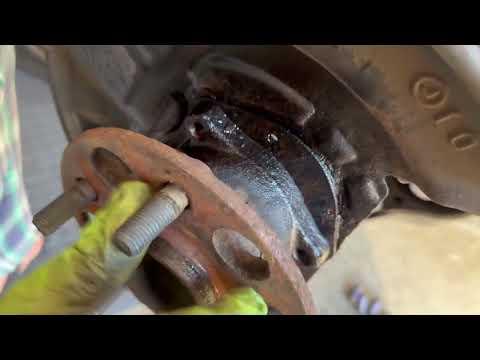







How to Replace the Front Wheel Bearing on a 2019 Toyota Camry
Step-by-step instructions with tools, parts, torque specs, and safety tips for 2018, 2019, 2020, 2021, 2022, 2023
How to Replace the Front Wheel Bearing on a 2019 Toyota Camry
Step-by-step instructions with tools, parts, torque specs, and safety tips for 2018, 2019, 2020, 2021, 2022, 2023


🔧 Wheel Bearing - Replacement
Assumption: this is the front hub bearing assembly. On your A4, the bearing is part of the hub assembly and is usually replaced as a unit, not pressed apart. A worn bearing can cause humming, growling, looseness, or ABS warning lights.
Difficulty Level: Advanced | Estimated Time: 3-5 hours per side
⚠️ Safety & Precautions
- Support the vehicle with jack stands; never rely on a jack alone.
- Your Camry Hybrid has high-voltage systems. No HV battery disconnect is needed for this job, but keep the ignition off and key fob away from the car.
- Brake components may be hot if the car was just driven.
- Do not hang the brake caliper by the hose.
- Be careful with the wheel speed sensor wiring so you do not damage ABS wiring.
🔧 Required Tools
You'll need the following tools for this repair:
- Floor jack (rated 3-ton minimum)
- Jack stands
- Wheel chocks
- Safety glasses
- Mechanic gloves
- 21mm lug wrench or socket
- Torque wrench
- 10mm socket
- 12mm socket
- 14mm socket
- 17mm socket
- 19mm socket
- Ratchet
- Breaker bar
- Bungee cord or caliper hanger
- Flat-blade screwdriver
- Hammer
- Punch
- Penetrating oil
- Brake cleaner
- Wire brush
🔩 Required Parts
HowToo sells all the parts you need for this repair:
- Front wheel hub bearing assembly - Qty: 1 per side
- New axle nut - Qty: 1 per side
- New hub bolts - Qty: 3 per side
- Brake cleaner - Qty: 1 can
📋 Before You Begin
- Park on level ground and set the parking brake.
- Loosen the lug nuts before lifting the car.
- If equipped with an electric parking brake, make sure it is released before starting.
- Use Menu > Settings > Vehicle > Maintenance only if your dash prompts for service reset after repair.
🔨 Step-by-Step Instructions
Follow these steps in order:
Step 1: Lift and secure the vehicle
- Loosen the lug nuts with a 21mm lug wrench or socket.
- Lift the car with a floor jack (rated 3-ton minimum).
- Set it down on jack stands and chock the rear wheels.
Step 2: Remove the wheel and brake parts
- Remove the wheel with the 21mm socket.
- Use a 12mm socket or 14mm socket to remove the caliper bolts, depending on the side and fastener style.
- Hang the caliper with a bungee cord or caliper hanger.
- Remove the brake rotor. If it is stuck, tap it gently with a hammer.
Step 3: Remove the axle nut and sensor components
- Use a 19mm socket and breaker bar to remove the axle nut.
- Disconnect the wheel speed sensor connector with a 10mm socket if the harness is attached to the knuckle.
- Carefully unclip the sensor wire so it is out of the way.
Step 4: Separate the knuckle from the hub area
- Remove the hub-to-knuckle bolts using a 17mm socket or 19mm socket.
- If the hub is rusted in place, spray penetrating oil around the flange and let it soak.
- Use a hammer and punch to tap the hub free evenly from the knuckle.
Step 5: Install the new hub bearing assembly
- Clean the mounting surface with wire brush and brake cleaner.
- Set the new hub bearing assembly in place by hand.
- Install the new hub bolts and snug them with a 17mm socket or 19mm socket.
- Torque to 70 Nm (52 ft-lbs) for the hub bolts.
Step 6: Reassemble the brakes and axle
- Reinstall the rotor and caliper using the 12mm socket or 14mm socket.
- Install a new axle nut and snug it with a 19mm socket.
- Torque to 216 Nm (159 ft-lbs) for the axle nut after the vehicle is back on the ground.
- Torque to 34 Nm (25 ft-lbs) for the caliper bolts unless your brake hardware label specifies otherwise.
Step 7: Reinstall the wheel
- Put the wheel back on and hand-tighten the lug nuts.
- Lower the vehicle and torque the lug nuts with a torque wrench.
- Torque to 103 Nm (76 ft-lbs) for the lug nuts.
✅ After Repair
- Start the car and check for any ABS or brake warnings.
- Drive slowly at first and listen for noise.
- Verify the wheel spins smoothly with no grinding or play.
- Recheck the axle nut and lug torque after a short test drive.
💰 DIY vs Shop Cost
Shop Cost: ₹12,000-₹25,000 per side (parts + labor)
DIY Cost: ₹3,500-₹8,500 per side (parts only)
You Save: ₹8,500-₹16,500 by doing it yourself!
Shop labor rates vary but typically run ₹2,500-₹7,000/hour. This repair takes a shop approximately 3-5 hours.
🎯 Ready to get started?
HowToo makes it easy: same-day/2-day shipping on every part, plus all the tools and specialty tools you need! Check out the parts and tools sections below to add everything to your cart.