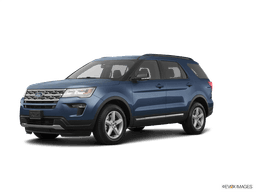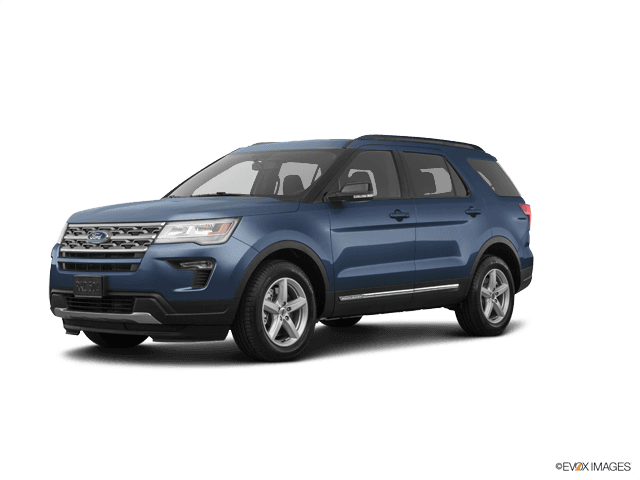

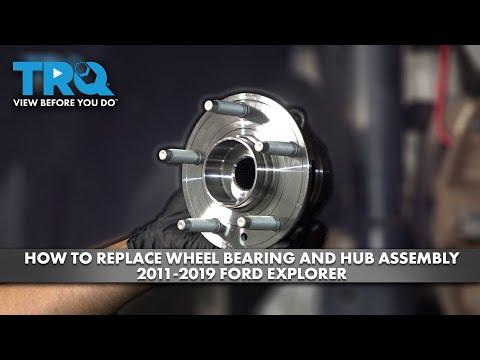







How to Replace the Front Wheel Bearing Hub on a 2018 Ford Explorer
Step-by-step instructions with tools, parts, torque specs, and safety tips for 2011, 2012, 2013, 2014, 2015, 2016, 2017, 2018, 2019
How to Replace the Front Wheel Bearing Hub on a 2018 Ford Explorer
Step-by-step instructions with tools, parts, torque specs, and safety tips for 2011, 2012, 2013, 2014, 2015, 2016, 2017, 2018, 2019


🔧 Wheel Bearing - Front Hub Assembly Replacement
Assumption: This guide covers the front wheel bearing/hub assembly on your Explorer. The rear is similar, but the parking brake makes it a little different.
The front wheel bearing on this Explorer is serviced as a complete hub assembly. That means you remove the knuckle-side hub, install the new assembly, and torque everything correctly so the wheel runs smooth and quiet.
Difficulty Level: Intermediate | Estimated Time: 2-3 hours
⚠️ Safety & Precautions
- Work on a flat surface and chock the rear wheels.
- Lift the Explorer with a proper jack and support it with jack stands before removing the wheel.
- Do not hang the brake caliper by the hose.
- If equipped with an electronic parking brake on the rear, it must be retracted with a scan tool before rear service.
- Use care around ABS wiring. Do not pull on the wheel speed sensor harness.
🔧 Required Tools
You'll need the following tools for this repair:
- Floor jack (rated 3-ton minimum)
- Jack stands (rated 3-ton minimum)
- Wheel chocks
- Breaker bar
- Torque wrench
- 19mm socket
- 13mm socket
- 15mm socket
- 18mm socket
- 21mm socket
- Torx T30 screwdriver
- Ratchet
- Long-handled pry bar
- Dead-blow hammer
- Penetrating oil
- Brake hanger hook
- Safety glasses
- Mechanic gloves
🔩 Required Parts
HowToo sells all the parts you need for this repair:
- Front wheel hub bearing assembly - Qty: 1
- Front axle nut - Qty: 1
- Brake caliper bracket bolts - Qty: 2
- Hub mounting bolts - Qty: 3
📋 Before You Begin
- Park on level ground and set the parking brake.
- Loosen the lug nuts before lifting the vehicle.
- Turn the steering wheel so you have better access to the side you are servicing.
- Penetrating oil helps on rusty bolts.
🔨 Step-by-Step Instructions
Follow these steps in order:
Step 1: Remove the wheel
- Use a 19mm socket and breaker bar to loosen the lug nuts, then raise the Explorer and support it with jack stands.
- Remove the wheel and set it aside.
Step 2: Remove the brake caliper and rotor
- Use a 15mm socket to remove the caliper slide bolts.
- Hang the caliper with a brake hanger hook. Do not let it pull on the hose.
- Use a 13mm socket to remove the caliper bracket bolts, then remove the bracket.
- Pull the rotor off. If it is stuck, tap it lightly with a dead-blow hammer.
Step 3: Remove the axle nut and separate the hub
- Use a 21mm socket to remove the axle nut.
- Torque note for reassembly: Tighten the new axle nut to 407 Nm (300 ft-lbs).
- Use a long-handled pry bar to gently push the CV axle inward if needed.
- Use a Torx T30 screwdriver to remove the wheel speed sensor if it blocks access.
Step 4: Remove the hub assembly
- Use an 18mm socket to remove the three hub mounting bolts from the back of the knuckle.
- If the hub is rusted in place, tap around the flange with a dead-blow hammer and work it free.
- Remove the hub bearing assembly from the knuckle.
Step 5: Install the new hub assembly
- Clean the knuckle mating surface before installation.
- Position the new hub assembly and start the three mounting bolts by hand.
- Use an 18mm socket to tighten the hub bolts to 115 Nm (85 ft-lbs).
- Reinstall the wheel speed sensor and route the harness exactly as removed.
Step 6: Reinstall the brake parts
- Reinstall the rotor, caliper bracket, and caliper.
- Use a 13mm socket for the caliper bracket bolts and tighten to 175 Nm (129 ft-lbs).
- Use a 15mm socket for the caliper slide bolts and tighten to 35 Nm (26 ft-lbs).
Step 7: Reinstall the axle nut and wheel
- Install the new axle nut with a 21mm socket and torque to 407 Nm (300 ft-lbs).
- Reinstall the wheel and tighten the lug nuts by hand.
- Lower the Explorer and use a torque wrench with a 19mm socket to tighten the lug nuts to 135 Nm (100 ft-lbs).
✅ After Repair
- Start the vehicle and check for ABS or traction control warning lights.
- Test drive at low speed first. Listen for growling, clicking, or rubbing.
- Recheck lug nut torque after 25-50 miles.
- If the ABS light stays on, scan for wheel speed sensor faults.
💰 DIY vs Shop Cost
Shop Cost: $450-$850 (parts + labor)
DIY Cost: $120-$260 (parts only)
You Save: $330-$590 by doing it yourself!
Shop labor rates vary but typically run $100-$150/hour. This repair takes a shop approximately 2-3 hours.
🎯 Ready to get started?
HowToo makes it easy: same-day/2-day shipping on every part, plus all the tools and specialty tools you need! Check out the parts and tools sections below to add everything to your cart.