







How to Replace the Battery on a 2016-2026 Hyundai Tucson (Engine: Inline 4 1.6L)
Step-by-step 12V battery replacement guide with tools, parts, torque specs, and safety tips for 2016, 2017, 2018
How to Replace the Battery on a 2016-2026 Hyundai Tucson (Engine: Inline 4 1.6L)
Step-by-step 12V battery replacement guide with tools, parts, torque specs, and safety tips for 2016, 2017, 2018


🔧 Tucson - 12V Battery Replacement
This repair replaces the 12-volt starting battery in your Tucson. A weak battery can cause slow cranking, warning lights, no-start issues, or electrical glitches.
Difficulty Level: Beginner | Estimated Time: 20-40 minutes
⚠️ Safety & Precautions
- ⚠️ Always remove the negative battery cable first to reduce the risk of short circuits.
- ⚠️ Do not let tools touch both battery terminals or the positive terminal and body metal at the same time.
- ⚠️ Wear safety glasses and gloves. Batteries can leak acid and release flammable gas.
- ⚠️ Keep sparks, cigarettes, and open flames away from the battery area.
- ⚠️ Battery disconnect is required for this repair. Some radio presets, clock settings, and auto window settings may need resetting afterward.
🔧 Required Tools
You'll need the following tools for this repair:
- 10mm socket
- 12mm socket
- 3/8-inch ratchet
- 3/8-inch extension 6-inch
- Battery terminal puller (specialty)
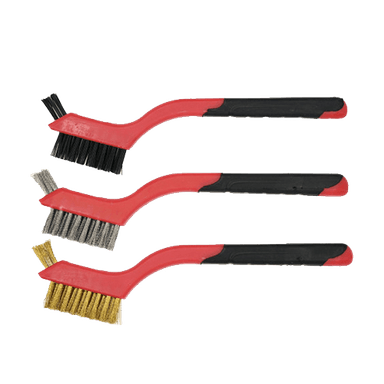
- Battery post and terminal cleaning brush
- Torque wrench inch-pound
- Memory saver 12V OBD-II (specialty)
- Nitrile gloves
- Safety glasses
🔩 Required Parts
HowToo sells all the parts you need for this repair:
- 12V AGM or flooded lead-acid battery matched to Tucson fitment - Qty: 1
- Battery terminal protectant spray - Qty: 1
- Battery anti-corrosion washers - Qty: 2
📋 Before You Begin
- 🚗 Park your Tucson on level ground, shift to Park, and apply the parking brake.
- 🔑 Turn the ignition off and remove the key fob from the vehicle.
- ⏱️ Wait at least 3 minutes before disconnecting the battery so control modules can go to sleep.
- 🔌 Optional: Connect a memory saver 12V OBD-II. A memory saver is a small backup power supply that helps preserve clock, radio, and module memory while the battery is disconnected.
- 📍 The battery is located under the hood on the driver-side front area of the engine bay.
🔨 Step-by-Step Instructions
Follow these steps in order:
Step 1: Open the Hood and Locate the Battery
- Use the interior hood release, then lift the hood and secure it with the hood prop rod if equipped.
- Use safety glasses and nitrile gloves before touching the battery.
- Identify the negative terminal marked - and the positive terminal marked +.
Step 2: Disconnect the Negative Cable First
- Use a 10mm socket and 3/8-inch ratchet to loosen the negative battery terminal nut.
- Lift the negative cable off the battery post by hand.
- If it is stuck, use a battery terminal puller. A terminal puller gently lifts the cable end without damaging the battery post.
- Move the cable aside so it cannot spring back and touch the battery post.
- Negative off first, always.
Step 3: Disconnect the Positive Cable
- Open the red positive terminal cover by hand.
- Use a 10mm socket and 3/8-inch ratchet to loosen the positive terminal nut.
- Lift the positive cable off the battery post by hand.
- If needed, use the battery terminal puller to remove it safely.
- Keep the positive cable away from body metal.
Step 4: Remove the Battery Hold-Down
- Look at the lower edge of the battery for the hold-down bracket. The hold-down bracket keeps the battery from moving while driving.
- Use a 12mm socket, 3/8-inch extension 6-inch, and 3/8-inch ratchet to remove the hold-down bolt.
- Remove the hold-down bracket and set it aside.
Step 5: Remove the Old Battery
- Lift the battery straight up and out using both hands.
- Keep the battery upright. Do not tip it sideways.
- Batteries are heavy. Use your legs, not your back.
- Ask for help if needed.
Step 6: Clean the Battery Tray and Cable Ends
- Use a battery post and terminal cleaning brush to clean the inside of both cable terminals.
- Use the same battery post and terminal cleaning brush to clean light corrosion from the tray area.
- If you see heavy white or blue-green corrosion, avoid touching it with bare hands.
Step 7: Install the New Battery
- Place the new battery into the tray with the positive and negative posts in the same orientation as the old battery.
- Make sure the battery sits flat and does not rock.
- Install the battery hold-down bracket.
- Use a 12mm socket, 3/8-inch extension 6-inch, and torque wrench inch-pound to tighten the hold-down bolt.
- Torque to 8-10 Nm (71-89 in-lbs)
Step 8: Connect the Positive Cable First
- Install one battery anti-corrosion washer on the positive battery post.
- Push the positive cable fully down onto the positive battery post by hand.
- Use a 10mm socket and torque wrench inch-pound to tighten the terminal nut.
- Torque to 5-7 Nm (44-62 in-lbs)
- Close the red positive terminal cover by hand.
Step 9: Connect the Negative Cable Last
- Install one battery anti-corrosion washer on the negative battery post.
- Push the negative cable fully down onto the negative battery post by hand.
- Use a 10mm socket and torque wrench inch-pound to tighten the terminal nut.
- Torque to 5-7 Nm (44-62 in-lbs)
- Lightly apply battery terminal protectant spray to both terminal areas after tightening.
- Positive on first, negative on last.
Step 10: Check Your Work
- Try to gently twist each battery cable by hand.
- If a cable moves, use the 10mm socket and torque wrench inch-pound to retighten it to spec.
- Make sure no tools are left in the engine bay.
- Remove the memory saver 12V OBD-II if you used one.
✅ After Repair
- ✅ Start your Tucson and make sure it cranks normally.
- ✅ Confirm the battery warning light turns off after the engine starts.
- ✅ Reset the clock and radio presets if needed.
- ✅ If the one-touch power window function does not work, fully close the window and hold the switch up for about 1 second after it reaches the top.
- ✅ Drive normally for several minutes so the idle and transmission adaptives can relearn after battery power loss.
- ♻️ Recycle the old battery at a parts store, battery retailer, or local recycling center. Do not throw it in regular trash.
💰 DIY vs Shop Cost
Shop Cost: $220-$420 (parts + labor)
DIY Cost: $160-$300 (parts only)
You Save: $60-$120 by doing it yourself!
Shop labor rates vary but typically run $100-$150/hour. This repair takes a shop approximately 0.3-0.6 hours.
🎯 Ready to get started?
HowToo makes it easy: same-day/2-day shipping on every part, plus all the tools and specialty tools you need! Check out the parts and tools sections below to add everything to your cart.