

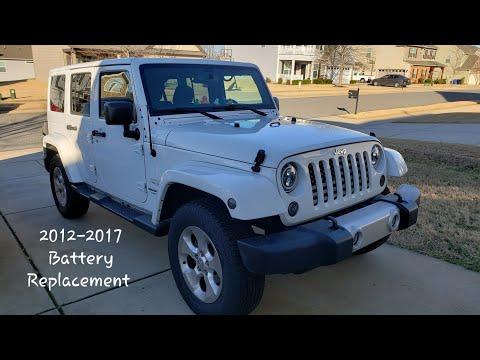





How to Replace the Battery on a 2015 Jeep Wrangler (12V)
Step-by-step battery swap with required tools/parts, safety tips, and terminal torque specs for 2012, 2013, 2014, 2015, 2016, 2017, 2018, 2019, 2020, 2021, 2022, 2023, 2024
How to Replace the Battery on a 2015 Jeep Wrangler (12V)
Step-by-step battery swap with required tools/parts, safety tips, and terminal torque specs for 2012, 2013, 2014, 2015, 2016, 2017, 2018, 2019, 2020, 2021, 2022, 2023, 2024


🔧 Wrangler - Battery Replacement
On your Wrangler, the 12V battery sits in the engine bay and powers starting and all electronics. The job is mainly removing the hold-down, swapping the battery, and reconnecting the cables in the correct order to avoid electrical damage.
Difficulty Level: Beginner | Estimated Time: 0.5-1.0 hours
⚠️ Safety & Precautions
- ⚠️ Keep keys out of the ignition and away from the Jeep while working.
- ⚠️ Wear eye protection; batteries can vent acid/corrosive gas.
- ⚠️ Do not short the battery with a tool (tool bridging + and -).
- ⚠️ Disconnect negative (-) first and reconnect negative (-) last.
- ⚠️ If the battery is cracked/leaking, stop and replace safely.
🔧 Required Tools
You'll need the following tools for this repair:
- 10mm socket
- 1/4" drive ratchet
- 6" socket extension (1/4" drive)
- 13mm socket
- 3/8" drive ratchet
- Torque wrench (in-lb or Nm range)
- Battery terminal brush
- Work gloves
- Safety glasses
🔩 Required Parts
HowToo sells all the parts you need for this repair:
- 12V starting battery (correct fit for your Wrangler) - Qty: 1
- Battery terminal anti-corrosion pads - Qty: 2
- Battery terminal protectant spray - Qty: 1
📋 Before You Begin
- Park on level ground, shift to Park, and set the parking brake.
- Pop the hood and let the engine bay cool if it’s hot.
- Identify the battery positive (+) and negative (-) terminals before loosening anything.
- Take a quick photo of the cable routing.
🔨 Step-by-Step Instructions
Follow these steps in order:
Step 1: Access the battery
- Open the hood and locate the battery on the passenger side of the engine bay.
- If anything blocks access (like a small cover), remove it by hand and set it aside.
Step 2: Disconnect the negative (-) cable
- Use a 10mm socket with a 1/4" ratchet to loosen the negative terminal clamp nut.
- Twist and lift the clamp off the battery post, then tuck it aside so it can’t spring back to the post.
- Negative first prevents accidental shorting.
Step 3: Disconnect the positive (+) cable
- Use a 10mm socket with a 1/4" ratchet to loosen the positive terminal clamp nut.
- Remove the clamp from the positive post and move it safely aside.
Step 4: Remove the battery hold-down
- Locate the battery hold-down at the base of the battery.
- Use a 13mm socket with a 3/8" ratchet and a 6" extension to remove the hold-down bolt.
- Remove the hold-down bracket and set it aside.
Step 5: Remove the old battery
- Lift the battery straight up and out using safe lifting form (it’s heavy).
- Place it on the ground upright.
Step 6: Clean and prep the connections
- Use a battery terminal brush to clean the inside of both cable clamps until shiny metal is visible.
- Clean the battery tray area by hand (dry debris only).
- Battery terminal brush = a stiff brush made to remove corrosion from battery connections.
Step 7: Install the new battery and secure it
- Set the new battery into the tray in the same orientation as the old one.
- Reinstall the hold-down bracket and start the bolt by hand.
- Use a 13mm socket and torque wrench to tighten the hold-down bolt: Torque to 9 Nm (80 in-lb).
Step 8: Reconnect the positive (+) cable first
- Install an anti-corrosion pad on the positive post (if using).
- Push the positive clamp fully down on the post.
- Use a 10mm socket and torque wrench to tighten: Torque to 5 Nm (44 in-lb).
Step 9: Reconnect the negative (-) cable last
- Install an anti-corrosion pad on the negative post (if using).
- Push the negative clamp fully down on the post.
- Use a 10mm socket and torque wrench to tighten: Torque to 5 Nm (44 in-lb).
- Spray battery terminal protectant on both terminals (light coat).
✅ After Repair
- Start your Wrangler and verify it cranks normally.
- Check that the battery is secure (no movement) and cables are fully seated.
- Confirm no warning lights stay on after a short drive.
- Reset the clock and radio presets if they were lost.
💰 DIY vs Shop Cost
Shop Cost: $220-$450 (parts + labor)
DIY Cost: $160-$320 (parts only)
You Save: $60-$130 by doing it yourself!
Shop labor rates vary but typically run $100-$150/hour. This repair takes a shop approximately 0.5-1.0 hours.
🎯 Ready to get started?
HowToo makes it easy: same-day/2-day shipping on every part, plus all the tools and specialty tools you need! Check out the parts and tools sections below to add everything to your cart.