

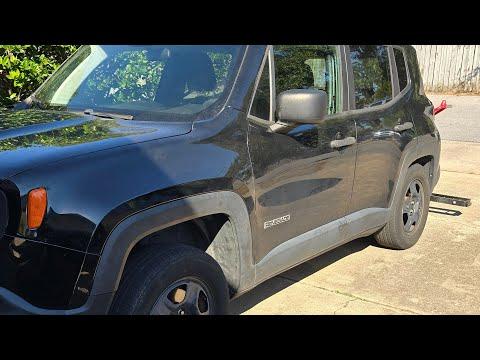







How to Replace the Alternator on a 2018 Jeep Renegade (Step-by-Step Guide)
Tools, parts, safety tips, wheel-well access steps, and key torque specs for a clean install for 2015, 2016, 2017, 2018
How to Replace the Alternator on a 2018 Jeep Renegade (Step-by-Step Guide)
Tools, parts, safety tips, wheel-well access steps, and key torque specs for a clean install for 2015, 2016, 2017, 2018


🔧 Renegade - Alternator Replacement
The alternator charges your battery and powers the vehicle while the engine runs. On your Renegade, access is tight, so you’ll usually remove the right-front wheel and inner splash shield to reach the belt and alternator safely.
Difficulty Level: Advanced | Estimated Time: 2-4 hours
⚠️ Safety & Precautions
- ⚠️ Disconnect the battery negative cable before touching the alternator wiring (prevents a dead short).
- ⚠️ Never work under a vehicle supported only by a jack—use jack stands.
- ⚠️ Keep fingers and tools away from the serpentine belt path.
- ⚠️ Let the engine cool; the turbo/exhaust area can burn you.
🔧 Required Tools
You'll need the following tools for this repair:
- Safety glasses
- Mechanic gloves
- Floor jack (rated 2-ton minimum)
- Jack stands (rated 2-ton minimum)
- Wheel chocks
- 21mm socket
- 3/8" drive ratchet
- 1/2" drive breaker bar
- 3/8" drive torque wrench
- 1/2" drive torque wrench
- 10mm socket
- 13mm socket
- 15mm socket
- E12 external Torx socket
- E14 external Torx socket
- Flat-blade trim tool
- Flat-blade screwdriver
- Needle-nose pliers
- Serpentine belt tool (specialty)
- Work light
🔩 Required Parts
HowToo sells all the parts you need for this repair:
- Alternator - Qty: 1
- Serpentine belt - Qty: 1 Replace if cracked or glazed
- Dielectric grease - Qty: 1
📋 Before You Begin
- Park on level ground, set the parking brake, and place wheel chocks behind the rear wheels.
- Open the hood and keep the key fob away from the vehicle.
- Disconnect the battery negative terminal using a 10mm socket. Wrap the cable so it can’t touch
- Take a quick photo or draw the belt routing before removing the serpentine belt.
🔨 Step-by-Step Instructions
Follow these steps in order:
Step 1: Raise and secure the right-front corner
- Use a floor jack (rated 2-ton minimum) to lift the right-front jack point.
- Set the vehicle onto jack stands (rated 2-ton minimum) and verify it’s stable.
- Remove the right-front wheel using a 21mm socket and 1/2" drive breaker bar.
- Reinstall later and Torque to 135 Nm (100 ft-lbs).
Step 2: Remove the right-front inner splash shield
- Remove the plastic fasteners/screws using a flat-blade trim tool and flat-blade screwdriver.
- Pull the splash shield out to expose the serpentine belt and accessory drive area.
Step 3: Relieve serpentine belt tension
- Fit a 15mm socket on the belt tensioner bolt (or use a serpentine belt tool (specialty) for more room).
- Rotate the tensioner to release tension, then slip the belt off the alternator pulley.
- Slowly let the tensioner return to its resting position. Don’t let it snap back
Step 4: Disconnect alternator electrical connections
- Locate the alternator wiring connector and release the lock using a flat-blade screwdriver, then unplug it.
- Remove the rubber protective cap from the main power stud.
- Remove the B+ cable nut using a 13mm socket, then lift the cable off the stud.
- During reassembly: Torque the B+ nut to 13 Nm (115 in-lbs).
- Apply a small dab of dielectric grease to the connector seal before plugging back in.
Step 5: Unbolt and remove the alternator
- Support the alternator with one hand and remove the mounting bolts using either:
- Use a 15mm socket (hex-head bolt version), or
- Use an E12 external Torx socket / E14 external Torx socket (external Torx bolt version).
- Work the alternator out through the wheel-well opening. Rotate it slowly to clear hoses
- During reassembly: Torque alternator mounting bolts to 48 Nm (35 ft-lbs).
Step 6: Install the new alternator
- Set the new alternator into place and start all mounting bolts by hand to avoid cross-threading.
- Tighten mounting bolts using the same tool you removed them with.
- Torque alternator mounting bolts to 48 Nm (35 ft-lbs).
Step 7: Reconnect wiring
- Install the B+ cable onto the stud and tighten the nut using a 13mm socket.
- Torque the B+ nut to 13 Nm (115 in-lbs), then reinstall the protective cap.
- Plug in the alternator connector until it clicks.
Step 8: Reinstall the serpentine belt
- Route the belt according to your photo/diagram.
- Rotate the tensioner using a 15mm socket or serpentine belt tool (specialty), then slide the belt onto the alternator pulley.
- Double-check the belt ribs are fully seated in every pulley groove. Misalignment shreds belts fast
Step 9: Reinstall splash shield and wheel
- Reinstall the inner splash shield fasteners using a flat-blade trim tool and flat-blade screwdriver.
- Reinstall the wheel using a 21mm socket.
- Lower the vehicle, then Torque lug nuts to 135 Nm (100 ft-lbs) using a 1/2" drive torque wrench.
Step 10: Reconnect the battery
- Reconnect the negative battery terminal using a 10mm socket.
- Torque to 6 Nm (53 in-lbs).
✅ After Repair
- Start the engine and confirm the battery/charging warning light is off.
- Listen for belt squeal or slapping; shut off and recheck belt seating if you hear noise.
- If you have a scan tool, clear any stored charging-system codes and recheck for returns.
- Check charging voltage at the battery with a meter: typically ~13.5–14.8V with the engine running.
💰 DIY vs Shop Cost
Shop Cost: $650-$1,050 (parts + labor)
DIY Cost: $220-$520 (parts only)
You Save: $430-$530 by doing it yourself!
Shop labor rates vary but typically run $100-$150/hour. This repair takes a shop approximately 2-4 hours.
🎯 Ready to get started?
HowToo makes it easy: same-day/2-day shipping on every part, plus all the tools and specialty tools you need! Check out the parts and tools sections below to add everything to your cart.