






How to Replace the Alternator on a 2013 Honda CR‑V 2.4L
Step-by-step DIY alternator replacement with tools, parts list, torque specs, safety tips, and cost-saving advice
How to Replace the Alternator on a 2013 Honda CR‑V 2.4L
Step-by-step DIY alternator replacement with tools, parts list, torque specs, safety tips, and cost-saving advice


🔧 CR-V - Alternator Replacement
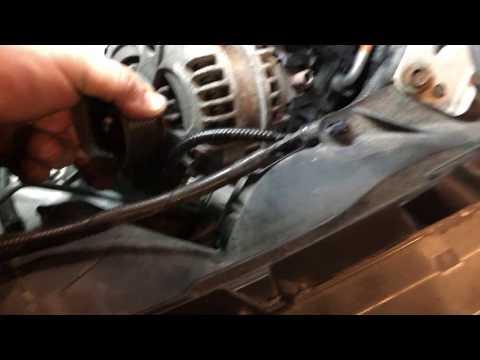
You’ll be removing the serpentine belt, disconnecting wiring from the alternator, and unbolting it from the engine, then installing a new one. On your CR-V the alternator is on the front of the engine, driven by the main serpentine belt.
Difficulty Level: Intermediate | Estimated Time: 2-3 hours
⚠️ Safety & Precautions
- ⚠️ Always disconnect the negative battery cable before working on the alternator to avoid short circuits and electric shock.
- ⚠️ Let the engine cool completely; the exhaust and engine parts can be very hot.
- ⚠️ Support the vehicle securely with jack stands if you raise it; never rely only on a floor jack.
- ⚠️ Keep metal tools away from the battery positive terminal once cables are disconnected.
- ⚠️ Do not pry directly on the serpentine belt; use the tensioner correctly to avoid damage.
🔧 Required Tools
You'll need the following tools for this repair:
- 🛠️ 10mm socket
- 🛠️ 12mm socket
- 🛠️ 14mm socket
- 🛠️ 3/8" drive ratchet
- 🛠️ 3/8" drive extension 6"
- 🛠️ Breaker bar 3/8" drive
- 🛠️ Serpentine belt tool or long 14mm wrench (specialty)
- 🛠️ Flathead screwdriver medium
- 🛠️ Needle-nose pliers
- 🛠️ Torque wrench 3/8" drive
- 🛠️ Floor jack (rated 3-ton minimum)
- 🛠️ Jack stands (rated 3-ton minimum)
- 🛠️ Fender cover or old towel
- 🛠️ Work light or flashlight
- 🛠️ Gloves
- 🛠️ Safety glasses
🔩 Required Parts
HowToo sells all the parts you need for this repair:
- 🔩 Alternator (120A, for 2.4L) - Qty: 1
- 🔩 Serpentine drive belt - Qty: 1
- 🔩 Alternator mounting bolts (optional, replacement) - Qty: 2
- 🔩 Battery terminal cleaning brush - Qty: 1
- 🔩 Dielectric grease - Qty: 1
- 🔩 Anti-seize compound - Qty: 1
- 🔩 Penetrating oil spray - Qty: 1
📋 Before You Begin
- Park the CR-V on level ground, shift to Park, and set the parking brake.
- Open the hood and secure it with the prop rod.
- Disconnect the negative battery cable: use a 10mm socket on the clamp and move the cable aside so it cannot spring back.
- If access from below is tight, raise the front of the vehicle with a floor jack and support it with jack stands under the front pinch welds or subframe.
- Take photos of belt routing before removal.
🔨 Step-by-Step Instructions
Follow these steps in order:
Step 1: Remove the plastic engine cover (if equipped)
- Use your hands or a flathead screwdriver to carefully pop off any plastic clips holding the top engine cover.
- Lift the cover straight up and set it aside.
- Don’t force clips; pry gently.
Step 2: Gain access to the serpentine belt
- From the top, locate the serpentine belt on the front of the engine (passenger side of the bay).
- If needed for more room, remove the right front wheel and plastic splash shield:
- Use the breaker bar and appropriate socket to loosen wheel lug nuts, then raise the vehicle with a floor jack and support with jack stands.
- Finish removing lug nuts and take off the wheel.
- Use a 10mm socket or flathead screwdriver to remove plastic clips/screws holding the inner fender/splash shield near the belt area, then pull it back for access.
Step 3: Relieve belt tension
- The belt tensioner is a spring-loaded pulley that keeps the belt tight.
- Place a 14mm socket with ratchet or serpentine belt tool on the tensioner bolt (center of tensioner pulley).
- Rotate the tensioner clockwise to relieve tension on the belt.
- While holding the tensioner, slide the belt off the alternator pulley with your free hand.
- Slowly release the tensioner back to its resting position.
- Do not let the tensioner snap back.
Step 4: Remove the serpentine belt (recommended)
- Note or photograph the belt routing around all pulleys.
- From top and wheel well, pull the belt out of the engine bay completely.
- If you’re reusing the belt temporarily, mark direction with a marker before removal.
Step 5: Disconnect alternator electrical connections
- Locate the alternator on the front of the engine (near the top, passenger side).
- On the back of the alternator, unplug the small electrical connector:
- Press the tab and pull straight out by hand or with needle-nose pliers on the plug body (not the wires).
- Remove the main charging cable:
- Use a 10mm socket to remove the nut holding the thick cable on the alternator stud.
- Lift the cable off and tuck it aside.
- Double-check battery negative is still disconnected.
Step 6: Remove alternator mounting bolts
- There are usually two main mounting bolts: upper and lower.
- Spray a little penetrating oil spray on the bolts if they look rusty; let it soak a few minutes.
- Use a 14mm socket and ratchet (with extension 6" if needed) to loosen and remove the upper mounting bolt.
- Use the same 14mm socket and ratchet to remove the lower mounting bolt.
- Support the alternator with one hand as you remove the last bolt so it doesn’t drop.
Step 7: Remove the alternator from the engine bay
- The alternator may be lightly stuck in its bracket.
- Gently rock it by hand to free it; if needed, use a flathead screwdriver to pry very gently at the mounting ears, avoiding damage to aluminum surfaces.
- Work the alternator out through the top or through the wheel well opening (whichever gives more space).
- Be patient; rotate and tilt as needed.
Step 8: Prepare and position the new alternator
- Compare the old and new alternators side by side to confirm:
- Same mounting points
- Same pulley diameter
- Same electrical connectors and stud locations
- Lightly coat the mounting bolt threads with anti-seize compound.
- Carefully lower the new alternator into position in the bracket.
Step 9: Install alternator mounting bolts
- Hand-thread the lower mounting bolt first to avoid cross-threading.
- Then hand-thread the upper mounting bolt.
- Use a 14mm socket and ratchet to snug both bolts.
- Then use a torque wrench with 14mm socket to tighten:
- Alternator mounting bolts: Torque to 44 Nm (33 ft-lbs)
- Always torque, don’t just “guess tight”.
Step 10: Reconnect alternator wiring
- Push the small connector back into the new alternator until it clicks.
- Place the main battery/charging cable onto the alternator stud.
- Apply a tiny amount of dielectric grease to the stud if desired.
- Install the nut using a 10mm socket and ratchet:
- Alternator B+ terminal nut: Torque to 9 Nm (80 in-lbs)
Step 11: Install the new serpentine belt
- Route the new belt around the crankshaft pulley and other pulleys according to your photo or the belt routing diagram under the hood (if present).
- Leave the alternator pulley for last; that makes it easier.
- Use the 14mm socket and serpentine belt tool or breaker bar to rotate the tensioner clockwise again.
- While holding the tensioner, slip the belt over the alternator pulley.
- Carefully release the tensioner and make sure the belt sits centered on all pulley grooves.
- Visually inspect from top and wheel well that the belt is not “one rib off” anywhere.
Step 12: Reinstall splash shield and wheel (if removed)
- Reposition the inner fender/splash shield in the wheel well.
- Use the 10mm socket and/or flathead screwdriver to reinstall all screws and clips.
- Reinstall the wheel and hand-thread the lug nuts.
- Lower the vehicle with the floor jack and remove the jack stands.
- Tighten the lug nuts evenly with the breaker bar:
- Wheel lug nuts: Torque to 108 Nm (80 ft-lbs) if you have a torque wrench suitable for wheels.
Step 13: Reconnect the battery and tidy up
- Clean the battery terminals with the battery terminal cleaning brush if they are dirty or corroded.
- Reattach the negative battery cable and tighten the clamp with a 10mm socket:
- Battery terminal clamp: Torque to 5 Nm (44 in-lbs) if possible.
- Reinstall the engine cover by pressing it back onto its mounts or clips.
- Remove tools and rags from the engine bay.
✅ After Repair
- Start the engine and listen for any belt squealing or unusual noises near the alternator.
- Check that the battery warning light on the dash turns off after starting.
- Use a multimeter (if available) to check charging voltage at the battery:
- Engine idling, lights off: it should read about 13.8–14.5 volts.
- Let the engine run for a few minutes and recheck that the belt is tracking correctly on all pulleys.
- Take a short test drive, then recheck under the hood for any loose connectors or belt misalignment.
💰 DIY vs Shop Cost
Shop Cost: $550-$800 (parts + labor)
DIY Cost: $220-$350 (parts only)
You Save: $330-$450 by doing it yourself!
Shop labor rates vary but typically run $100-$150/hour. This repair takes a shop approximately 1.5-2.0 hours.
🎯 Ready to get started?
HowToo makes it easy: same-day/2-day shipping on every part, plus all the tools and specialty tools you need! Check out the parts and tools sections below to add everything to your cart.