

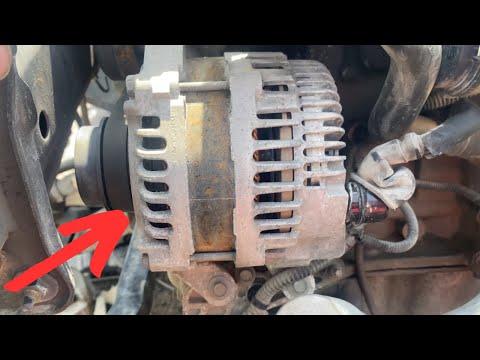




How to Replace the Alternator on a 2013-2019 Ford Escape (Engine: Inline 4 2.0L)
Step-by-step DIY guide with tools, parts, torque specs, belt routing, and charging tests for 2013, 2014, 2015, 2016, 2017, 2018, 2019
How to Replace the Alternator on a 2013-2019 Ford Escape (Engine: Inline 4 2.0L)
Step-by-step DIY guide with tools, parts, torque specs, belt routing, and charging tests for 2013, 2014, 2015, 2016, 2017, 2018, 2019


🔧 Escape - Alternator Replacement
Replacing the alternator on your Escape restores proper battery charging and prevents stalling, no-starts, dim lights, and charging-system warning messages. On the 2.0L turbo engine, access is tight, so take your time and keep track of each fastener.
Difficulty Level: Intermediate | Estimated Time: 2.5-4 hours
⚠️ Safety & Precautions
- ⚠️ Disconnect the negative battery cable before touching the alternator wiring. The alternator main cable is always hot when connected.
- ⚠️ Let the engine cool completely before working near the turbocharger, exhaust, and cooling fan area.
- ⚠️ Support the Escape securely with jack stands if you lift it. Never work under a vehicle supported only by a jack.
- ⚠️ Do not pry against plastic pulleys, coolant hoses, or wiring connectors.
- ⚠️ Keep fingers clear of the belt path when moving the belt tensioner. A belt tensioner is a spring-loaded arm that keeps the belt tight.
🔧 Required Tools
You'll need the following tools for this repair:
- 8mm socket
- 10mm socket
- 13mm socket
- 15mm socket
- 3/8-inch drive ratchet
- 3/8-inch drive breaker bar
- 3/8-inch drive extension set
- Serpentine belt tool (specialty)
- Flat-blade screwdriver
- Trim clip removal tool
- Needle-nose pliers
- Torque wrench, 5-80 Nm range
- Floor jack (rated 2-ton minimum)
- Jack stands (rated 2-ton minimum)
- Wheel chocks
- Battery terminal brush
- Digital multimeter
- Safety glasses
- Mechanic gloves
🔩 Required Parts
HowToo sells all the parts you need for this repair:
- Alternator - Qty: 1
- Serpentine belt - Qty: 1
- Battery terminal protectant - Qty: 1
📋 Before You Begin
- 🅿️ Park your Escape on level ground, shift to Park, and set the parking brake.
- 🧊 Let the engine cool for at least 30-45 minutes if it was recently driven.
- 🔋 Open the hood and disconnect the negative battery cable using a 10mm socket. Move the cable aside so it cannot spring back onto the battery post.
- 🧠 No battery registration or coding is required for this alternator replacement.
- 📸 Take a photo of the belt routing before removal. There is also usually a belt routing label in the engine bay.
🔨 Step-by-Step Instructions
Follow these steps in order:
Step 1: Raise and secure the front of the vehicle
- Place wheel chocks behind the rear wheels.
- Use a floor jack rated 2-ton minimum to lift the front of your Escape at the front jacking point.
- Set the vehicle securely on jack stands rated 2-ton minimum.
- Gently shake the vehicle to confirm it is stable before working underneath.
Step 2: Remove the lower splash shield
- Use an 8mm socket to remove the lower splash shield fasteners.
- Use a trim clip removal tool to remove any plastic push clips.
- Lower the splash shield and set it aside.
- Keep fasteners grouped by location.
Step 3: Remove the serpentine belt
- Locate the belt tensioner on the front of the engine.
- Install the serpentine belt tool or 3/8-inch drive breaker bar into the tensioner.
- Rotate the tensioner to release belt tension.
- Slide the belt off the alternator pulley first, then slowly release the tensioner.
- Remove the belt from the remaining pulleys and compare it to the new serpentine belt.
Step 4: Create working room near the alternator
- From above, use a flat-blade screwdriver to release any intake duct clips that block access.
- Use an 8mm socket or 10mm socket to loosen intake duct clamps if needed.
- Move the ducting aside carefully. Do not pull hard on attached hoses or wiring.
- Use needle-nose pliers to move any small retaining clips only if they block alternator access.
Step 5: Disconnect the alternator electrical connectors
- Confirm the negative battery cable is still disconnected.
- Press the tab on the small alternator electrical connector and unplug it by hand.
- Use a 10mm socket or 13mm socket to remove the nut from the large alternator output cable.
- Pull the cable straight off the stud and move it aside.
- Torque during installation: output cable nut to 10 Nm (89 in-lbs).
Step 6: Remove the alternator mounting bolts
- Support the alternator with one hand so it does not drop when the last bolt comes out.
- Use a 13mm socket, 15mm socket, 3/8-inch drive ratchet, and 3/8-inch drive extension to remove the alternator mounting bolts.
- Note the bolt locations because upper and lower bolts may be different lengths.
- Work the alternator out carefully through the available space.
- Do not force it past hoses.
Step 7: Compare the old and new alternator
- Place both alternators side by side on a clean surface.
- Confirm the pulley style, mounting ears, electrical connector, and output stud location match.
- If the new alternator came with protective caps, remove them by hand before installation.
Step 8: Install the new alternator
- Guide the new alternator into position by hand.
- Start all mounting bolts by hand first to avoid cross-threading.
- Use a 13mm socket or 15mm socket to snug the bolts evenly.
- Use a torque wrench, 5-80 Nm range to tighten the alternator mounting bolts.
- Torque to 48 Nm (35 ft-lbs).
Step 9: Reconnect alternator wiring
- Install the large output cable onto the alternator stud by hand.
- Use a 10mm socket or 13mm socket with the torque wrench to tighten the output cable nut.
- Torque to 10 Nm (89 in-lbs).
- Push the small electrical connector in until it clicks.
- Gently tug the connector to confirm it is locked.
Step 10: Install the serpentine belt
- Route the new serpentine belt around all pulleys except the alternator pulley.
- Use the belt routing photo or under-hood routing label.
- Use the serpentine belt tool or 3/8-inch drive breaker bar to rotate the tensioner.
- Slide the belt over the alternator pulley.
- Slowly release the tensioner and inspect every pulley groove.
- The belt must sit fully inside each grooved pulley.
Step 11: Reinstall removed intake ducting
- Reposition any intake ducting removed earlier.
- Use an 8mm socket or 10mm socket to tighten the duct clamps until snug.
- Reconnect any clips or small hoses by hand.
- Make sure nothing is touching the belt or pulleys.
Step 12: Reinstall the lower splash shield
- Lift the splash shield into place.
- Use a trim clip removal tool to help align plastic clips if needed.
- Use an 8mm socket to reinstall the shield fasteners.
- Tighten the fasteners snugly by hand tool only. Do not overtighten plastic retainers.
Step 13: Reconnect the battery
- Use a battery terminal brush to clean the negative battery terminal if corrosion is present.
- Apply battery terminal protectant lightly to the terminal.
- Reconnect the negative battery cable.
- Use a 10mm socket to tighten the terminal clamp.
- Torque to 5 Nm (44 in-lbs).
Step 14: Lower the vehicle
- Use the floor jack rated 2-ton minimum to lift slightly off the jack stands.
- Remove the jack stands rated 2-ton minimum.
- Lower the Escape slowly to the ground.
- Remove the wheel chocks.
✅ After Repair
- 🔋 Use a digital multimeter at the battery posts before starting. A charged battery should read about 12.4-12.7 volts.
- 🚗 Start the engine and let it idle. The charging voltage should usually read about 13.5-14.8 volts at the battery.
- 👂 Listen for belt squeal, grinding, or rubbing. Shut the engine off immediately if the belt is not tracking correctly.
- 💡 Turn on headlights, blower motor, and rear defroster, then recheck voltage with the digital multimeter.
- 🧭 If the battery was disconnected, the clock, one-touch window function, and radio presets may need to be reset.
- 🪟 If one-touch window operation is lost, fully close the window and hold the switch up for a few seconds, then fully open and hold down for a few seconds.
💰 DIY vs Shop Cost
Shop Cost: $550-$950 USD equivalent, depending on alternator quality and labor rates
DIY Cost: $220-$520 USD equivalent for parts only
You Save: $300-$500 by doing it yourself!
Shop labor rates vary but typically run $100-$150/hour. This repair takes a shop approximately 1.8-2.8 hours.
🎯 Ready to get started?
HowToo makes it easy: same-day/2-day shipping on every part, plus all the tools and specialty tools you need! Check out the parts and tools sections below to add everything to your cart.