






How to Replace the Alternator on a 2010-2014 Subaru Outback 3.6L (Engine: Flat 6 3.6L)
Step-by-step DIY instructions with tools, parts, torque specs, and charging tests for 2010, 2011, 2012, 2013, 2014
How to Replace the Alternator on a 2010-2014 Subaru Outback 3.6L (Engine: Flat 6 3.6L)
Step-by-step DIY instructions with tools, parts, torque specs, and charging tests for 2010, 2011, 2012, 2013, 2014


🔧 Outback - Alternator Replacement
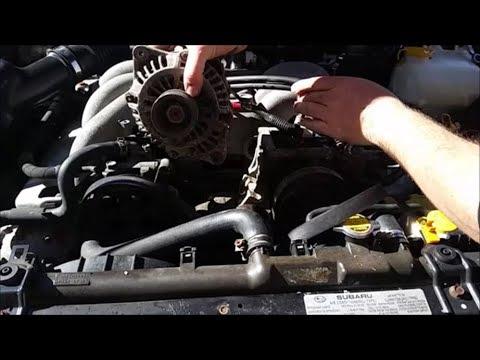
The alternator sits at the front of the 3.6L engine and charges the battery while the engine runs. Replacement requires removing the accessory drive belt, disconnecting the electrical connections, and unbolting the alternator.
Difficulty Level: Intermediate | Estimated Time: 1.5-2.5 hours
Assumption: Your Outback retains its factory accessory-drive layout.
⚠️ Safety & Precautions
- ⚠️ Disconnect the negative battery cable before touching the alternator. Its output terminal is always connected directly to the battery.
- 🧤 Work only with the engine completely cool and keep fingers away from the spring-loaded belt tensioner.
- 🔑 Keep the ignition switched off and remove the key from the vehicle.
- 🔩 Never allow a metal tool to bridge the alternator output terminal and engine metal.
- 🛑 Do not start the engine until the belt is correctly seated on every pulley.
🔧 Required Tools
You'll need the following tools for this repair:
- 3/8-inch drive ratchet
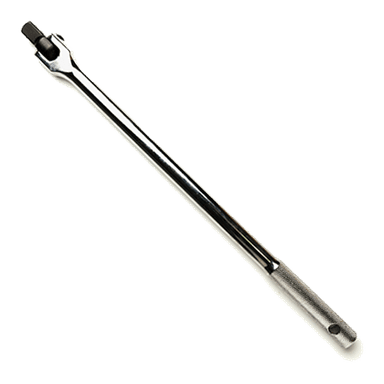
- 3/8-inch drive breaker bar
- 3/8-inch drive torque wrench rated 5-80 Nm
- 8mm socket
- 10mm socket
- 12mm socket
- 14mm socket
- 14mm combination wrench
- 6-inch socket extension
- Plastic trim-clip removal tool
- Digital multimeter rated for 20 volts DC
- Work light
- Mechanic gloves
- Safety glasses
🔩 Required Parts
HowToo sells all the parts you need for this repair:
- Alternator for 3.6L engine - Qty: 1
- Accessory drive belt - Qty: 1 if cracked, glazed, frayed, or contaminated
📋 Before You Begin
- 🚗 Park your Outback on level ground, select Park, apply the parking brake, and let the engine cool.
- 📻 No infotainment service mode or scan-tool command is required for this repair.
- 🪟 Lower the driver’s window before disconnecting the battery so you cannot become locked out.
- 📝 Save radio presets if desired. Battery disconnection may reset the clock and learned window positions.
- 🔌 A belt tensioner is a spring-loaded arm that keeps the accessory belt tight. Rotate it only far enough to release belt tension.
🔨 Step-by-Step Instructions
Follow these steps in order:
Step 1: Disconnect the Battery
- Open the hood and use a 10mm socket and ratchet to loosen the negative battery-terminal clamp.
- Lift the negative cable from the battery post and position it where it cannot spring back into contact.
- Wait at least one minute before working on the alternator wiring.
Step 2: Clear the Working Area
- Use a plastic trim-clip removal tool to release the clips securing the front air-intake duct if it obstructs access.
- Use an 8mm socket or 10mm socket, as fitted, to remove any intake-duct fastener.
- Lift the duct away and place its clips and fasteners together.
- Use a work light to locate the alternator, belt tensioner, and belt routing.
Step 3: Record the Belt Routing
- Use the work light to find the factory belt-routing label under the hood.
- If the label is missing, photograph or sketch the belt path around every pulley before removal.
- Confirm which side of the belt contacts each pulley: the ribbed side runs on grooved pulleys, while the smooth side runs on smooth pulleys.
Step 4: Release Belt Tension
- Place a 14mm combination wrench or 14mm socket with a breaker bar on the belt-tensioner hex.
- Rotate the tensioner clockwise, viewed from the front of the vehicle, only far enough to create belt slack.
- Slide the belt off the alternator pulley while maintaining control of the tensioner.
- Slowly return the tensioner to its resting position. Do not let it snap back.
- Remove the belt if it will be replaced; otherwise, leave it routed around the lower pulleys.
- Keep the belt ribs clean and dry.
Step 5: Disconnect the Alternator Wiring
- Use the work light to identify the small regulator connector and the rubber-covered output terminal.
- Press the locking tab by hand and unplug the regulator connector. Pull on the connector body, not its wires.
- Lift the rubber terminal boot away from the output stud.
- Use a 12mm socket and ratchet to remove the output-terminal nut, then lift off the cable eyelet.
- Keep the cable eyelet from contacting metal even though the battery is disconnected.
Step 6: Remove the Alternator
- Support the alternator with one hand.
- Use a 14mm socket, 6-inch extension, and ratchet to remove the alternator mounting bolts.
- Note the position and length of each bolt so it returns to the same location.
- Rock the alternator gently by hand and lift it from its mounting bracket. Do not lever against plastic housings or wiring.
- Compare the old and replacement alternators. The connector, output stud, mounting ears, pulley grooves, and pulley offset must match.
Step 7: Install the Replacement Alternator
- Lower the replacement alternator squarely into its bracket by hand.
- Start every mounting bolt by hand for several turns to avoid cross-threading.
- Use a 14mm socket and ratchet to seat the mounting bolts evenly.
- Use the torque wrench and 14mm socket to tighten the alternator mounting bolts to 25 Nm (18 ft-lbs).
Step 8: Reconnect the Alternator Wiring
- Place the output-cable eyelet over the alternator stud and start its nut by hand.
- Use the torque wrench and 12mm socket to tighten the output-terminal nut to 9 Nm (80 in-lbs).
- Press the rubber boot completely over the terminal so no metal remains exposed.
- Push the regulator connector into its socket until its lock clicks.
- Do not overtighten the insulated output stud.
Step 9: Install the Accessory Belt
- Route the belt according to the factory routing label or the record made earlier.
- Use a 14mm combination wrench or 14mm socket with the breaker bar to rotate the tensioner clockwise.
- Slip the belt over the alternator pulley, then slowly release the tensioner.
- Use the work light to inspect every pulley. Each belt rib must sit inside a matching pulley groove, with no rib hanging over an edge.
- Rotate the tensioner again and reposition the belt if any section is misaligned.
Step 10: Reinstall the Intake Duct
- Position the intake duct in its original location.
- Use the plastic trim-clip removal tool by hand to reset each reusable clip, then press the clips into place.
- Use the applicable 8mm socket or 10mm socket to reinstall the duct fastener snugly. Do not crush the plastic.
Step 11: Reconnect the Battery
- Place the negative cable fully down over the battery post.
- Use the 10mm socket and torque wrench to tighten the terminal clamp to 6 Nm (53 in-lbs).
- Confirm the clamp cannot rotate by hand. Do not overtighten it.
✅ After Repair
- 👀 Check that no tools remain in the engine compartment and that the belt is centered on every pulley.
- 🔊 Start the engine and listen for squealing, scraping, or belt slapping. Switch the engine off immediately if the belt wanders or makes abnormal noise.
- ⚡ Set the digital multimeter to 20 volts DC. With the engine idling, place the red probe on the positive battery post and the black probe on the negative post.
- 📈 Charging voltage will normally rise above the engine-off battery voltage, often into approximately 13.5-14.8 volts. Subaru’s charging control can vary voltage with temperature and electrical demand.
- 💡 Turn on the headlights and cabin blower, then verify the charge-warning light remains off and the system continues charging.
- 🪟 If automatic window operation was lost, close the driver’s window fully, hold the switch upward for about one second, then check one-touch operation.
- 🕒 Reset the clock and radio presets if necessary. Alternator coding or battery registration is not required.
💰 DIY vs Shop Cost
Shop Cost: ₹35,000-₹90,000 (parts + labor)
DIY Cost: ₹25,000-₹75,000 (parts only)
You Save: ₹3,000-₹15,000 by doing it yourself!
Local labor and imported-part prices vary. This repair takes a shop approximately 1-1.5 hours.
🎯 Ready to get started?
HowToo makes it easy: same-day/2-day shipping on every part, plus all the tools and specialty tools you need! Check out the parts and tools sections below to add everything to your cart.