















How to Replace Suspension Bushings on a 2018 Ford Explorer
Step-by-step repair guide with tools, parts, torque tips, and alignment advice for 2011, 2012, 2013, 2014, 2015, 2016, 2017, 2018, 2019
How to Replace Suspension Bushings on a 2018 Ford Explorer
Step-by-step repair guide with tools, parts, torque tips, and alignment advice for 2011, 2012, 2013, 2014, 2015, 2016, 2017, 2018, 2019


🔧 Suspension Bushings - Replacement
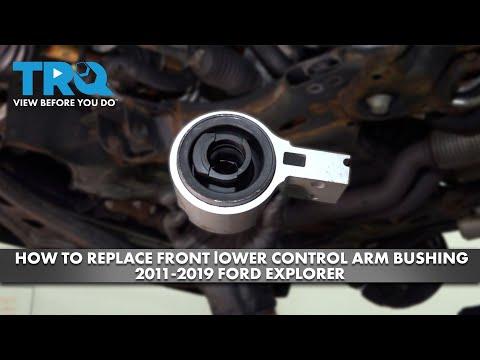
On your Explorer, most suspension bushings are not replaced one-by-one with hand tools. The usual repair is to replace the worn control arm or suspension arm assembly that contains the bushing, then align the vehicle afterward.
Difficulty Level: Advanced | Estimated Time: 3-6 hours
⚠️ Safety & Precautions
- Support the vehicle on jack stands before removing any suspension parts.
- Do not work under a vehicle supported only by a jack.
- Many suspension bolts are tightened with the suspension at ride height; final torque should be applied with the vehicle loaded or the suspension supported.
- An alignment is required after suspension arm or bushing replacement.
- If the vehicle has a brake hose or ABS wire attached to the arm, do not let it hang or stretch.
🔧 Required Tools
You'll need the following tools for this repair:
- Floor jack (rated 3-ton minimum)
- Jack stands
- Wheel chocks
- Safety glasses
- Mechanic gloves
- Breaker bar
- Torque wrench
- Ratchet set
- Socket set
- Combination wrench set
- Ball joint separator (specialty)
- Bushing press kit (specialty)
- Penetrating oil
- Paint marker
🔩 Required Parts
HowToo sells all the parts you need for this repair:
- Front lower control arm assembly - Qty: 2 if replacing both sides
- Front upper control arm assembly - Qty: 2 if replacing both sides
- Rear suspension arm assembly - Qty: 2 if replacing both sides
- New control arm bolts and nuts - Qty: 1 set
- Alignment service - Qty: 1
📋 Before You Begin
- Park on level ground and set the parking brake.
- Loosen wheel lug nuts slightly before lifting the vehicle.
- Spray all suspension fasteners with penetrating oil and let it soak.
- If you are replacing front or rear control arms, plan to get a professional alignment right after the repair.
🔨 Step-by-Step Instructions
Follow these steps in order:
Step 1: Lift and secure the vehicle
- Use a floor jack to raise the Explorer at the proper lift points.
- Place jack stands under the frame or approved support points.
- Remove the wheel with a lug wrench or impact gun if equipped.
Step 2: Inspect and mark the arm position
- Use a paint marker to mark the position of the control arm bolts and cam bolts.
- Helps keep alignment closer to original.
Step 3: Remove the suspension arm fasteners
- Use the correct socket and breaker bar to remove the arm-to-subframe bolts.
- Use a wrench or socket to remove the ball joint nut if the arm is attached to the steering knuckle.
- If needed, use a ball joint separator to free the taper without damaging parts.
Step 4: Remove the old arm or bushing assembly
- Lower and remove the control arm or arm assembly from the vehicle.
- If you are pressing bushings only, use a bushing press kit to press the old bushing out.
- Press the new bushing in squarely with the bushing press kit.
Step 5: Install the replacement part
- Position the new control arm or bushing assembly in place.
- Start all bolts by hand first to avoid cross-threading.
- Tighten the fasteners snug, but do not fully torque yet if the suspension is hanging.
Step 6: Set suspension at ride height and torque fasteners
- Raise the control arm with a jack to approximate ride height.
- Use a torque wrench to tighten all suspension fasteners to manufacturer specification.
- Torque to factory specification for your exact arm and fastener type.
Step 7: Reinstall the wheel and lower the vehicle
- Reinstall the wheel and hand-tighten the lug nuts.
- Lower the Explorer to the ground.
- Tighten the lug nuts with a torque wrench in a star pattern.
✅ After Repair
- Test drive slowly and listen for clunks or squeaks.
- Check that the steering wheel is centered.
- Schedule a wheel alignment immediately.
- Recheck fastener torque after the first drive if needed.
💰 DIY vs Shop Cost
Shop Cost: $450-$1,200 (parts + labor)
DIY Cost: $180-$700 (parts only)
You Save: $270-$500 by doing it yourself!
Shop labor rates vary but typically run $100-$150/hour. This repair takes a shop approximately 3-6 hours.
🎯 Ready to get started?
HowToo makes it easy: same-day/2-day shipping on every part, plus all the tools and specialty tools you need! Check out the parts and tools sections below to add everything to your cart.