

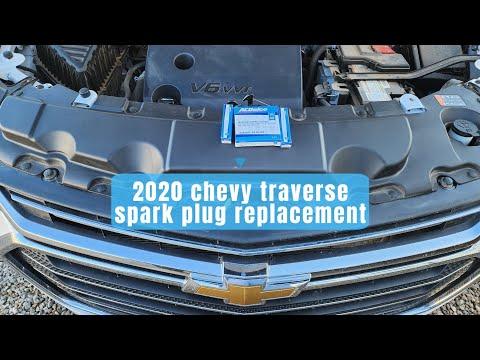







How to Replace Spark Plugs on a 2020 Chevrolet Traverse (Front & Rear Bank Guide)
Step-by-step DIY instructions with tools, parts, intake manifold removal tips, and torque specs for 2012, 2013, 2014, 2015, 2016, 2017, 2018, 2019, 2020
How to Replace Spark Plugs on a 2020 Chevrolet Traverse (Front & Rear Bank Guide)
Step-by-step DIY instructions with tools, parts, intake manifold removal tips, and torque specs for 2012, 2013, 2014, 2015, 2016, 2017, 2018, 2019, 2020


🔧 Traverse - Spark Plug Replacement
On your Traverse, the front bank spark plugs are easy to reach, but the rear bank sits near the firewall and is accessed by removing the upper intake manifold (the top plastic/aluminum “air passage” feeding the engine). Replacing plugs at the correct interval helps prevent misfires, rough idle, and poor fuel economy.
Difficulty Level: Intermediate | Estimated Time: 2-4 hours
⚠️ Safety & Precautions
- 🧤 Work on a cool engine to avoid burns.
- 🔋 Disconnect the negative battery cable before unplugging coils/sensors.
- 🧯 Keep dirt out of the intake—cover ports with clean rags once the manifold is off.
- 👓 Wear safety glasses when blowing debris from plug wells.
- ⚠️ Do not use anti-seize on these plugs unless the plug maker specifically requires it.
🔧 Required Tools
You'll need the following tools for this repair:
- Safety glasses
- Nitrile gloves
- Floor jack (rated 3-ton minimum)
- Jack stands (rated 3-ton minimum)
- Wheel chocks
- 3/8" drive ratchet
- 3/8" drive torque wrench (10-30 Nm range)
- 10mm socket
- 8mm socket
- 5/8" spark plug socket
- 3/8" drive extension set (3", 6", 10")
- 3/8" drive universal joint
- Flathead screwdriver
- Trim clip remover
- Pick tool
- Compressed air blow gun
- Flashlight
- Masking tape and marker
🔩 Required Parts
HowToo sells all the parts you need for this repair:
- Spark plugs (OEM-spec iridium) - Qty: 6
- Upper intake manifold gasket set - Qty: 1
- Throttle body gasket - Qty: 1
- Dielectric grease - Qty: 1
📋 Before You Begin
- Park on level ground, shift to Park, and set the parking brake.
- Open the hood and let the engine cool fully.
- Use a 10mm socket to disconnect the negative battery cable and isolate it so it can’t spring back.
- Use masking tape and marker to label any hoses/connectors you’re not 100% sure about. Labeling prevents mix-ups.
🔨 Step-by-Step Instructions
Follow these steps in order:
Step 1: Remove the engine cover and intake duct
- Lift off the engine cover (it pulls upward on its grommets).
- Use an 8mm socket or flathead screwdriver to loosen the clamps on the air intake duct.
- Unclip/remove any duct retainers with a trim clip remover, then lift the duct out.
Step 2: Remove the ignition coils (front bank)
- Unplug each coil electrical connector by lifting the lock with a pick tool (a pick tool is a small hook used to release stubborn clips), then pulling the connector straight off.
- Remove the coil bolts using a 10mm socket.
- Pull the coils straight up and set them aside in order.
- When reinstalling coil bolts later: Torque to 10 Nm (89 in-lbs).
Step 3: Replace the front bank spark plugs
- Blow out the plug wells using a compressed air blow gun so dirt can’t fall into the cylinder.
- Remove each plug using a 5/8" spark plug socket with a 3/8" drive extension and 3/8" drive ratchet.
- Thread the new plug in by hand first (use the spark plug socket with an extension, no ratchet). Hand-threading prevents cross-threading.
- Tighten with a 3/8" drive torque wrench: Torque to 15 Nm (11 ft-lbs).
Step 4: Remove the upper intake manifold to access the rear bank
- Disconnect any electrical connectors and vacuum/EVAP lines attached to the upper intake manifold, using a pick tool as needed to release locks.
- Use masking tape and marker to label each hose/connector as you remove it.
- Remove the upper intake manifold bolts using a 10mm socket.
- Lift the upper intake manifold off carefully. If it sticks, gently wiggle it—do not pry hard on sealing surfaces.
- Cover the exposed intake ports with clean rags.
Step 5: Replace the rear bank spark plugs
- Unplug and remove the rear bank coils using a 10mm socket.
- Blow out each rear plug well using the compressed air blow gun.
- Remove the rear plugs using a 5/8" spark plug socket, 3/8" drive extensions, and a 3/8" drive universal joint for the tighter angles.
- Install the new plugs by hand first, then tighten with a 3/8" drive torque wrench: Torque to 15 Nm (11 ft-lbs).
- Reinstall rear coils and bolts: Torque to 10 Nm (89 in-lbs).
- Apply a small amount of dielectric grease inside each coil boot before reinstalling. (Dielectric grease is a non-conductive grease that helps seal out moisture.)
Step 6: Reinstall the upper intake manifold
- Remove the old upper intake manifold gaskets and install the new ones from the upper intake manifold gasket set.
- Set the manifold back in place, making sure no wires/hoses are trapped.
- Install bolts finger-tight first, then tighten evenly using a 10mm socket.
- Final tighten with a 3/8" drive torque wrench: Torque to 10 Nm (89 in-lbs).
- If you removed the throttle body, reinstall it with a new throttle body gasket and tighten bolts with a 3/8" drive torque wrench: Torque to 10 Nm (89 in-lbs).
Step 7: Reassemble and reconnect battery
- Reconnect all hoses and electrical connectors (use your labels).
- Reinstall the air intake duct and tighten clamps using an 8mm socket or flathead screwdriver.
- Reinstall the engine cover.
- Reconnect the negative battery cable using a 10mm socket.
✅ After Repair
- Start the engine and let it idle for 1-2 minutes. It should be smooth with no shaking.
- Listen for vacuum leaks (a hissing sound) around the upper intake area.
- If the check engine light comes on, re-check coil connectors and intake hoses first.
- Test drive 10-15 minutes, then recheck for any new warning lights.
💰 DIY vs Shop Cost
Shop Cost: $450-$850 (parts + labor)
DIY Cost: $80-$220 (parts only)
You Save: $370-$630 by doing it yourself!
Shop labor rates vary but typically run $100-$150/hour. This repair takes a shop approximately 2-3 hours.
🎯 Ready to get started?
HowToo makes it easy: same-day/2-day shipping on every part, plus all the tools and specialty tools you need! Check out the parts and tools sections below to add everything to your cart.