





How to Replace Spark Plugs on a 2012-2018 Jeep Wrangler 3.6L V6 (Engine: V6 3.6L)
Step-by-step DIY guide with tools, parts, spark plug gap, torque specs, and safety tips for 2012, 2013, 2014, 2015, 2016, 2017, 2018
How to Replace Spark Plugs on a 2012-2018 Jeep Wrangler 3.6L V6 (Engine: V6 3.6L)
Step-by-step DIY guide with tools, parts, spark plug gap, torque specs, and safety tips for 2012, 2013, 2014, 2015, 2016, 2017, 2018


🔧 Wrangler - Spark Plug Replacement
Replacing the spark plugs on your Wrangler helps restore smooth idle, easy starts, fuel economy, and proper engine power. The 3.6L V6 uses six spark plugs and coil-on-plug ignition, meaning each plug has its own ignition coil mounted directly above it.
Difficulty Level: Intermediate | Estimated Time: 2.5-4 hours
⚠️ Safety & Precautions
- ⚠️ Work only on a cold engine. Aluminum cylinder heads can be damaged if spark plugs are removed hot.
- ⚠️ Disconnect the negative battery cable before unplugging ignition coils and intake sensors.
- ⚠️ Keep dirt out of the intake ports. Stuffing a clean rag into open intake passages prevents anything from falling into the engine.
- ⚠️ Do not over-tighten spark plugs. The cylinder heads are aluminum and threads can strip.
- ⚠️ Replace all six spark plugs at the same time for even engine performance.
🔧 Required Tools
You'll need the following tools for this repair:
- 3/8-inch drive ratchet
- 1/4-inch drive ratchet
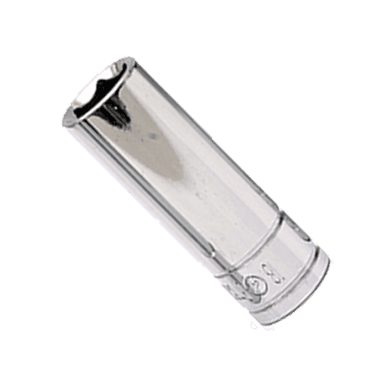
- 5/8-inch spark plug socket
- 3-inch extension
- 6-inch extension
- 10mm socket
- 8mm socket
- Flat-blade screwdriver
- Torque wrench, inch-pound range
- Torque wrench, foot-pound range
- Spark plug gap gauge
- Compressed air blow gun
- Needle-nose pliers
- Magnetic pickup tool
- Plastic trim tool
- Clean shop rags
- Nitrile gloves
- Safety glasses
🔩 Required Parts
HowToo sells all the parts you need for this repair:
- Spark plugs - Qty: 6
- Upper intake manifold gasket set - Qty: 1
- Throttle body gasket - Qty: 1
- Dielectric grease - Qty: 1 small tube
📋 Before You Begin
- Park your Wrangler on level ground, shift into neutral, and apply the parking brake.
- Let the engine cool completely before starting.
- Open the hood and remove any loose dirt around the engine cover and intake area.
- Disconnect the negative battery cable using a 10mm socket.
- The intake manifold must be removed to access the driver-side spark plugs on the 3.6L V6.
- A spark plug gap gauge checks the distance between the plug tip and ground strap. Your Wrangler uses a spark plug gap of about 0.043 in.
🔨 Step-by-Step Instructions
Follow these steps in order:
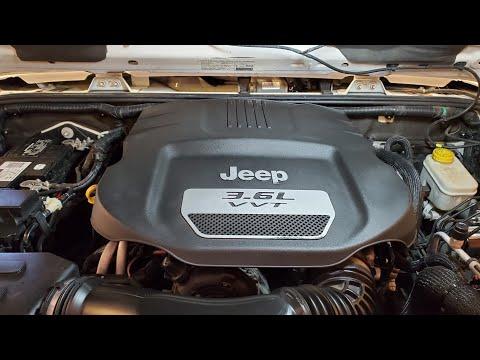
Step 1: Remove the Engine Cover
- Use both hands to lift the plastic engine cover straight upward.
- Set it aside where it will not get stepped on.
- Pull evenly to avoid cracking it.
Step 2: Disconnect the Battery
- Use a 10mm socket to loosen the negative battery terminal clamp.
- Move the cable away from the battery post so it cannot accidentally touch.
Step 3: Remove the Air Intake Tube
- Use a flat-blade screwdriver or 8mm socket to loosen the clamp at the throttle body.
- Use the same tool to loosen the clamp at the air filter box.
- Disconnect any small breather hose attached to the intake tube by hand or with needle-nose pliers.
- Lift the intake tube out of the engine bay.
Step 4: Unplug Throttle Body and Intake Connectors
- Use your fingers or a plastic trim tool to release the lock tab on the throttle body electrical connector.
- Unplug the connector gently. Do not pull on the wires.
- Unplug any intake manifold sensors or hose connections that prevent manifold removal.
- Label hoses with tape if needed so they go back in the same place.
Step 5: Remove the Upper Intake Manifold
- Use a 10mm socket, 3-inch extension, and ratchet to remove the upper intake manifold bolts.
- Lift the manifold upward carefully once all bolts are loose.
- Disconnect any remaining vacuum hose using your hand or needle-nose pliers.
- Remove the intake manifold from the engine bay.
- Immediately cover the open intake ports with clean shop rags.
- Count your rags before and after.
Step 6: Remove the Old Intake Gaskets
- Use your fingers or a plastic trim tool to remove the old upper intake manifold gaskets.
- Do not use a metal scraper on the plastic manifold or aluminum sealing surfaces.
- Wipe the sealing surfaces with a clean shop rag.
Step 7: Access the Ignition Coils
- There are three ignition coils on each side of the engine.
- An ignition coil is the small electrical unit that sits directly above each spark plug.
- Use a 10mm socket to remove the ignition coil hold-down bolt from the first coil.
- Press the connector tab and unplug the ignition coil connector by hand.
Step 8: Remove the Ignition Coil
- Twist the ignition coil gently by hand to loosen the rubber boot.
- Pull the coil straight upward.
- If it sticks, use a gentle rocking motion. Do not pry hard.
- Set each coil near its original cylinder location.
Step 9: Clean Around the Spark Plug Well
- Put on safety glasses.
- Use a compressed air blow gun to blow dirt out of the spark plug well.
- This keeps debris from falling into the cylinder when the plug is removed.
Step 10: Remove the Old Spark Plug
- Use a 5/8-inch spark plug socket, 6-inch extension, and 3/8-inch drive ratchet to loosen the spark plug.
- Turn counterclockwise slowly until the plug is free.
- Lift the plug out carefully using the spark plug socket.
- If the plug drops from the socket, use a magnetic pickup tool to retrieve it.
Step 11: Check the New Spark Plug Gap
- Use a spark plug gap gauge to verify the new plug gap is about 0.043 in.
- Do not force the gauge through the gap.
- Most quality replacement plugs come pre-gapped, but checking prevents misfire issues.
Step 12: Install the New Spark Plug
- Place the new spark plug into the 5/8-inch spark plug socket.
- Lower it straight into the spark plug well using the 6-inch extension.
- Start the plug by hand only. Turn clockwise several turns before using a ratchet.
- This prevents cross-threading, which means damaging the cylinder head threads.
- Use a torque wrench, foot-pound range to tighten the spark plug to Torque to 18 Nm (13 ft-lbs).
Step 13: Reinstall the Ignition Coil
- Apply a small amount of dielectric grease inside the rubber coil boot.
- Dielectric grease helps seal out moisture and makes future removal easier.
- Push the ignition coil straight down until it seats on the spark plug.
- Use a 10mm socket to install the coil hold-down bolt.
- Use a torque wrench, inch-pound range to tighten the coil bolt to Torque to 8 Nm (71 in-lbs).
- Reconnect the ignition coil electrical connector until it clicks.
Step 14: Repeat for the Remaining Spark Plugs
- Repeat Steps 7 through 13 for the other five spark plugs.
- Use the 10mm socket, 5/8-inch spark plug socket, 6-inch extension, and torque wrench the same way for each cylinder.
- Work one plug and one coil at a time to avoid mixing parts.
Step 15: Install New Intake Manifold Gaskets
- Remove the clean shop rags from the intake ports.
- Double-check that no rag, bolt, or tool is left near the intake openings.
- Press the new upper intake manifold gaskets into place by hand.
- Install the new throttle body gasket if the throttle body was removed.
Step 16: Reinstall the Upper Intake Manifold
- Carefully lower the upper intake manifold into position by hand.
- Start all manifold bolts by hand before tightening.
- Use a 10mm socket, 3-inch extension, and torque wrench, inch-pound range to tighten the manifold bolts evenly.
- Tighten the intake manifold bolts in a crisscross pattern to Torque to 12 Nm (106 in-lbs).
Step 17: Reconnect Hoses and Electrical Connectors
- Reconnect all vacuum hoses by hand.
- Reconnect the throttle body connector and intake sensor connectors until each clicks.
- Use a plastic trim tool only if needed to guide connector locks gently.
Step 18: Reinstall the Air Intake Tube
- Place the air intake tube back between the air filter box and throttle body.
- Use a flat-blade screwdriver or 8mm socket to tighten both hose clamps snugly.
- Reconnect the breather hose by hand or with needle-nose pliers.
Step 19: Reinstall the Engine Cover and Battery Cable
- Push the engine cover straight down onto its mounting points by hand.
- Reconnect the negative battery cable.
- Use a 10mm socket to tighten the battery terminal snugly.
✅ After Repair
- Start your Wrangler and let it idle for a few minutes.
- Listen for hissing sounds, which may indicate an intake vacuum leak.
- Check that the engine idles smoothly and the check engine light stays off.
- Take a short test drive and confirm smooth acceleration.
- If the idle is high or rough at first, let the engine idle a few minutes while the throttle body relearns.
- Recheck the intake tube clamps and visible hose connections after the test drive.
💰 DIY vs Shop Cost
Shop Cost: $350-$650 (parts + labor)
DIY Cost: $70-$180 (parts only)
You Save: $280-$470 by doing it yourself!
Shop labor rates vary but typically run $100-$150/hour. This repair takes a shop approximately 2-3 hours.
🎯 Ready to get started?
HowToo makes it easy: same-day/2-day shipping on every part, plus all the tools and specialty tools you need! Check out the parts and tools sections below to add everything to your cart.