
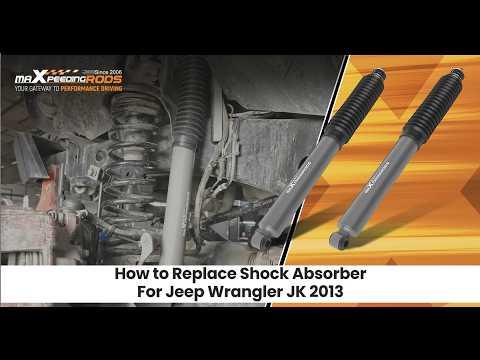






How to Replace Shock Absorbers on a 2007-2017 Jeep Wrangler
Step-by-step front and rear shock guide with tools, parts, torque specs, and safety tips for 2007, 2008, 2009, 2010, 2011, 2012, 2013, 2014, 2015, 2016, 2017
How to Replace Shock Absorbers on a 2007-2017 Jeep Wrangler
Step-by-step front and rear shock guide with tools, parts, torque specs, and safety tips for 2007, 2008, 2009, 2010, 2011, 2012, 2013, 2014, 2015, 2016, 2017


🔧 Wrangler - Shock Absorber Replacement
Replacing the shock absorbers on your Wrangler restores ride control, reduces bouncing, and helps the tires stay planted on rough roads. Your Wrangler uses separate shock absorbers at each corner, and this job can be done with basic hand tools if the fasteners are not badly rusted.
Difficulty Level: Beginner to Intermediate | Estimated Time: 2-4 hours
⚠️ Safety & Precautions
- ⚠️ Work on a flat, solid surface and never rely on a jack alone.
- ⚠️ Always support your Wrangler with jack stands before working underneath.
- ⚠️ Shock absorbers help control suspension movement, but they do not hold the vehicle up like a coil spring.
- ⚠️ Keep hands clear when removing shock bolts because the axle can shift slightly.
- ⚠️ Do not loosen or remove coil springs for a standard shock replacement.
- ⚠️ Battery disconnect is not required for this repair.
🔧 Required Tools
You'll need the following tools for this repair:
- Floor jack (rated 3-ton minimum)
- Jack stands (rated 3-ton minimum)
- Wheel chocks
- 1/2-inch drive ratchet
- 3/8-inch drive ratchet
- 18mm socket
- 18mm wrench
- 16mm socket
- 16mm wrench
- 15mm socket
- 15mm wrench
- 6-inch socket extension
- Breaker bar 1/2-inch drive
- Torque wrench 1/2-inch drive
- Penetrating oil
- Wire brush
- Rubber mallet
- Safety glasses
- Mechanic gloves
🔩 Required Parts
HowToo sells all the parts you need for this repair:
- Front shock absorbers - Qty: 2
- Rear shock absorbers - Qty: 2
- Shock mounting hardware kit - Qty: 1
Note: Replace shocks in pairs on the same axle. For best ride quality, replace all four.
📋 Before You Begin
- Park your Wrangler on level ground and shift the manual transmission into 1st gear.
- Apply the parking brake and place wheel chocks at the wheels that will stay on the ground.
- Spray penetrating oil on all shock mounting bolts and let it soak for 10-15 minutes.
- A breaker bar is a long-handled ratchet used to loosen tight bolts without using power tools.
- A torque wrench tightens bolts to the correct measured tightness so they are not too loose or too tight.
🔨 Step-by-Step Instructions
Follow these steps in order:
Step 1: Prepare and Lift the Front
- Use wheel chocks behind the rear tires.
- Use the floor jack under the front axle tube near the center to raise the front of your Wrangler.
- Place jack stands under the front axle tubes on both sides.
- Lower the floor jack slowly until the axle rests securely on the jack stands.
- Keep the floor jack lightly touching the axle as backup support.
- Shake gently to confirm stability.
Step 2: Remove the Front Lower Shock Bolt
- Use the wire brush to clean the lower shock bolt and nut.
- Use penetrating oil on the lower shock bolt if it looks rusty.
- Use an 18mm socket and 18mm wrench to remove the lower front shock bolt and nut.
- If the bolt is tight, use the 1/2-inch breaker bar with the 18mm socket.
- Support the shock by hand as the bolt comes out.
Step 3: Remove the Front Upper Shock Nut
- Open the hood to access the top of the front shock tower.
- Use a 16mm wrench or 16mm socket with a 6-inch socket extension to remove the upper shock nut.
- Remove the upper washer and rubber bushing.
- Pull the front shock absorber down and out of the mount.
- If the shock is stuck, tap it gently with a rubber mallet.
Step 4: Install the New Front Shock
- Compare the new shock absorber with the old one before installing.
- Install the supplied lower bushing and sleeve if they are not pre-installed.
- Slide the new shock up into the upper shock tower by hand.
- Install the upper rubber bushing, washer, and nut by hand first.
- Use a 16mm wrench or 16mm socket to tighten the upper nut until the rubber bushing slightly bulges.
- Do not crush the rubber bushing flat.
- Position the lower shock eye in the axle bracket.
- Use the 18mm socket and 18mm wrench to install the lower bolt and nut.
- Use the torque wrench 1/2-inch drive with the 18mm socket and tighten the lower front shock bolt to Torque to 75 Nm (55 ft-lbs).
Step 5: Repeat for the Other Front Shock
- Use the same tools and steps on the opposite front shock absorber.
- Make sure both lower bolts are tightened to Torque to 75 Nm (55 ft-lbs).
- Check that both upper bushings are seated evenly.
Step 6: Lower the Front
- Use the floor jack to lift the front axle slightly off the jack stands.
- Remove the jack stands by hand.
- Lower your Wrangler slowly to the ground with the floor jack.
Step 7: Prepare and Lift the Rear
- Move the wheel chocks to the front tires.
- Use the floor jack under the rear axle tube near the center to raise the rear of your Wrangler.
- Place jack stands under the rear axle tubes on both sides.
- Lower the floor jack slowly until the rear axle rests securely on the jack stands.
- Keep the floor jack lightly touching the axle as backup support.
Step 8: Remove the Rear Lower Shock Bolt
- Use the wire brush to clean the rear lower shock bolt and nut.
- Use penetrating oil on the bolt and let it soak if needed.
- Use an 18mm socket and 18mm wrench to remove the rear lower shock bolt and nut.
- Use the 1/2-inch breaker bar with the 18mm socket if the bolt is tight.
Step 9: Remove the Rear Upper Shock Bolts
- Support the rear shock absorber by hand.
- Use a 15mm socket, 3/8-inch drive ratchet, and 6-inch socket extension to remove the two upper rear shock bolts.
- Pull the rear shock absorber out of the upper mount and lower bracket.
- If needed, use the rubber mallet to gently free the shock from the bracket.
Step 10: Install the New Rear Shock
- Compare the new rear shock absorber with the old one.
- Position the new shock in the upper mount first.
- Use the 15mm socket and 3/8-inch drive ratchet to start both upper bolts by hand first.
- Use the torque wrench 1/2-inch drive with the 15mm socket to tighten the upper rear shock bolts to Torque to 50 Nm (37 ft-lbs).
- Line up the lower shock eye with the axle bracket.
- Use the 18mm socket and 18mm wrench to install the lower bolt and nut.
- Use the torque wrench 1/2-inch drive with the 18mm socket to tighten the rear lower shock bolt to Torque to 75 Nm (55 ft-lbs).
Step 11: Repeat for the Other Rear Shock
- Use the same tools and steps on the opposite rear shock absorber.
- Confirm both upper rear shock bolts are tightened to Torque to 50 Nm (37 ft-lbs).
- Confirm both lower rear shock bolts are tightened to Torque to 75 Nm (55 ft-lbs).
Step 12: Lower the Rear and Final Check
- Use the floor jack to raise the rear axle slightly off the jack stands.
- Remove the jack stands by hand.
- Lower your Wrangler slowly to the ground.
- Use the torque wrench and correct sockets to recheck all shock mounting bolts.
- Look at each shock and confirm it is centered in its brackets.
✅ After Repair
- ✅ Bounce each corner of your Wrangler by hand. It should settle quickly without repeated bouncing.
- ✅ Take a slow test drive on a smooth road first, then over small bumps.
- ✅ Listen for clunks, rattles, or metal-on-metal noises.
- ✅ Recheck all shock bolts after 25-50 miles of driving.
- ✅ An alignment is usually not required after standard shock absorber replacement on your Wrangler.
💰 DIY vs Shop Cost
Shop Cost: $500-$900 (parts + labor)
DIY Cost: $180-$450 (parts only)
You Save: $320-$450 by doing it yourself!
Shop labor rates vary but typically run $100-$150/hour. This repair takes a shop approximately 2-3 hours.
🎯 Ready to get started?
HowToo makes it easy: same-day/2-day shipping on every part, plus all the tools and specialty tools you need! Check out the parts and tools sections below to add everything to your cart.