

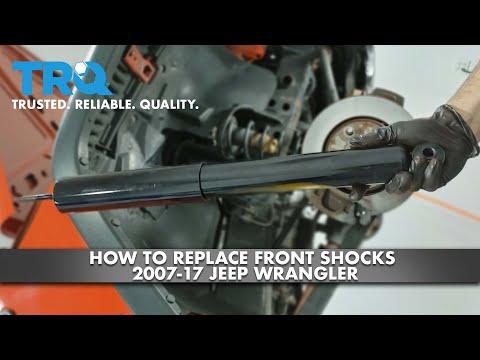






How to Replace Shock Absorbers on a 2007-2015 Jeep Wrangler (Trim: Sahara | Engine: V6 3.6L)
Step-by-step front and rear shock replacement guide with tools, parts, torque specs, and safety tips for 2007, 2008, 2009, 2010, 2011
How to Replace Shock Absorbers on a 2007-2015 Jeep Wrangler (Trim: Sahara | Engine: V6 3.6L)
Step-by-step front and rear shock replacement guide with tools, parts, torque specs, and safety tips for 2007, 2008, 2009, 2010, 2011


🔧 Wrangler - Shock Absorber Replacement
Replacing the shock absorbers on your Wrangler helps restore ride control, reduce bouncing, and improve stability over bumps. The shocks are separate from the coil springs, so you do not need to compress or remove the springs for this repair.
Difficulty Level: Beginner | Estimated Time: 2-3 hours for all four shocks
⚠️ Safety & Precautions
- ⚠️ Work only on a flat, solid surface.
- ⚠️ Never work under your Wrangler while it is supported only by a jack.
- ⚠️ Use jack stands under the axle tubes before removing any shock bolts.
- ⚠️ Keep your hands away from pinch points when raising or lowering the axle.
- ⚠️ Do not remove the coil springs for shock replacement.
- ⚠️ Battery disconnect is not required.
🔧 Required Tools
You'll need the following tools for this repair:
- Floor jack (rated 3-ton minimum)
- Jack stands (rated 3-ton minimum)
- Wheel chocks
- 1/2-inch drive ratchet
- 3/8-inch drive ratchet
- 13mm socket
- 16mm socket
- 18mm socket
- 13mm wrench
- 16mm wrench
- 18mm wrench
- Torque wrench (10-150 ft-lbs)
- Breaker bar 1/2-inch drive
- Penetrating oil
- Wire brush
- Flat pry bar
- Rubber mallet
- Safety glasses
- Mechanic gloves
🔩 Required Parts
HowToo sells all the parts you need for this repair:
- Front shock absorbers - Qty: 2, replace in pairs
- Rear shock absorbers - Qty: 2, replace in pairs
- Shock mounting hardware kit - Qty: 1 if bolts or nuts are rusty or damaged
📋 Before You Begin
- 🚗 Park your Wrangler on level ground and set the parking brake.
- 🧱 Place wheel chocks at the wheels that stay on the ground. Wheel chocks are blocks that stop the vehicle from rolling.
- 🧴 Spray penetrating oil on all shock bolts and nuts. Let it soak for 10-15 minutes.
- 🧽 Clean visible threads with a wire brush before loosening bolts.
- 🛞 Wheels can usually stay installed, but removing them gives more room if needed.
🔨 Step-by-Step Instructions
Follow these steps in order:
Step 1: Lift and Support the Front Axle
- Use wheel chocks behind both rear wheels.
- Use the floor jack under the front axle tube to raise the front of your Wrangler.
- Place jack stands under the front axle tubes, one on each side.
- Lower the floor jack slowly until the axle is resting securely on the jack stands.
- Keep the floor jack lightly touching the axle as backup support.
- Give it a gentle shake first.
Step 2: Remove the Front Lower Shock Bolt
- Use the wire brush to clean the lower shock bolt threads.
- Use penetrating oil on the lower shock bolt and nut.
- Use an 18mm socket and 18mm wrench to remove the lower shock bolt and nut from the axle bracket.
- If it is tight, use the 1/2-inch breaker bar. A breaker bar is a longer handle that gives more leverage.
- Pull the lower bolt out by hand.
Step 3: Remove the Front Upper Shock Nut
- Open the hood for better access to the top of the front shock.
- Use a 16mm wrench or 16mm socket to remove the upper shock nut.
- If the shock shaft spins, hold the shaft flats with a wrench while turning the nut with the 16mm wrench.
- Remove the upper washer and rubber bushing. A bushing is a rubber cushion that reduces vibration.
- Pull the front shock down and out through the lower opening.
Step 4: Install the New Front Shock
- Use your hands to place the lower washer and rubber bushing on the new shock stem in the same order as the old shock.
- Guide the new shock up into the front shock tower.
- Install the upper rubber bushing, washer, and nut by hand first.
- Use a 16mm wrench or 16mm socket to tighten the upper nut until the rubber bushings slightly bulge.
- Do not crush the rubber bushings flat.
Step 5: Install the Front Lower Shock Bolt
- Use the floor jack to raise or lower the axle slightly until the lower shock eye lines up with the axle bracket.
- Use a flat pry bar gently if the holes are slightly off. A pry bar is a simple lever used for small alignment adjustments.
- Slide the lower bolt in by hand.
- Install the nut by hand first to avoid damaging the threads.
- Use an 18mm socket and 18mm wrench to tighten the lower shock bolt.
- Torque to 75 Nm (55 ft-lbs)
Step 6: Repeat for the Other Front Shock
- Use the same 16mm wrench, 16mm socket, 18mm socket, 18mm wrench, floor jack, and jack stands on the opposite side.
- Replace the other front shock the same way.
- Front shocks should always be replaced in pairs.
Step 7: Lower the Front
- Use the floor jack to raise the front axle slightly off the jack stands.
- Remove the jack stands.
- Lower your Wrangler slowly to the ground with the floor jack.
Step 8: Lift and Support the Rear Axle
- Move the wheel chocks to the front wheels.
- Use the floor jack under the rear axle tube to raise the rear of your Wrangler.
- Place jack stands under the rear axle tubes, one on each side.
- Lower the rear axle slowly onto the jack stands.
- Keep the floor jack lightly touching the rear axle as backup support.
Step 9: Remove the Rear Lower Shock Bolt
- Use the wire brush to clean the rear lower shock bolt threads.
- Use penetrating oil on the rear lower shock bolt and nut.
- Use an 18mm socket and 18mm wrench to remove the lower shock bolt and nut from the rear axle bracket.
- Use the 1/2-inch breaker bar if the bolt is stuck.
- Pull the lower bolt out by hand.
Step 10: Remove the Rear Upper Shock Bolts
- Support the shock with one hand so it does not drop.
- Use a 16mm socket to remove the rear upper shock bolts from the frame bracket.
- If your installed hardware has smaller bolt heads, use a 13mm socket instead.
- Remove the rear shock from your Wrangler.
- Go slowly on rusty upper bolts.
Step 11: Install the New Rear Shock Upper Bolts
- Position the new rear shock in the upper frame bracket by hand.
- Start both upper bolts by hand first.
- Use a 16mm socket, or 13mm socket if your hardware uses smaller heads, to tighten the upper bolts evenly.
- Torque to 50 Nm (37 ft-lbs)
Step 12: Install the Rear Lower Shock Bolt
- Use the floor jack to slightly raise or lower the rear axle until the lower shock eye lines up with the axle bracket.
- Use the flat pry bar gently if the holes need a small adjustment.
- Slide the lower bolt in by hand.
- Install the nut by hand first.
- Use an 18mm socket and 18mm wrench to tighten the lower shock bolt.
- Torque to 75 Nm (55 ft-lbs)
Step 13: Repeat for the Other Rear Shock
- Use the same 16mm socket, 13mm socket if needed, 18mm socket, 18mm wrench, floor jack, and jack stands on the opposite side.
- Replace the other rear shock the same way.
- Rear shocks should always be replaced in pairs.
Step 14: Lower the Rear and Recheck Torque
- Use the floor jack to raise the rear axle slightly off the jack stands.
- Remove the jack stands.
- Lower your Wrangler slowly to the ground.
- Use the torque wrench and 18mm socket to recheck lower shock bolts at 75 Nm (55 ft-lbs).
- Use the torque wrench and 16mm socket to recheck rear upper shock bolts at 50 Nm (37 ft-lbs).
✅ After Repair
- ✅ Push down firmly on each corner of your Wrangler. It should settle quickly instead of bouncing repeatedly.
- ✅ Take a slow test drive over small bumps and listen for clunks.
- ✅ If you hear a clunk, stop and recheck the shock bolts.
- ✅ Recheck all shock hardware after 25-50 miles.
- ✅ An alignment is usually not required after shock-only replacement.
💰 DIY vs Shop Cost
Shop Cost: $450-$850 for all four shocks
DIY Cost: $180-$500 for parts only
You Save: $270-$350 by doing it yourself!
Shop labor rates vary but typically run $100-$150/hour. This repair takes a shop approximately 1.5-2.5 hours.
🎯 Ready to get started?
HowToo makes it easy: same-day/2-day shipping on every part, plus all the tools and specialty tools you need! Check out the parts and tools sections below to add everything to your cart.