

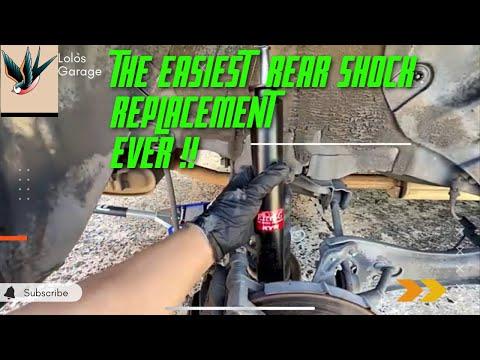






How to Replace Rear Shock Absorbers on a 2015 Hyundai Tucson
Step-by-step DIY guide with tools, parts, torque specs, safety tips, and cost savings for 2010, 2011, 2012, 2013, 2014, 2015
How to Replace Rear Shock Absorbers on a 2015 Hyundai Tucson
Step-by-step DIY guide with tools, parts, torque specs, safety tips, and cost savings for 2010, 2011, 2012, 2013, 2014, 2015


🔧 Tucson - Rear Shock Absorber Replacement
On your Tucson, the rear shock absorbers are separate from the rear coil springs, making this a very doable suspension repair for a careful beginner. Replacing worn rear shocks helps restore ride control, reduce bouncing, and improve tire contact with the road.
Difficulty Level: Beginner-Intermediate | Estimated Time: 1.5-3 hours
⚠️ Safety & Precautions
- ⚠️ Never work under your Tucson supported only by a jack. Always use jack stands.
- 🧤 Wear safety glasses and gloves because suspension parts can be rusty and dirty.
- 🚗 Replace rear shock absorbers in pairs so the vehicle handles evenly.
- 🔩 Do not loosen rear suspension arm bolts unless instructed; this job only requires the shock mounting bolts.
- 📌 The coil spring is separate from the rear shock on your Tucson, so a spring compressor is not normally required for rear shock replacement.
🔧 Required Tools
You'll need the following tools for this repair:
- Floor jack (rated 3-ton minimum)
- Jack stands (rated 3-ton minimum)
- Wheel chocks
- 21mm lug nut socket
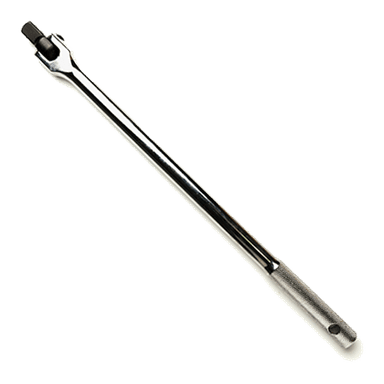
- Breaker bar 1/2-inch drive
- Ratchet wrench 1/2-inch drive
- 17mm socket
- 19mm socket
- 17mm combination wrench
- 19mm combination wrench
- Torque wrench 1/2-inch drive
- Penetrating oil spray
- Wire brush
- Rubber mallet 16-ounce
- Pry bar 18-inch
- Safety glasses
- Mechanic gloves
🔩 Required Parts
HowToo sells all the parts you need for this repair:
- Rear shock absorbers - Qty: 2
- Rear shock upper mounting hardware - Qty: 1 set
- Rear shock lower mounting hardware - Qty: 1 set
Replace in pairs: Always replace both rear shocks at the same time.
📋 Before You Begin
- 🚗 Park your Tucson on level ground.
- 🅿️ Shift the transmission to Park and set the parking brake.
- 🧱 Place wheel chocks in front of the front tires.
- 🔩 Use penetrating oil spray on the upper and lower rear shock bolts before starting.
- 📌 A shock absorber is the part that slows suspension bouncing after bumps.
- 📌 A torque wrench is a tool that tightens bolts to the correct measured tightness.
🔨 Step-by-Step Instructions
Follow these steps in order:
Step 1: Loosen the Rear Wheel Lug Nuts
- Use a 21mm lug nut socket and breaker bar 1/2-inch drive to loosen each rear wheel lug nut about 1/2 turn.
- Do not remove the lug nuts yet.
- Loosen lugs before lifting the vehicle.
Step 2: Lift and Support the Rear of the Vehicle
- Use the floor jack rated 3-ton minimum to lift the rear of your Tucson at the rear center lifting point or approved rear subframe area.
- Place jack stands rated 3-ton minimum under the approved rear side support points.
- Lower the vehicle slowly onto the jack stands.
- Give the vehicle a gentle push by hand to make sure it is stable.
Step 3: Remove the Rear Wheels
- Use a 21mm lug nut socket and ratchet wrench 1/2-inch drive to remove the rear lug nuts.
- Remove both rear wheels by hand.
- Slide the wheels under the vehicle as an extra safety backup.
Step 4: Support the Rear Suspension Arm
- Place the floor jack lightly under the rear lower control arm near the shock mount.
- Raise the jack just enough to support the arm, not enough to lift the vehicle off the jack stand.
- The lower control arm is the suspension arm that holds the wheel hub area from below.
Step 5: Remove the Lower Shock Bolt
- Use a wire brush to clean the exposed threads on the lower shock bolt.
- Spray penetrating oil on the lower shock bolt.
- Use a 19mm socket with ratchet wrench 1/2-inch drive on the bolt head.
- Use a 19mm combination wrench on the nut if the nut turns.
- Remove the lower shock bolt and nut.
- If the bolt is tight, use the breaker bar 1/2-inch drive with the 19mm socket.
Step 6: Remove the Upper Shock Bolt
- Use a wire brush to clean the upper shock bolt area.
- Spray penetrating oil on the upper shock bolt.
- Use a 17mm socket with ratchet wrench 1/2-inch drive to remove the upper shock bolt.
- Use a 17mm combination wrench if the nut turns on the back side.
- Hold the shock with one hand as the final bolt comes out.
Step 7: Remove the Old Rear Shock
- Pull the old shock absorber out by hand.
- If it is stuck in the bracket, use a pry bar 18-inch gently to free it.
- If needed, tap the shock eyelet lightly with a rubber mallet 16-ounce.
- Compare the old shock with the new shock to confirm the length and mounting ends match.
Step 8: Install the New Rear Shock
- Position the new rear shock absorber in the upper mounting bracket by hand.
- Install the upper bolt by hand first.
- Use a 17mm socket and ratchet wrench 1/2-inch drive to snug the upper bolt, but do not fully torque it yet.
- Line up the lower shock mount with the lower bracket.
- Use the floor jack to raise or lower the rear lower control arm slightly until the bolt holes line up.
- Install the lower bolt and nut by hand.
- Use a 19mm socket and ratchet wrench 1/2-inch drive to snug the lower bolt.
Step 9: Torque the Shock Bolts
- Use the floor jack to support the rear lower control arm at normal ride height as closely as possible.
- Use a 17mm socket and torque wrench 1/2-inch drive on the upper shock bolt.
- Torque upper rear shock bolt to 90-110 Nm (66-81 ft-lbs)
- Use a 19mm socket and torque wrench 1/2-inch drive on the lower shock bolt.
- Torque lower rear shock bolt to 90-110 Nm (66-81 ft-lbs)
- Final tightening at ride height protects bushings.
Step 10: Repeat on the Other Side
- Move the floor jack to support the opposite rear lower control arm.
- Use the same 17mm socket, 19mm socket, wrenches, and torque wrench to replace the other rear shock absorber.
- Make sure both shocks are installed in the same orientation as the original parts.
Step 11: Reinstall the Rear Wheels
- Install each rear wheel by hand.
- Thread the lug nuts by hand first to avoid cross-threading.
- Use a 21mm lug nut socket and ratchet wrench 1/2-inch drive to snug the lug nuts in a star pattern.
Step 12: Lower the Vehicle and Torque the Lug Nuts
- Use the floor jack rated 3-ton minimum to lift the rear slightly off the jack stands.
- Remove the jack stands by hand.
- Lower your Tucson fully to the ground.
- Use a 21mm lug nut socket and torque wrench 1/2-inch drive to tighten the lug nuts in a star pattern.
- Torque rear wheel lug nuts to 88-107 Nm (65-79 ft-lbs)
✅ After Repair
- ✅ Bounce the rear of your Tucson by hand. It should settle quickly, not keep bouncing.
- 🔍 Look behind both rear wheels to confirm the shocks are seated straight and bolts are tight.
- 🚗 Take a slow test drive over smooth roads first, then small bumps.
- 👂 Listen for clunks. If you hear one, recheck the upper and lower shock bolts.
- 🔩 Recheck lug nut torque after 25-50 miles.
- 📐 A wheel alignment is not usually required for rear shock-only replacement, but get one if tire wear or pulling is present.
💰 DIY vs Shop Cost
Shop Cost: $350-$650 (parts + labor)
DIY Cost: $100-$250 (parts only)
You Save: $250-$400 by doing it yourself!
Shop labor rates vary but typically run $100-$150/hour. This repair takes a shop approximately 1-2 hours.
🎯 Ready to get started?
HowToo makes it easy: same-day/2-day shipping on every part, plus all the tools and specialty tools you need! Check out the parts and tools sections below to add everything to your cart.