

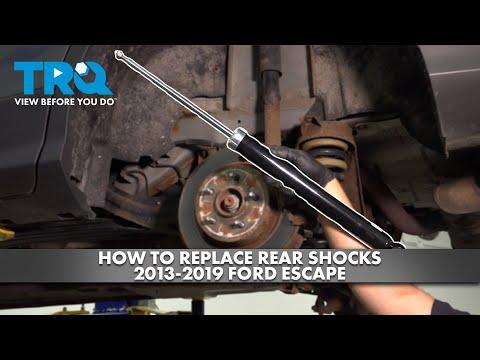






How to Replace Rear Shock Absorbers on a 2015 Ford Escape
Step-by-step DIY guide with tools, parts, torque specs, safety tips, and cost savings for 2013, 2014, 2015, 2016, 2017, 2018, 2019
How to Replace Rear Shock Absorbers on a 2015 Ford Escape
Step-by-step DIY guide with tools, parts, torque specs, safety tips, and cost savings for 2013, 2014, 2015, 2016, 2017, 2018, 2019


🔧 Escape - Rear Shock Absorber Replacement
This job replaces the rear shock absorbers on your Escape. The rear shocks control bouncing and help keep the tires planted on the road.
Difficulty Level: Beginner | Estimated Time: 1-2 hours
⚠️ Safety & Precautions
- ⚠️ Work on level, solid ground only.
- ⚠️ Use jack stands before working under your Escape. Never rely on a floor jack alone.
- ⚠️ Replace rear shock absorbers in pairs so the suspension works evenly.
- ⚠️ Do not remove coil springs for this repair. Rear shocks are separate from the springs on your Escape.
- ⚠️ Battery disconnect is not required for rear shock replacement.
🔧 Required Tools
You'll need the following tools for this repair:
- Floor jack (rated 2-ton minimum)
- Jack stands (rated 2-ton minimum)
- Wheel chocks
- 19mm lug nut socket
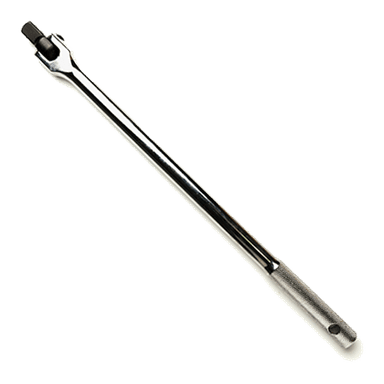
- 1/2-inch drive breaker bar
- 1/2-inch drive ratchet
- 15mm socket
- 18mm socket
- 18mm wrench
- Torque wrench (10-150 ft-lbs)
- Penetrating oil
- Wire brush
- Safety glasses
- Mechanic gloves
🔩 Required Parts
HowToo sells all the parts you need for this repair:
- Rear shock absorbers - Qty: 2
- Rear shock upper mounting bolts - Qty: 4
- Rear shock lower mounting bolts - Qty: 2
📋 Before You Begin
- Park your Escape on level ground.
- Shift to Park and apply the parking brake.
- Place wheel chocks in front of the front tires. Wheel chocks are wedges that stop the vehicle from rolling.
- Spray penetrating oil on the rear shock upper and lower bolts if they look rusty.
- Let the exhaust cool before working near the rear suspension.
🔨 Step-by-Step Instructions
Follow these steps in order:
Step 1: Loosen the Rear Wheel Lug Nuts
- Use a 19mm lug nut socket and 1/2-inch drive breaker bar to loosen the rear wheel lug nuts about half a turn.
- Do not remove the lug nuts yet.
- Loosen wheels before lifting.
Step 2: Lift and Support the Rear
- Use a floor jack to lift the rear of your Escape at a strong rear lifting point.
- Place jack stands under the approved rear support points.
- Lower the vehicle slowly onto the jack stands.
- Gently shake the vehicle by hand to confirm it is stable.
Step 3: Remove the Rear Wheels
- Use the 19mm lug nut socket and 1/2-inch drive ratchet to remove the lug nuts.
- Remove both rear wheels and set them flat on the ground.
Step 4: Support the Rear Suspension Arm
- Place the floor jack lightly under the rear lower suspension arm near the shock.
- Raise the jack just enough to support the arm. Do not lift the vehicle off the jack stand.
- This keeps the shock from being pinched by suspension weight.
Step 5: Remove the Lower Shock Bolt
- Use an 18mm socket, 18mm wrench, and 1/2-inch drive ratchet to remove the lower shock mounting bolt.
- If the bolt is rusty, clean the exposed threads with a wire brush and apply penetrating oil.
- Pull the lower end of the shock free from the mounting bracket.
Step 6: Remove the Upper Shock Bolts
- Use a 15mm socket and 1/2-inch drive ratchet to remove the upper shock mounting bolts.
- Hold the shock with one hand as the last bolt comes out.
- Remove the shock absorber from your Escape.
Step 7: Install the New Rear Shock
- Position the new shock absorber with the body and mounting ends aligned the same way as the old one.
- Use a 15mm socket and 1/2-inch drive ratchet to start the upper mounting bolts by hand first.
- Do not fully tighten yet.
- Start bolts by hand first.
Step 8: Install the Lower Shock Bolt
- Use the floor jack to slowly raise or lower the suspension arm until the lower shock hole lines up.
- Slide in the lower shock bolt by hand.
- Use an 18mm socket, 18mm wrench, and 1/2-inch drive ratchet to snug the lower bolt.
Step 9: Torque the Shock Bolts
- Use a torque wrench and 15mm socket to tighten the upper shock bolts to Torque to 35 Nm (26 ft-lbs).
- Use a torque wrench, 18mm socket, and 18mm wrench to tighten the lower shock bolt to Torque to 115 Nm (85 ft-lbs).
Step 10: Repeat on the Other Side
- Use the same 15mm socket, 18mm socket, 18mm wrench, and torque wrench to replace the shock on the other side.
- Always replace both rear shocks together.
Step 11: Reinstall the Rear Wheels
- Place each rear wheel back onto the hub.
- Use the 19mm lug nut socket and 1/2-inch drive ratchet to install the lug nuts finger-tight in a star pattern.
- A star pattern means tightening across the wheel instead of going around in a circle.
Step 12: Lower the Vehicle and Torque Lug Nuts
- Use the floor jack to lift the rear slightly and remove the jack stands.
- Lower your Escape until the tires touch the ground.
- Use a torque wrench and 19mm lug nut socket to tighten the rear lug nuts to Torque to 135 Nm (100 ft-lbs).
- Fully lower the vehicle and remove the wheel chocks.
✅ After Repair
- ✅ Bounce each rear corner by hand. The body should settle quickly without repeated bouncing.
- ✅ Road-test at low speed first and listen for clunks or rattles.
- ✅ Recheck the rear shock bolts if you hear noise after the test drive.
- ✅ Recheck lug nut torque after 25-50 miles.
- ✅ A wheel alignment is usually not required for rear shock replacement only.
💰 DIY vs Shop Cost
Shop Cost: $350-$650 (parts + labor)
DIY Cost: $90-$220 (parts only)
You Save: $260-$430 by doing it yourself!
Shop labor rates vary but typically run $100-$150/hour. This repair takes a shop approximately 1-2 hours.
🎯 Ready to get started?
HowToo makes it easy: same-day/2-day shipping on every part, plus all the tools and specialty tools you need! Check out the parts and tools sections below to add everything to your cart.